cc'ing @emollick and @ryancarson: 20 years later, "Air" by @geoffryman feels surprisingly more urgent and nuanced in explaining the before and after of the global AI rollout.
Air is the story of a town's fashion expert Chung Mae, a smart but illiterate peasant woman in a small village in the fictional country of Karzistan (loosely based on the country of Kazakhstan), and her suddenly leading role in reaction to dramatic, worldwide experiments with a new information technology called Air.
Air is information exchange, not unlike the Internet, that occurs in everyone's brain and is intended to connect the world. After a test of Air is imposed on Mae's unprepared mountain town, everyone and everything changes, especially Mae who was deeper into Air than any other person.
Afterwards, Mae struggles to prepare her people for what is to come while learning all about the world outside her home.
PS: @geoffryman – I'm currently re-reading your book and just wanted to say:
Wow. Air is even better than I remembered. On pretty much every level: Story, characters, momentum, unexpected segways and new horizons. It's a really, really good book.
cc'ing @emollick and @ryancarson: 20 years later, "Air" by @geoffryman feels surprisingly more urgent and nuanced in explaining the before and after of the global AI rollout.
Air is the story of a town's fashion expert Chung Mae, a smart but illiterate peasant woman in a small village in the fictional country of Karzistan (loosely based on the country of Kazakhstan), and her suddenly leading role in reaction to dramatic, worldwide experiments with a new information technology called Air.
Air is information exchange, not unlike the Internet, that occurs in everyone's brain and is intended to connect the world. After a test of Air is imposed on Mae's unprepared mountain town, everyone and everything changes, especially Mae who was deeper into Air than any other person.
Afterwards, Mae struggles to prepare her people for what is to come while learning all about the world outside her home.
@TheLewisW Agreed, and I believe, inversely true: Slow growth? Stop being vibe-driven. Clients want to see what's in it for them, not what you're doing on the weekends with your family.
my churn is way to high
if you signed up for post bridge: can you tell me WHY? what drove you to it?
I can tell you what drove me away: When you suddenly switched to building a food app. Postbridge was a solid MVP but without focus it felt stale quickly.
Note: I've made the exact same mistake in the past.
@SpringStreetNYC@SejalSud Based on mutual connections and engagement data, the most famous person to visit your profile is Ryan Carson, CEO and founder who built and sold 3 startups, with over 152K followers.
@ECMAScript4 the engineering culture moved to the US to build bombs and rockets decades ago
what’s left there is bureaucratic hellholes full of deeply unoptimized public organizations where most people don’t really do any work, and dirty streets
Amazing, I didn't know this existed! I started using Rails about 1 year later.
After writing web apps with Java servlets (and liking it), rails new and rails generate felt like pure magic.
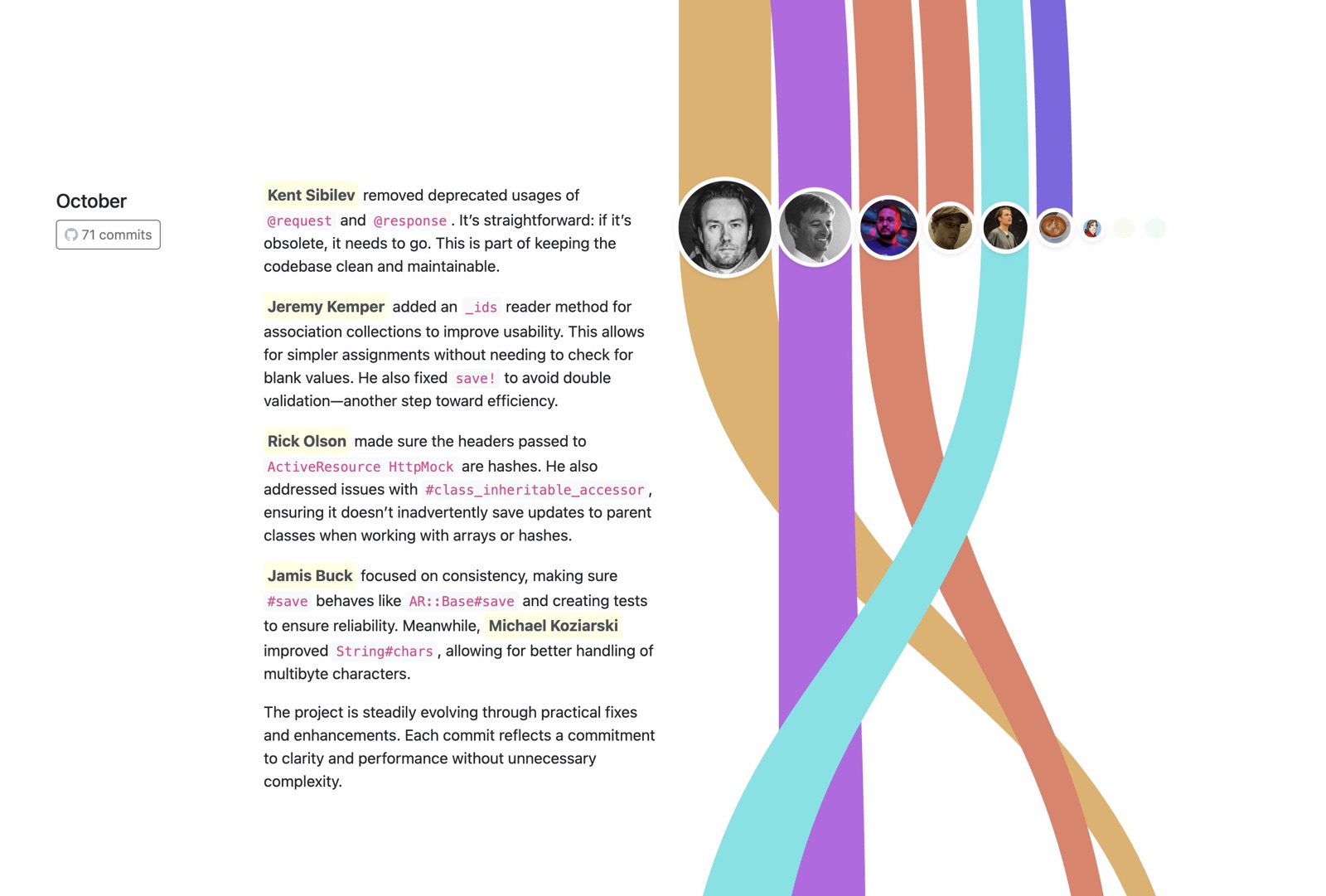
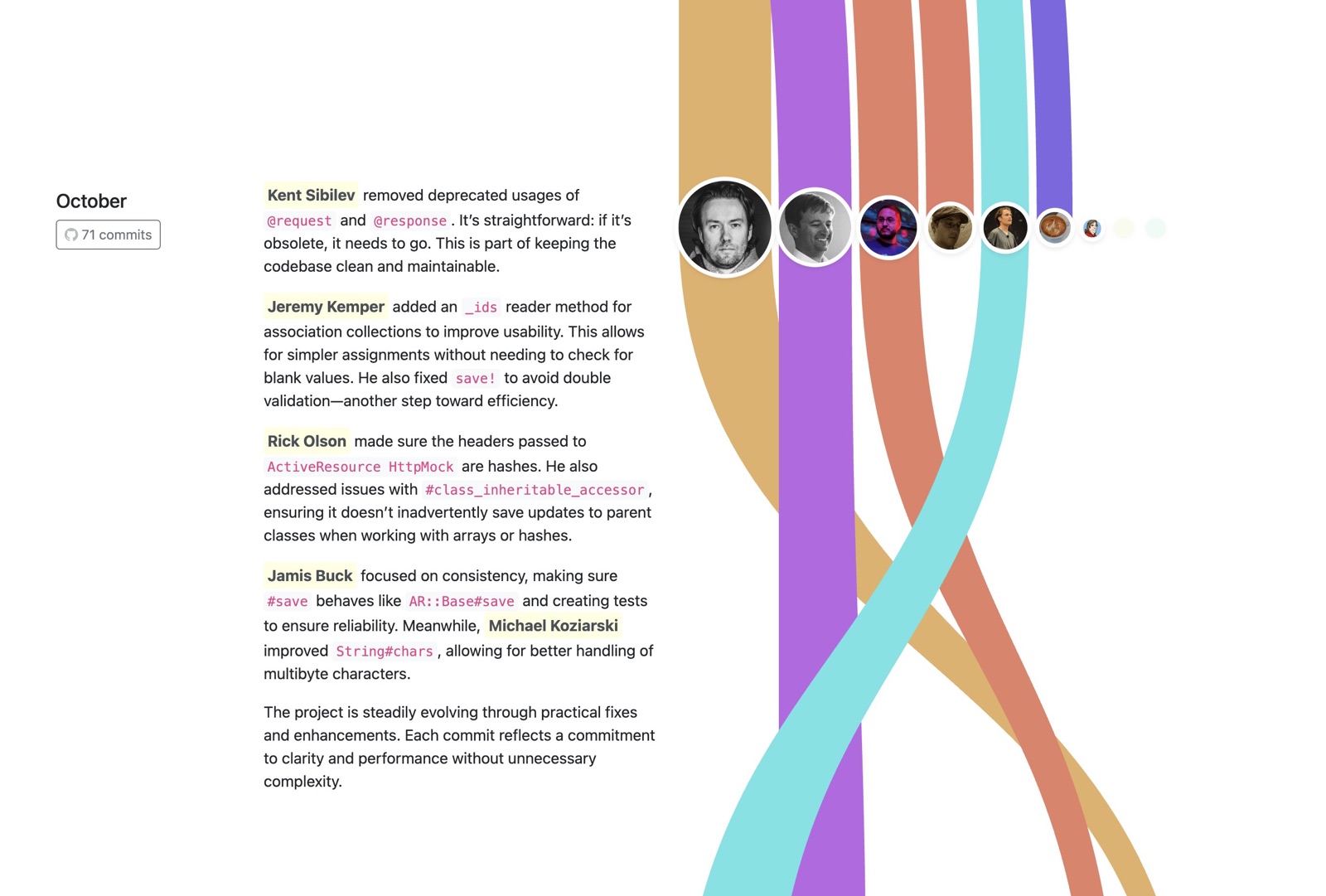
If anyone is interested, I built a git-history explorer for rails here (with a focus on the people involved). It starts with the first svn commit on Nov. 24th 2004.
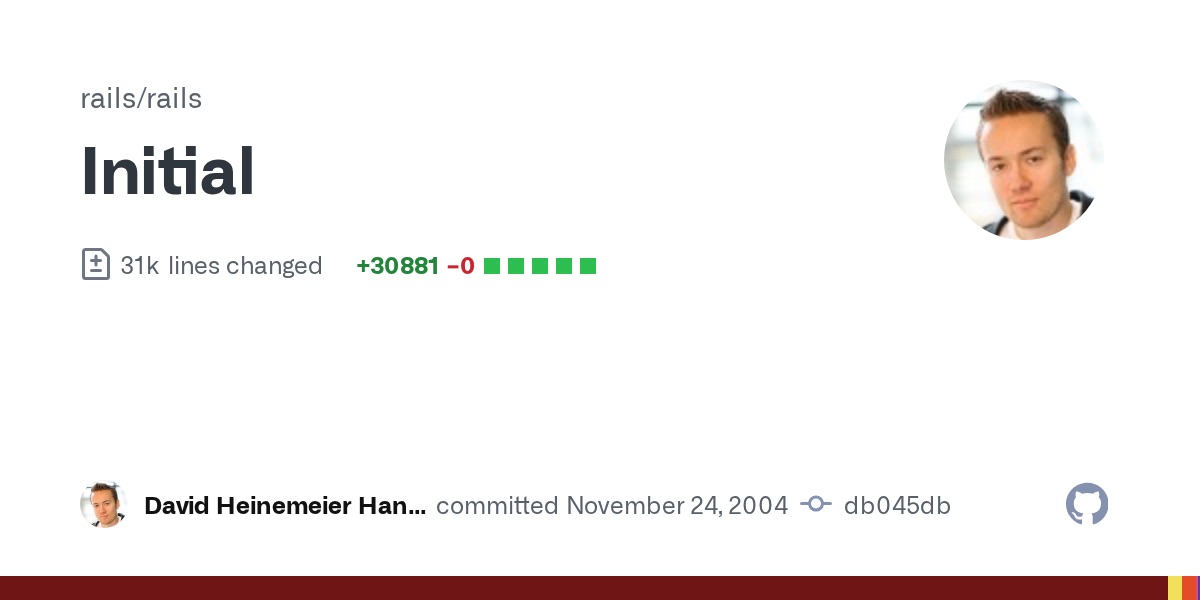
21 years ago today, after months of work, @dhh released Rails v0.5.0 to the world with the note: “this piece will grow in public.” He wasn’t wrong.
Since then, Rails has powered countless companies, grew with the support of thousands of contributors, and has kept true to its core promise made that day: "Everything needed to build real-world applications in less lines of code than other frameworks spend setting up their XML configuration files."
Amazing, I didn't know this existed! I started using Rails about 1 year later.
After writing web apps with Java servlets (and liking it), rails new and rails generate felt like pure magic.
If anyone is interested, I built a git-history explorer for rails here (with a focus on the people involved). It starts with the first svn commit on Nov. 24th 2004.
@ryancarson Oh. Good question. The most bottom-left key. Keychrons have a dedicated "macOS" hardware toggle, so I haven't needed much custom mapping. I think.
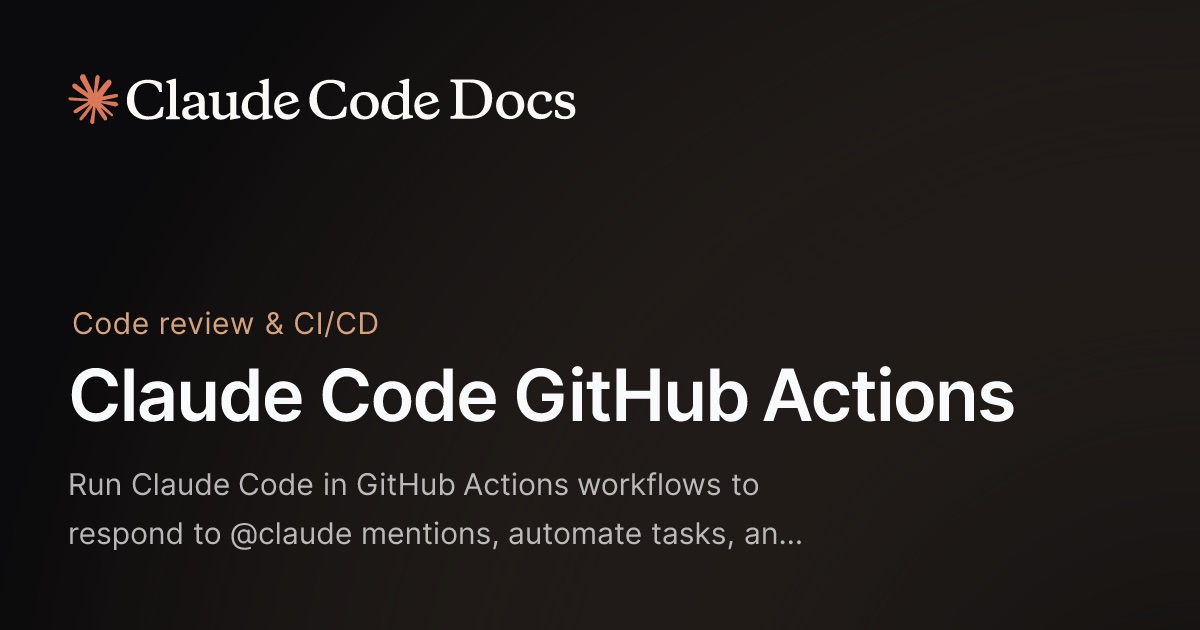
@ryancarson I'm not 100% sure if that's what you mean with gitui but me and a colleague have added delegating tasks to Claude Code via Github issues and actions. The PR then becomes the UI.
I think a large number of leading-edge devs will stop using IDEs in the next 12 months.
I've always used an IDE because I like the UI, but I find that for agentic coding, there's now a huge amount of cruft in the IDE UI that just slows me down and slows the agent down.
I'm moving to just using CLI agents + gitui + a couple terminal panes and I'm way faster.
Curious to hear everyone's thoughts.
I think we're starting to see the beginning of SDLC 2.0
This also means it's time for GitHub 2.0 to emerge.
@ryancarson Anecdotal: I switched to Claude Code full-time six months ago. Whenever I do come back to Cursor/VS Code, it feels over-engineered and clunky.
Built something I love. Vibe coded it even. And I don't give a fuck if you like it, if it fits your narrative, if it makes sense to you or not. I made it. I even made it better. It's amazing.