Alexis Rondeau

Archive

December 2018 · 7 dispatches

“...I would recommend this workshop to any entrepreneur who wants to start with a new idea.”

https://www.youtube.com/watch?v=l5oA\_XhlnP8

Tomás Moyano’s story how he and his co-founder used the “Reality Check” methods to deeply understand their market, their customers and run their first successful ad-campaign on LinkedIn.

Hi, I’m Tomas and I’m an entrepreneur.
I work for Hella FastForward and we work on new projects, new ideas for possible startups.
We were in the situation that we have an idea we had actually a technical solution to work on and we were trying to find what is a problem that this person had. This was very difficult.
What we learned from you and from your workshop – and it was really valuable for us – is to start always with the market or, ideally, with your passion In our situation it was not so easy to start with the passion so we started exploring the market and trying to understand who could be our potential customer?
And then from this potential customer we started to understand what what problems do they
have? And from having an idea of which products do they have we also wanted to know if they are willing to pay for this?
So we start checking if someone advertising to them and then what products do
they offer? What type of solution to they offer to the products that they might have?
This was really interesting we, learned a lot. We then defined personas and we
got very nice results.
In fact, we launched three ad campaigns in LinkedIn where we got on average a click-through rate of 1.4 percent. This is supposed to be very good according to LinkedIn average rate. And we also got some leads and the idea now is that since we see that there is some interest in the market we want to contact these leads to learn more about them and the problems.
I would recommend this workshop for any entrepreneur that wants to to start a new idea and not start by the technology – that is very tempting to do if you have very good technology – but you don’t know if someone wants this it doesn’t make any sense because no one will use it or buy it.
So thank you very much for this.

Tomás Moyano – Founder Sofa.AI, Berlin, Germany
“[Going to the workshop] was so useful for our strategy. I realized I couldn’t have done anything better…”

Patrick Da Sliva’s story how he and his co-founder used the “Reality Check” methods to deeply understand their market, their customers and run their first successful ad-campaign on LinkedIn.

You came at a point in our development of our startup project that we had the feeling that we should have started this with the marketing and not with the technology. In the sense of like there is always those two big questions:
what does the market want and what can we do?
and we focused on what we can do for a long time and then we realized maybe it’s not the right way to start. And when Tomás, my business partner, found you and started having a lot of discussions with you he told me “oh let’s have this marketing workshop.” It sounded really good I was like “okay let’s do it, it makes sense” and then he invited me and I figured though I’m a bit busy… but let’s do it just too because I was curious.
And then I realized I couldn’t have done anything better. Going there was that was so useful for strategy because essentially it was not just going through the process of learning how marketers do their work but it is also we were also taught with you like what’s the reasoning behind doing those things and understanding why doing it this way it helps you not only as a person but as a company and to understand what you’re doing better.
I remember thinking like oh when I look at other startups are doing they’re always thinking like “what’s the craziest thing we could do” and forget the people buying your product are not worried about how crazy your thing is they’re worried about how good can you solve my problem and the craziness is just about trying to do in the best way possible
but if you forget the customer then you’re just thinking in the clouds and from my background thinking in the clouds was a daily basis thing so it was really good to see why things should be done not from the tech back to the customer but from the customer all the way down to the tech.
I guess that at a high level that’s the greatest lesson that I’ve learned but a bit more in detail it’s also that you know how to do this from A
to Z and we know what the process looks like we know that it can be applied to a lot of situations can be repeated on across pretty much any industry. so that was extremely valuable to us for sure.

Patric Da Silva – Founder – Sofa.AI, Berlin, Germany

“…Es war ein riesen Mehrwert. Ich würde es immer wieder machen und liebend gerne einmal im Monat…”

Peer Soetebeer – Founder Nucaria, Berlin, Germany

Peer Soetebeer’s story how he and his team used my “Reality Check” methods to get back on-course with his startup by building for real customers.

Mit meinen Erfahrungen aus jahrelangem Konzern… Wie man eigentlich Produkte baut, digitale Produkte… habe ich mir schon vorgestellt, was wir in etwa machen.
Tatsächlich ist es doch viel überraschender und besser geworden als ich erwartet habe. Meine Erwartungen wurden übertroffen.
Liegt vor allem daran, dass wir selber, als junges Startup, unsere eigene Persona, unsere eigene Zielgruppen definiert haben und da schon so ein Bisschen Probleme mit hatten.
Wir uns an eine Agentur gewandt haben, das professioneller durchzuführen, heisst eigentlich genau zu schauen wer sind die Leute. Wie alt sind die. Die Demographien. Was für Marken mögen die, was für Getränke trinken sie…
Und dann hatten wir gedacht, wir haben die Zielperson, die wir brauchen, und es ist absolut das Beste und man hat darauf Customer Journeys aufbauen können…
ABER erst als wir die Marketing-Session mit Alexis hatten, haben wir festgestellt – und das war das Überraschende – wir können uns ja wirklich REALE Personen uns “anfiltern” – und dann auch bewerben. Und das sind andere Personen als die, die wir dort mit der Agentur definiert hatten über Tage, Wochen und mit mehreren Schleifen.
Die haben wir dann so gar nicht finden können. Weil es in Real solche Personen gar nicht gibt.
Und es kommt aber drauf an, die zu erreichen.
Dadurch war es ein Riesen Mehrwert und ich würde es immer wieder machen und liebend gerne einmal im Monat um die neuesten Sachen zu lernen und sich weiter zu entwickeln.
Also: Vielen Dank!

Peer Soetebeer – Founder at Nucaria, Berlin, Germany

“I realized… Oh my god! We’re building for the wrong user...”

Jonathan Najarian’s story how he and his team used my “Reality Check” methods to get back on-course with his startup by building for real customers.

The day that we met I thought everything was fine. I was like “Everything’s great! We’re building for the right person, we’re building the right product. And everything’s smooth sailing. We don’t need to worry about a thing.”
And then, after an hour, I realized… “Oh my god, we’re building for the wrong user. And our outlook is for the wrong user.”
And it’s because of an investment pitch that we prepared for that brought us totally off-course for the wrong persona and I didn’t realize it. My team didn’t realize it.
And so very quickly, after that one-hour session I went back to my team, we changed the whole thing. One day. Done.
So… Thank you, man. That was awesome!

Jonathan Najarian – Founder & CEO ScripeApp, Berlin, Germany

Related

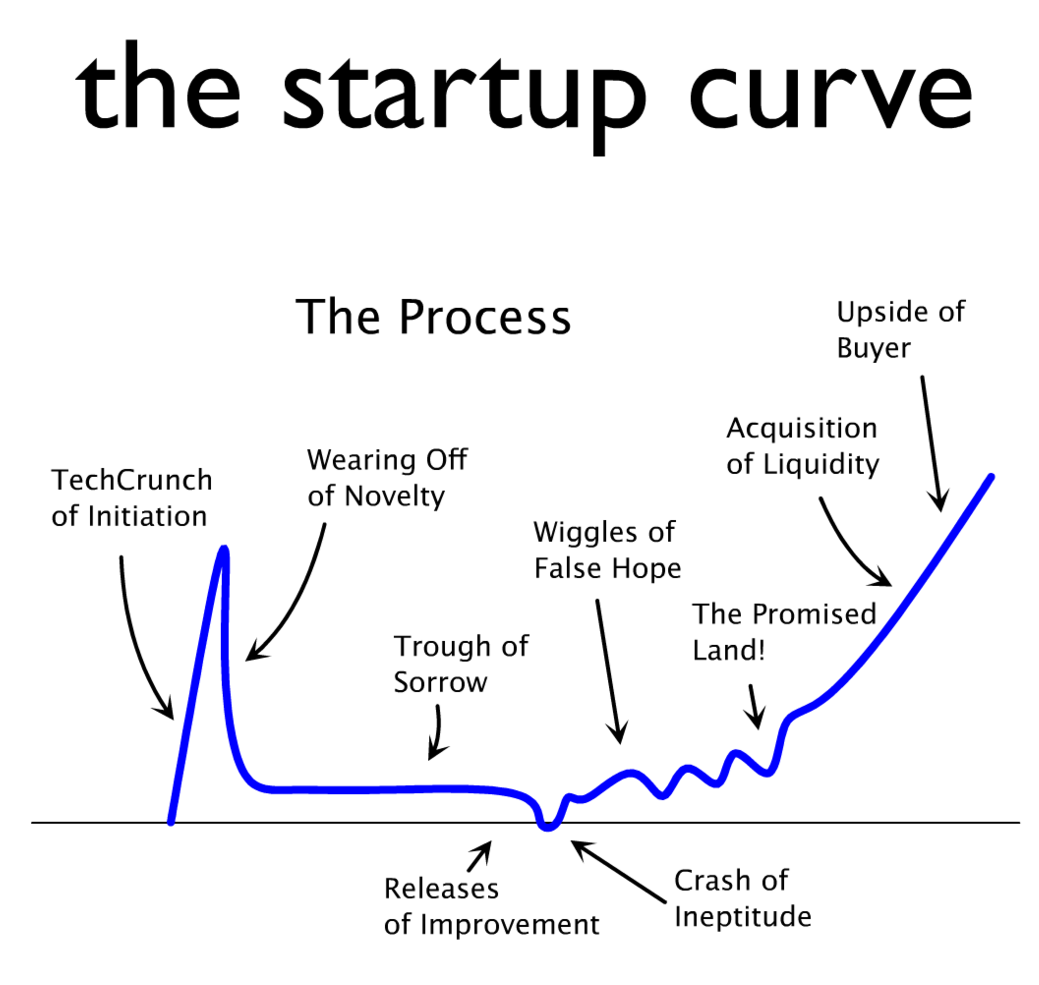
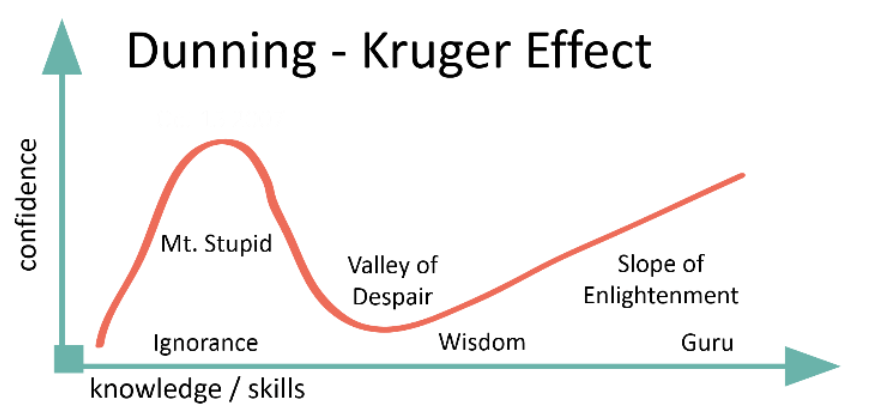
Confidence Is Everything: Paul Graham's Startup Curve and the Dunning-Kruger Effect

Yesterday, I was reading in Grant Cardone’s book “Sell Or Be Sold” and got stuck on the idea that “To the degree that you’re sold yourself on the product, idea, company, service, support you will sell to others. If you’re not 100% sold yourself, you can’t sell to others.”

Could the story of your confidence in your vision be expressed in both, “The Startup Curve” and the Dunning-Kruger effect? Are they potentially the same?

Paul Graham and Trevor Blackwell beautifully and cheekily captured this in “The Startup Curve” sometime around 2008.

What struck me is, how much it reminds me of the Dunning-Kruger effect. I think there’s a correlation because, in the end, what sells and makes a company move forward is utter conviction. That type of motivation is abundant in the beginning but, as we learn more, we get our slices of humble-pie and have to wade through ’the trough of sorrow’ aka. ‘Valley of despair’ until we’re ready to gain wisdom to once again climb the ladder of success.

Anyways, even just for entertainment value, here are the two curves to illustrate:

Source: Blogpost by Andrew Chen, Discussion on HN

Source: MarketCalls

Experiment: I'm Shutting Down Internet Access at Home. Again.

3 months ago I canceled my internet service at home for two reasons:

  1. The service provider sucked and
  2. I wanted to spend less time online and be less distracted

So, for two months I lived without high-speed internet at home.

I read 9 books.

I slept better because no more Netflix or Youtube before bed.

I generally planned my media/information consumption better.

I liked it very much.

I felt freed and less distracted.

But, a month ago I started working on a project with a company in the US.

The time-difference means the time I can interact with the team is from 3pm to 7pm CET.

At that time it became awkward to find a spot to be online, like a cafe or going to the Factory co-working space.

So, I asked my neighbor if she would be so kind to access to her network.\

She did (thank you very much!) and for the last 3 weeks I’ve been online at home again.

Needless to say, I got sucked back the old habits.

I again checked news, reddit, youtube and wasted hours on Netflix…

So, last night I made a pro/cons list and decided to go offline again.  

But with a twist… It’s not black and white:

  • I need to access work stuff on my laptop. I have kept the network on my laptop.
  • I like having Alexa there for music. Alexa’ll stay online as well.
  • I wasted too much time on my phone. I removed the network from my phone.
  • I wasted far too much time on my iPad. I removed the network from my iPad.

I cut the cords on my phone and iPad yesterday afternoon. 

And I already spent the evening reading again and slept better.