Alexis Rondeau

Archive

September 2018 · 14 dispatches

How I Have Grown My Morning Routine

I’m starting to appreciate how much grounding a solid morning routine can give me. It’s been a labor of love for the past year where I’ve started to “design” a series of tiny habits that I do within the first hour after waking up. I’ve closely followed BJ Fogg’s template to create new, tiny habits by…

  • Relying on an existing trigger (Waking up, getting out of the shower, etc.)
  • Starting with a small routine (1 push-up in the beginning) and increasing very gradually, over weeks and months
  • Making sure I celebrate each time (“Awesome!”)

With that process, my morning routine now looks as follows:

  1. After I get out of bed, I make my bed right away (Inspired by “Change the world by making your bed”)
  2. After I’ve made my bed, I stretch and exercise for about 15-20 minutes
  3. After I’ve exercised, I take a quick shower and groom
  4. After I’ve showered, I do 5 minutes of breathing exercises, 10 minutes of meditation and 5 minutes of relaxation
  5. After I’ve relaxed, I read or listen to 15 minutes of positive affirmations
  6. After I’ve read or listened, I go through my list of goals and confirm my day’s plan

Each routine is followed by a short moment of celebration and self-empowerment (“Nice!”)

As you can see, one routine is the hook for the next one.

  • Creating the exercise routine has been the longest project this year. I started out with 1 push-up and have grown the routine to stretching, jumping rope, 30+ pushups, 30+ leg-lifts and 30+ curls. But it truly started as small as it gets about 12 months ago.
  • I learned my breathing, meditation and relaxation routine during my Kundalini Yoga Teacher Training in 2011. That’s been since my most consistent practice in the morning.
  • The positive affirmations are a new addition but I have to admit, they’re working really, really well. They help me start the day on a high note and create the right emotional setting to review and plan my goals in the next step.
  • For my goal-setting, planning and execution, I built my own application that I’ve blogged a few times already. That has been working out well, because I have everything I need in one place.

If you want to start your routine, I recommend watching the two videos I linked above. They’re fantastic foundations for how I’ve gotten my morning routine to be a “no-brainer.”

So far, not once did I have to force myself to do any of the practices because I started super-small.

It’s been great, I wouldn’t want to change it anymore.

First, Give Them What They Want. Then, Give Them What They Need

Ouch.

Imagine you didn’t sleep well and you woke up with a sore left shoulder. You can’t turn to your left. It hurts. You call into work to take a sick day and then you call the Dr. Jackson’s office to schedule an appointment.

Then, with some effort, you make your way to the doctor’s office.

You’re feeling stressed and, it still hurts! You wait a little while, sitting isn’t too bad anyways. You get up and walk into the room. You wait another 5 minutes but you feel a little better because you’re here and the doc will take care of you.

You greet the doctor who is wearing his white overcoat. He asks about why you are here. You explain how you slept normal and, somehow, woke up with a completely stiff shoulder that hurts. Dr. Jackson listens intently and…

Cut

Now imagine, you could stop time here in this moment.

And imagine you had a remote control with which you could choose one of two responses from the doctor:

Dr. Jackson #1: Have him prescribe you a pain-killer. It will take away the immediate pain you’re feeling.

or…

Dr. Jackson #2: Have him prescribe you a week-long food and workout routine. If you follow it, your shoulder will never hurt again.

Which one would you choose?

I for one, know that right now, I want this stupid pain to be gone. It’s hurt all day already, I hauled myself here. First, I want relief so that I can go back home and heal. Yes I know. Healthy food and exercise routine help me long-term. But given the choice, I’ll take the pain-killer.

So, let’s continue the story with option “Dr. Jackson #1.”

Cut

… the doctor gives you a simple pain-killer pill. You take it with a cup of water while still at his office. He also prescribes you an ointment that you have to put on your shoulder for the coming 3 days. He also recommends a simple shoulder-rotating exercise.

You thank him, get the recipe and head out.

The pain-killer kicks in and for the first time today you can move to your left.

You feel better. So much better.

“Thank you Dr. Jackson.”

You swing by the pharmacy, get the ointment. You treat yourself for the next 3 days and actually practice the exercise every day twice.

Your pain is gone and your shoulder feels much better. In fact, the longer you exercise, the better it feels.

And you think to yourself: “If anything ever comes up, you’ll go straight back to Dr. Jackson.”

Entrepreneurs Are Like Dr. Jackson

As entrepreneur I’ve heard the adage of creating a pain-killer many times. Yet, I’ve found that I am susceptible to being Dr. Jackson #2. The one that prescribes the food regimen and weeklong exercises. Instead of the pain-killer.

As a “doctor” I know what you need. I am an expert, so I know that “food” and “exercise” will help you in the long run. While completely ignoring your agony.

This has a lot to do with having an “idea” and the ego-trip that comes with it. The food and exercise regimen is something I want you to want. Because I know you need it.

But you don’t care. At least not right now. Because when you’re in pain, that’s the first thing that I have to solve for you to trust me with any other treatment.

I recognize that it’s important to understand what my customers WANT. And solve for that problem first. Long before moving on to more involved, costly and time-consuming “treatments.”

Giraffe App: Sorting Highest-Priority Tasks By Granularity

App Overview

I even started a little landing page (that’s got to be secret for a moment longer) Attachments/58a0164956c8de45221e4a8ea97401d5.png

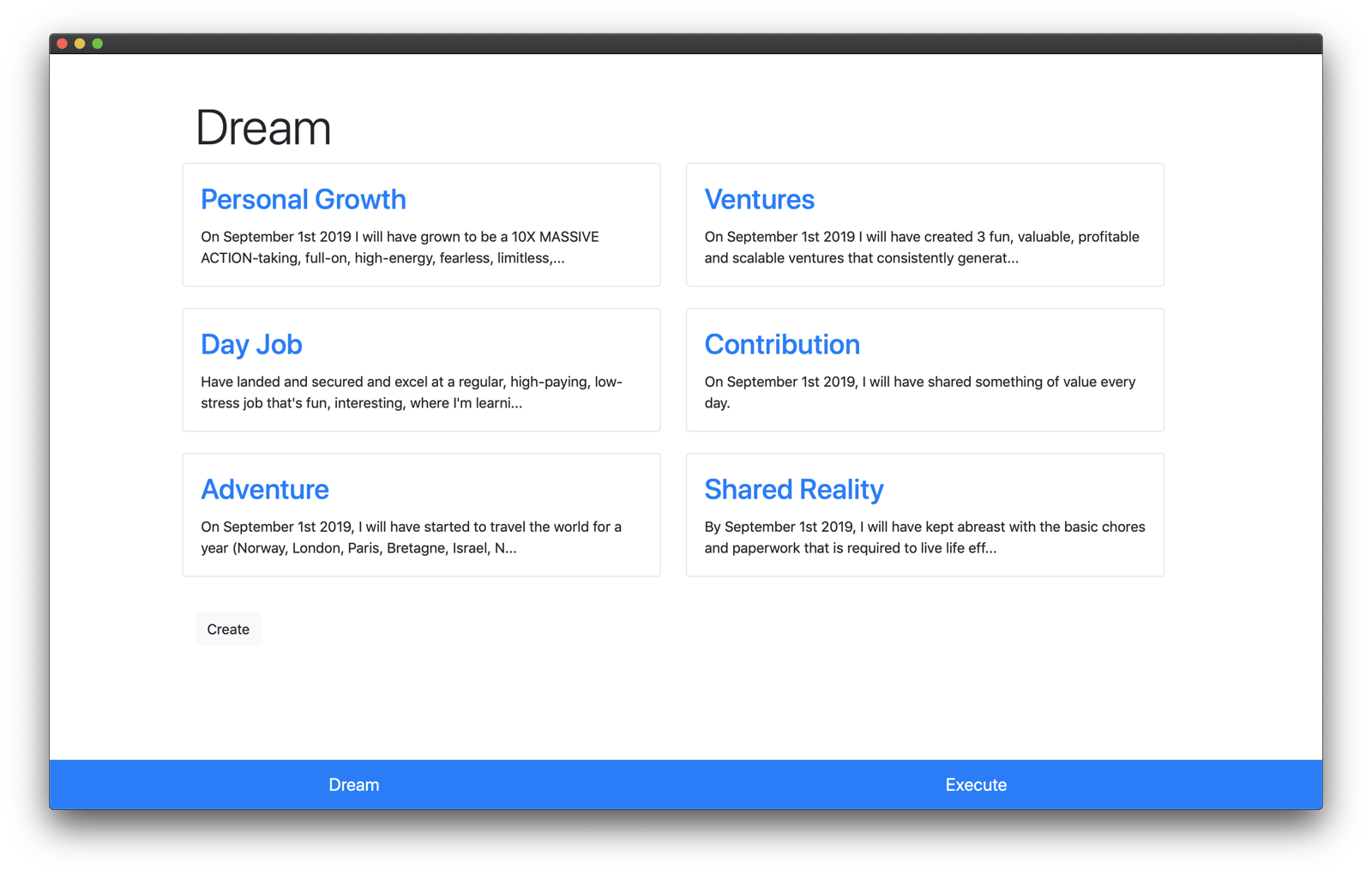
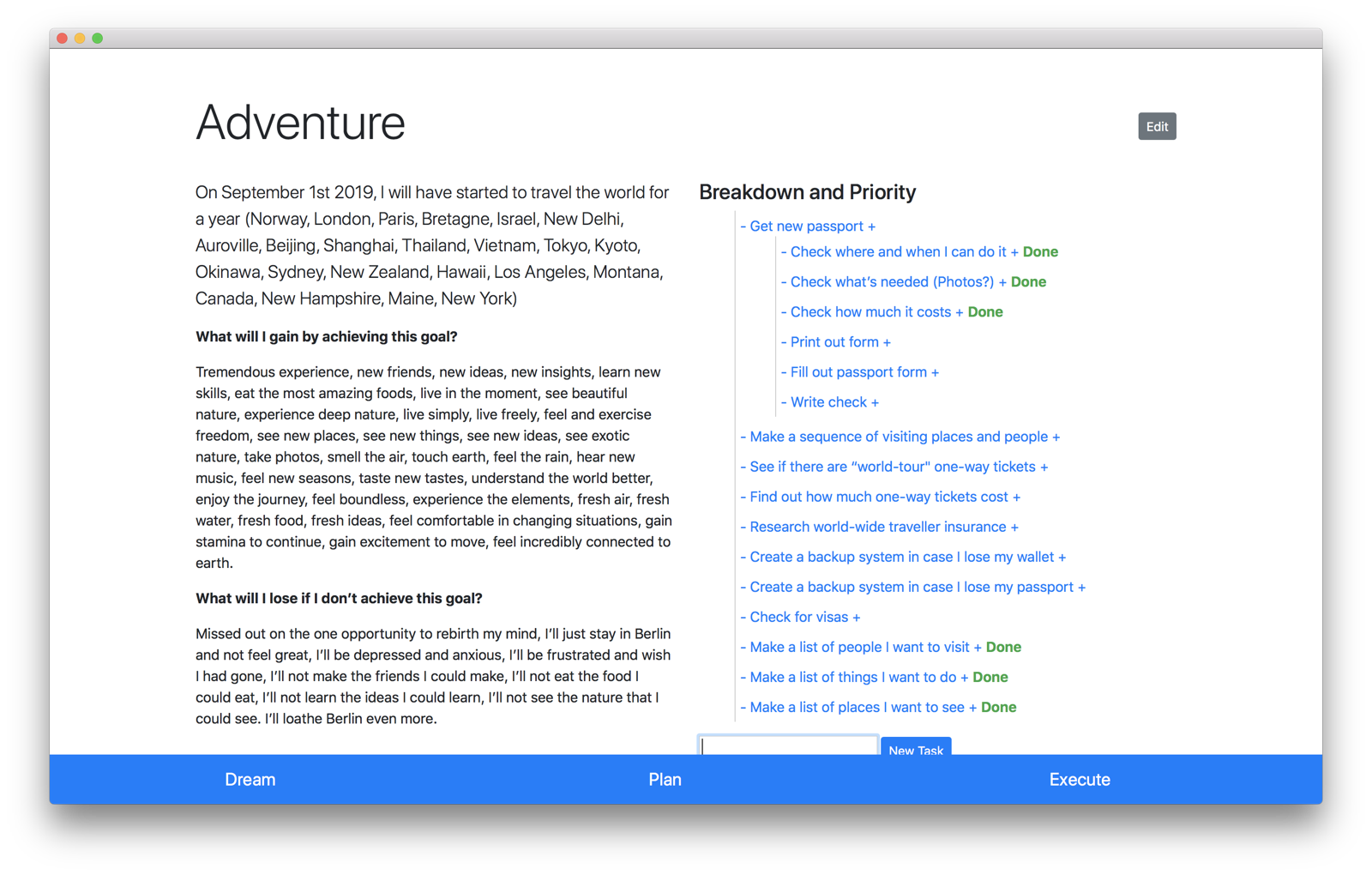
Start with top goals and dreams

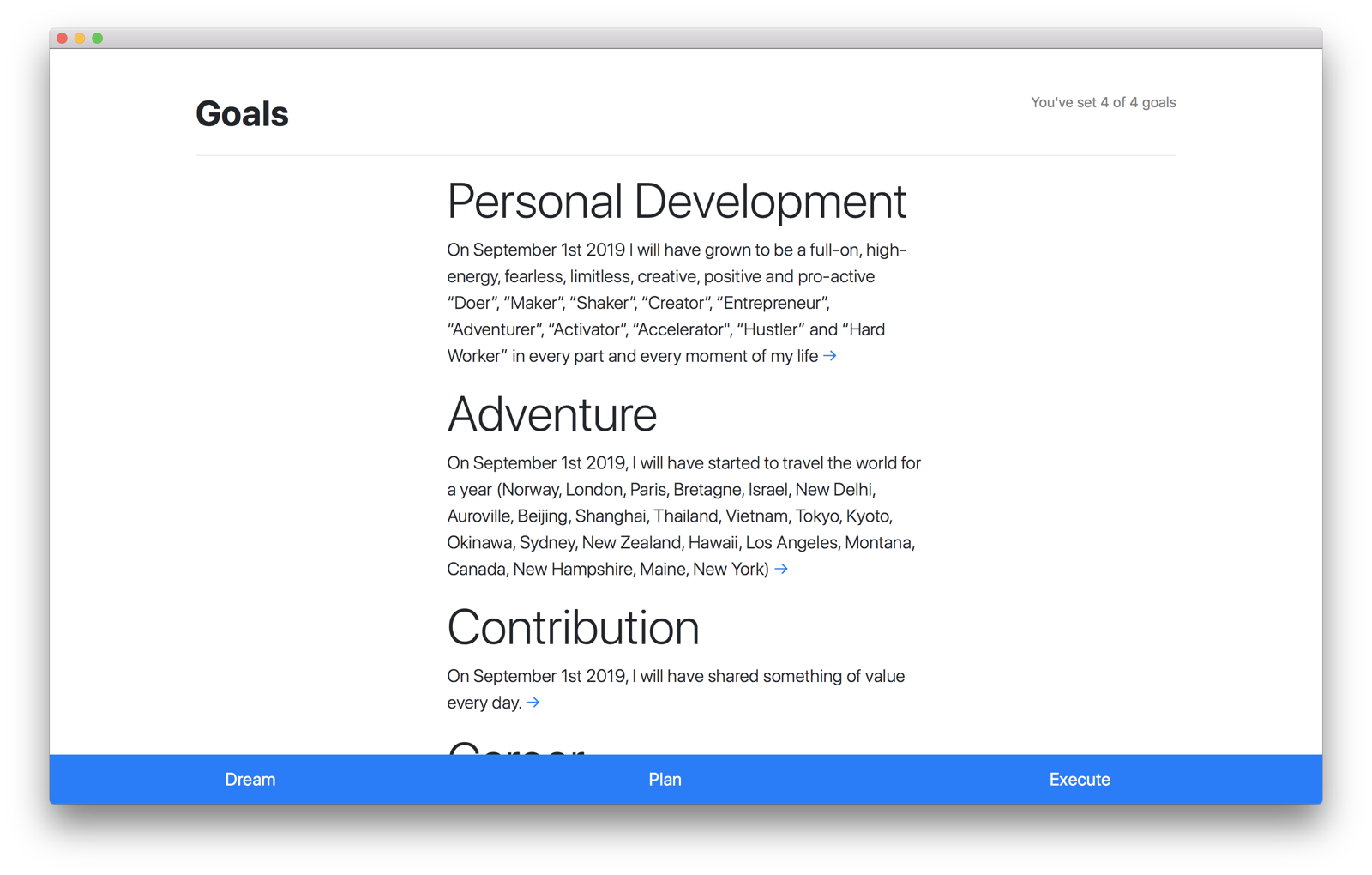
Here’s where you set your goals and dreams:

Attachments/eca4ef8caed4c9dba54cefb7ad59c2e5.png

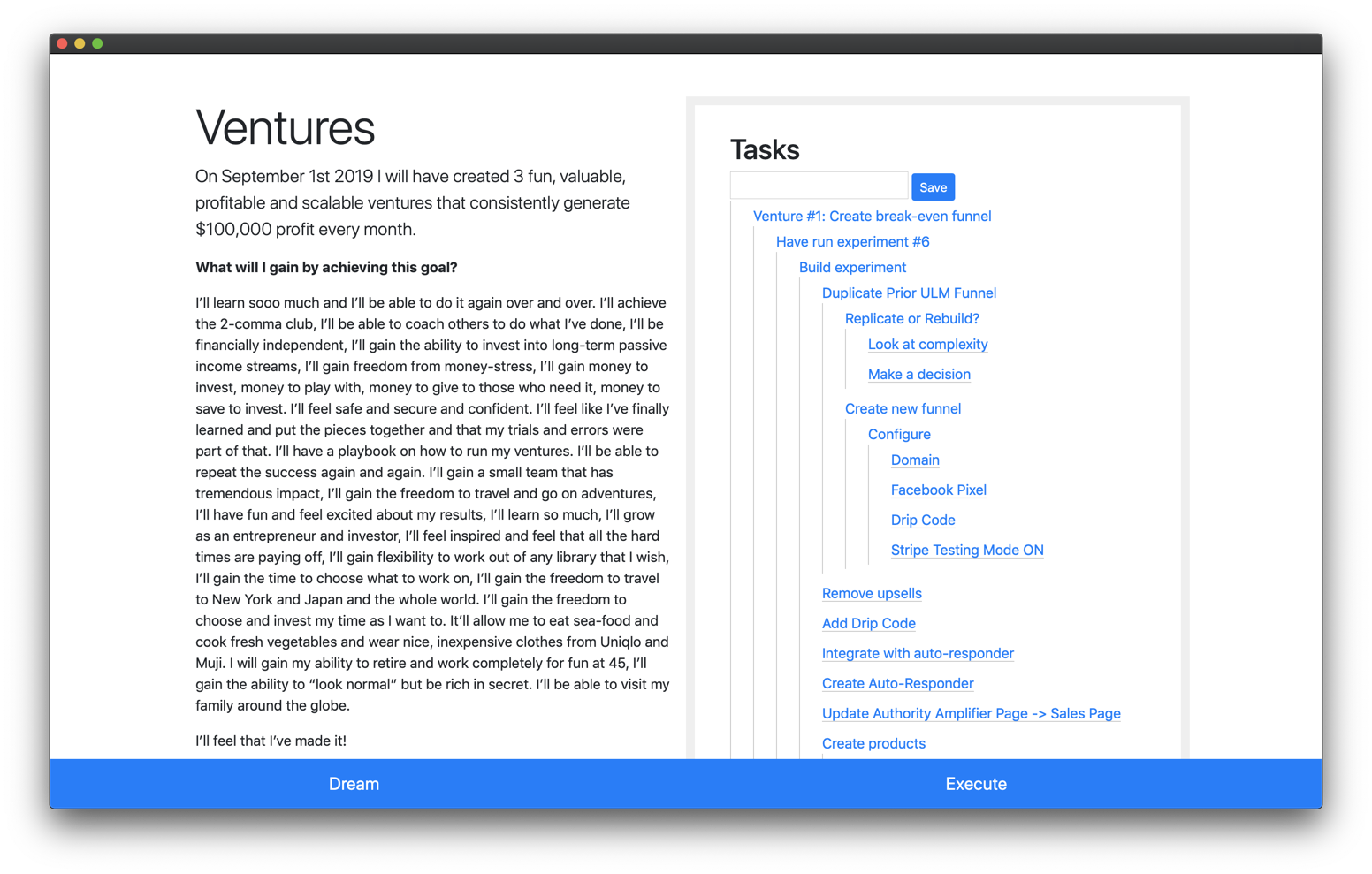
Break-down for each goal

Each goal includes a list of tasks and sub-tasks that can be arbitrarily broken down into smaller and smaller pieces

Attachments/10b7479b7c5bdc26ed0b5200593313e9.png

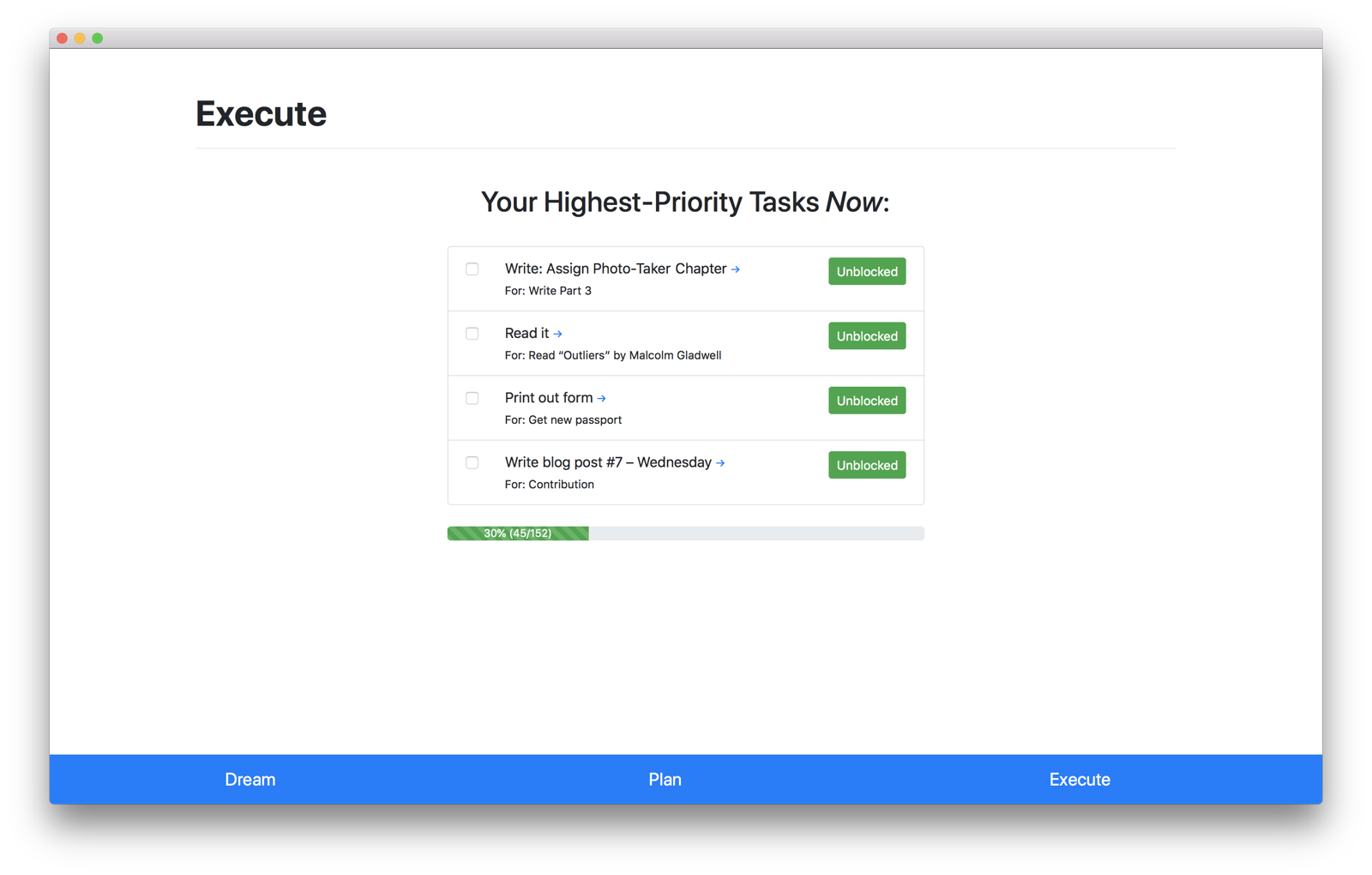
Execute the most important ONE next task per goal

And the “Execute” tab gives me the list of one top-priority task per goal.

Attachments/a8bb51cf097ad9dff2f17827ebc90134.png

Experience

Working with “Giraffe” in week 3, it’s been great. I’m definitely more productive since I started using it. At least more productive than my old Evernote/Outliner/Trello workflow and less overwhelmed.

Giraffe has allowed me to focus on tackling small, well-planned and high-value tasks all day.

Continuous Improvement

You know the saying “Jump Off the Cliff and Build Your Wings on the Way Down” – Well, Giraffe is truly being built on-the-fly as I’m working towards my goals.

And I’m improving it in small steps, polishing what doesn’t work on a day-to-day basis. I’m my own user and if something bothers me, well, I can change it.

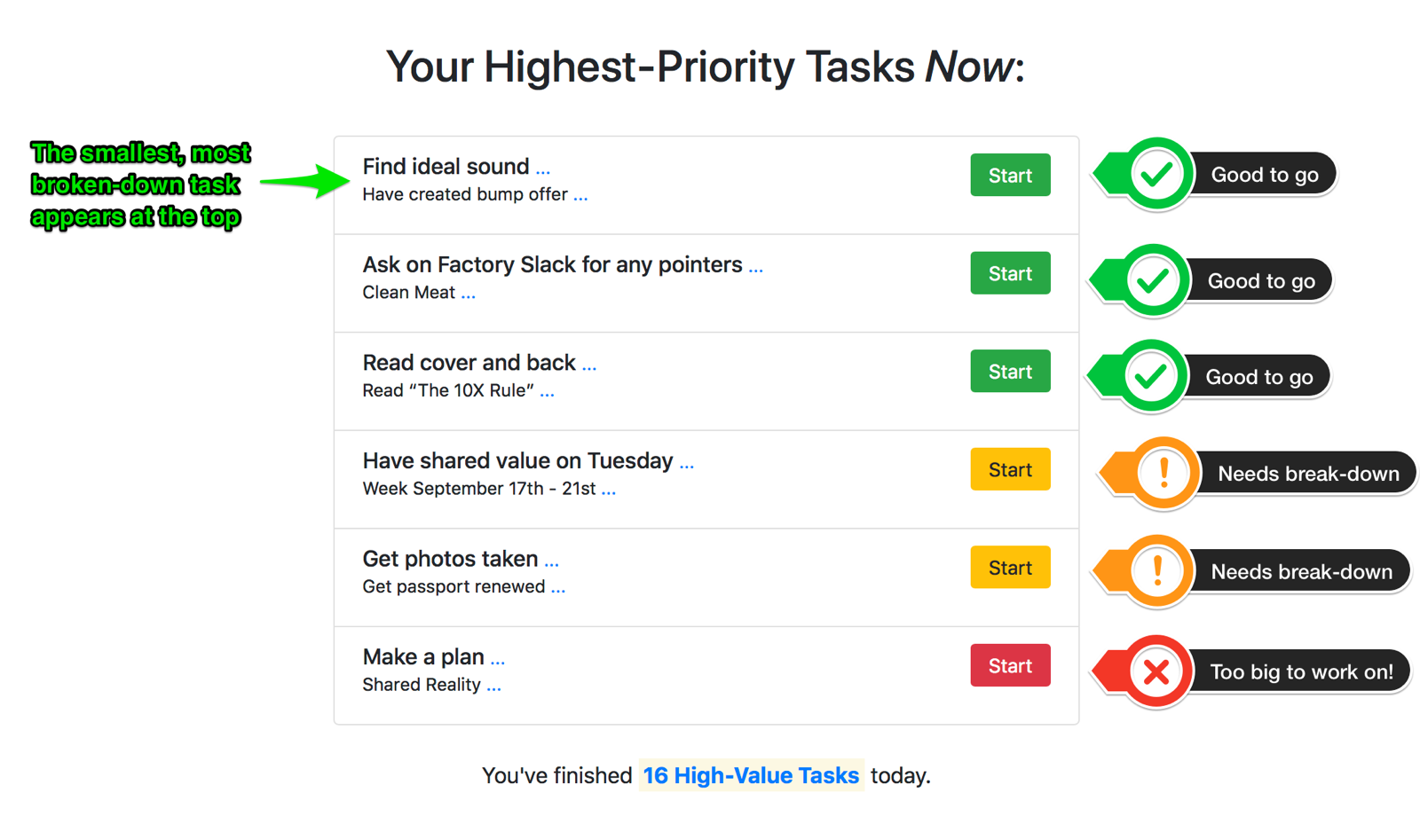
The best improvement has been the awesome color coding that I discussed last week. I made another small tweak which now sorts the pending tasks by their granularity.

Basically, the best-planned, most broken-down, tiniest tasks are on top of the list. It can be worked on right away.

In the middle are the medium-sized tasks that could use some break-down TLC.

At the bottom is the least-planned, coarsest tasks that still need break-down.

I can’t stress how helpful it is to have the system tell me “Hey, this task is not yet broken down enough yet. You’ll have a bad time trying to tackle this as-is. Break it down into smaller pieces and it’ll be easier.”

Here’s the list that’s generated for me with annotations, explaining the colors:

Attachments/8a515c92907bda972e3d62ef67cdf94b.png

6 Major Goals

And just as a reminder: The list of 6 tasks always reflects one task for each of the 6 major goals I’ve set for myself. In my case they are, in that order,…

  1. Personal Growth
  2. Ventures
  3. Work
  4. Contribution
  5. Adventure
  6. Shared Reality

From current experience, on a day-to-day basis I can reliably push forward the first 4. “Adventure” and “Shared Reality” are a little longer-term and I don’t have to work on the every day.

See Check In How I Make Consistent Progress Across My Major Life Goals With Giraffe and How Ive Rebuilt The Giraffe App With Tdd And Speed In Mind for more details.

Using Color To Signal Task Complexity and the Need to Break It Down Further

This didn’t fit anywhere else but I think it may be interesting to others watching how my app’s UI is evolving.

I reworked my “Top Tasks” view with a few changes:

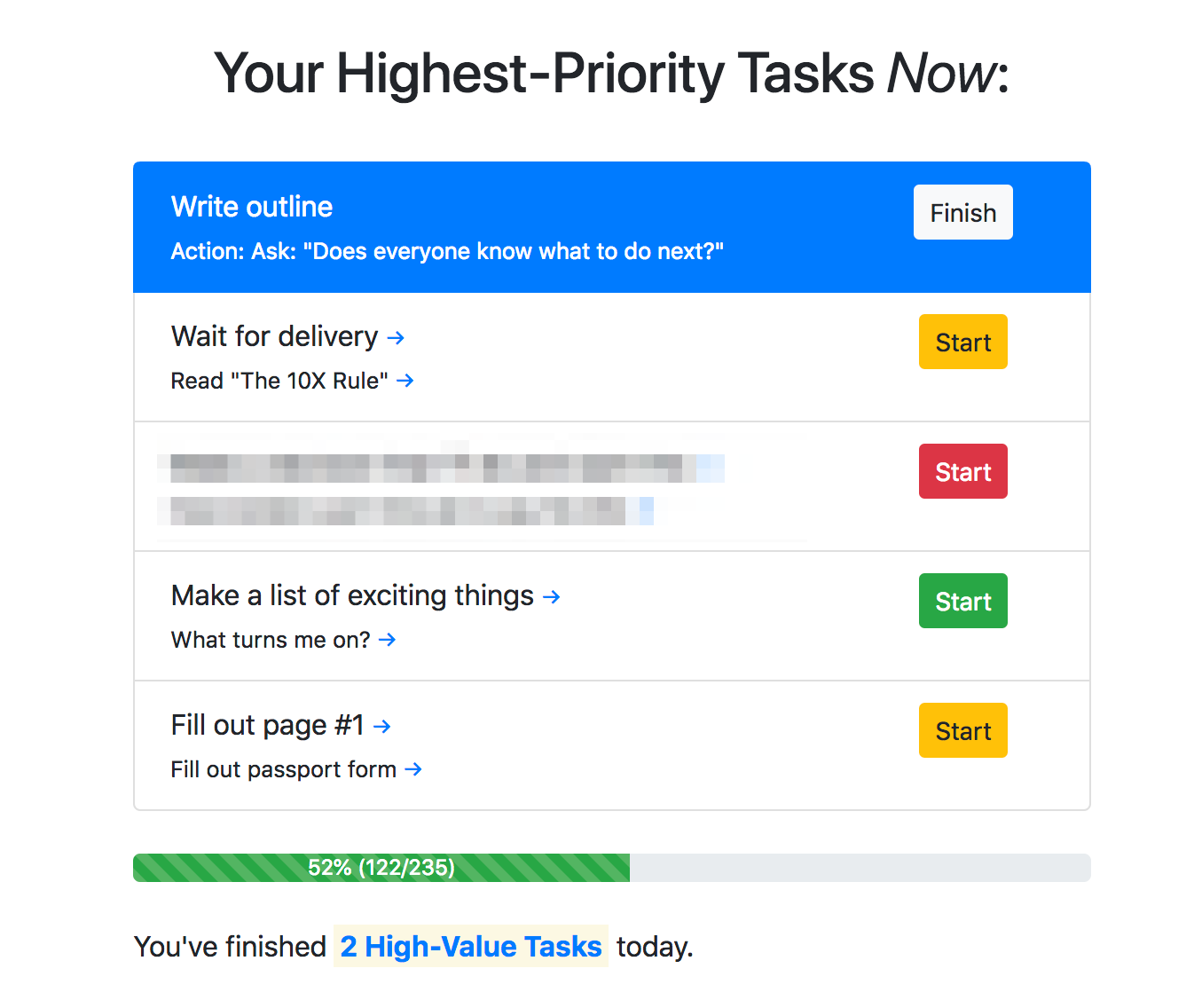
a. The task that’s “in-flight” get a blue background & finish button. The idea here is to that I stay focused on one thing at a time and don’t start another one in the meantime.

and…

b. Tasks in this list are assigned a color based on how how “doable” they are.

Here are the rules:

  • If a task is too high-level, it’ll get a red button to signal that it desperately needs breaking down
  • If a task is somewhat broken-down but not granular yet, it gets a yellow/orange button to signal it could be smaller
  • If a task is very low-level and small, it gets a green button to signal that this is good to

Let me show you what I mean:

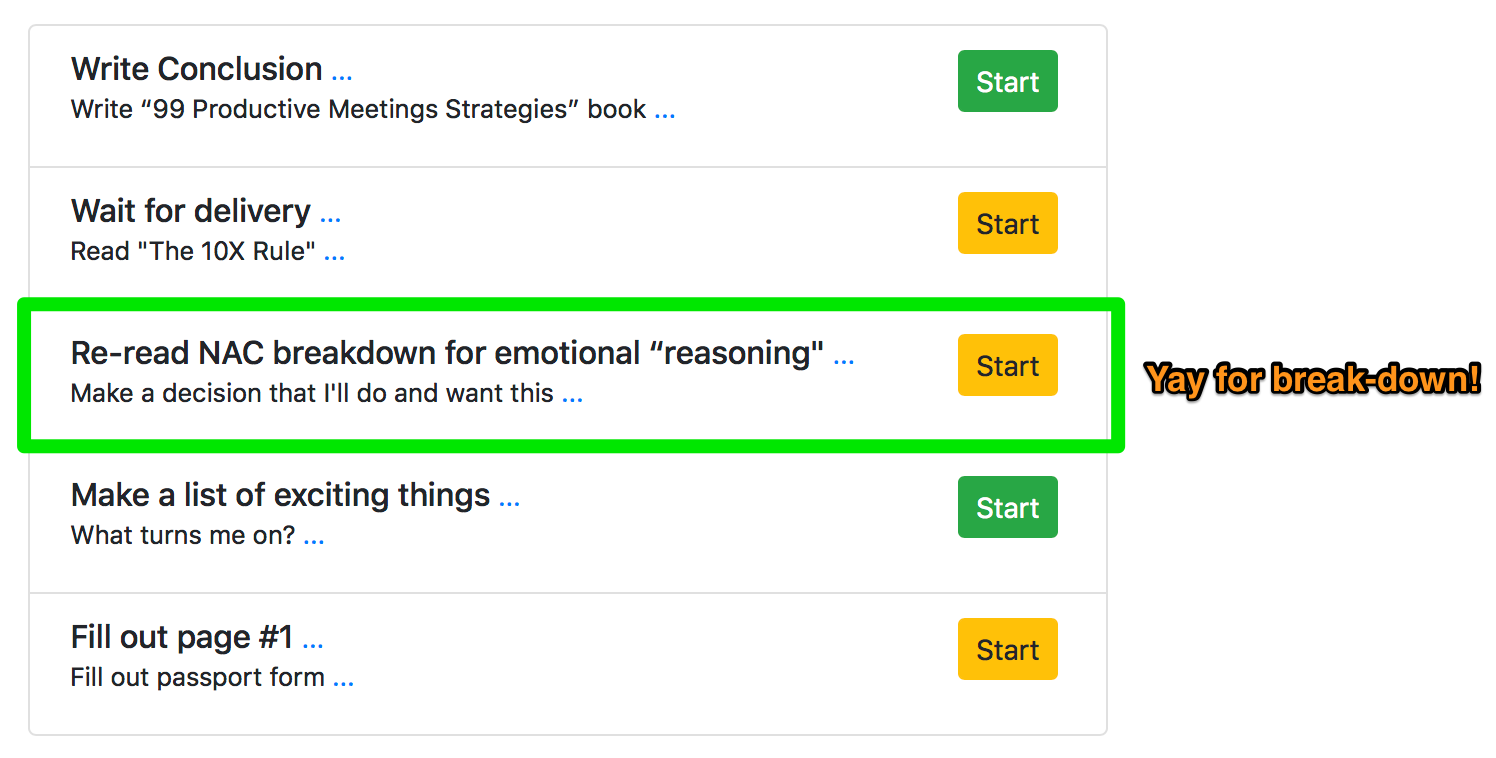
What I’ve found so far, is that this color-coding took a moment to get used to, BUT, it actually prompted me to break down the one with the red button further and I probably wouldn’t have otherwise. It’s still at “yellow” level but much better than before.
I’ll continue using this change for a few days to see if I can increase equal progress across all 5 major goals.

We’ll see!

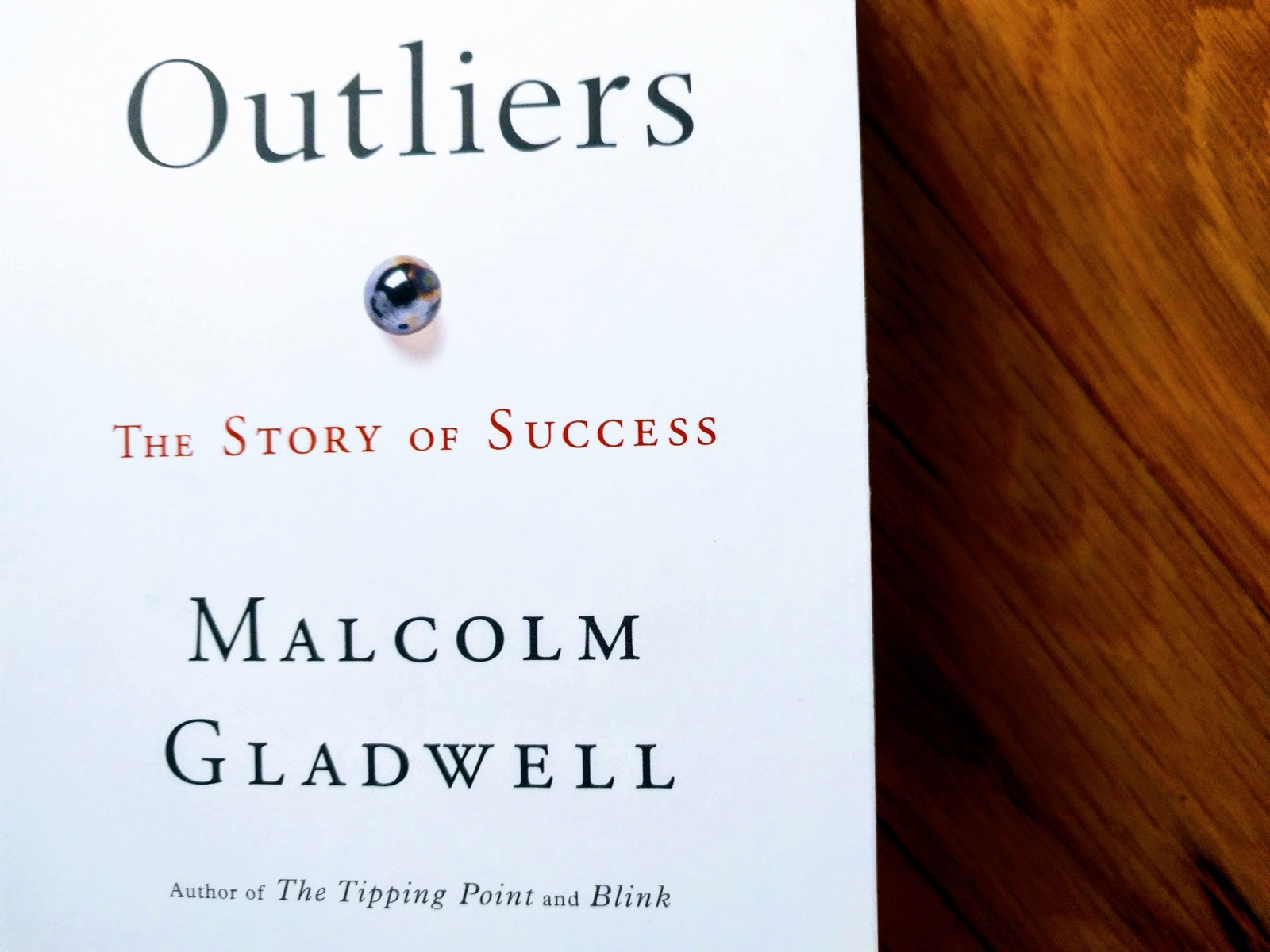
"Outliers" by Malcom Gladwell

Earlier this week I read Gladwell’s “David & Goliath” which I enjoyed tremendously. So, I wondered: 

“What else should I read by Gladwell?” 

“What’s next?”

Not only did Amazon put “Outliers” on top of the list recommendations. It’s been “around” and mentioned in my circle of friends for years. I may be the last person to have read it. So I did. 

What I enjoyed about “Outliers”

Gladwell is a king of using stories to drive a more abstract point home. His chapters are tight, on point, highly entertaining and easy to read. They almost always contain an element of surprise that is revealed at the end. His ideas are very, very “sticky.” I can’t even imagine how long it takes him to write a single chapter.

What I didn’t like so much

Gladwell uses cliffhangers early on in his chapters. He starts out with a high-drama setting in one story and, just before explaining or resolving the situation, he switches to a completely different story. He eventually reconnects the two and yes, it makes for good reading. However, after reading the second book of his in one week, this cliffhanger mechanic had become tiresome and somewhat predictable. 

Would I recommend it? 

Probably. It’s a staple in modern knowledge worker culture and clearly, it’s a really, really good book. I didn’t leave me with as much of a positive note the way “David & Goliath” did. I thought a lot about his findings on what makes people successful. This in turn, naturally, made me question my chances of succeeding and, to be honest, based on his findings, I’m not in an ideal place to succeed. Yet.

Understanding GaryVee and Julius Dein's Audience

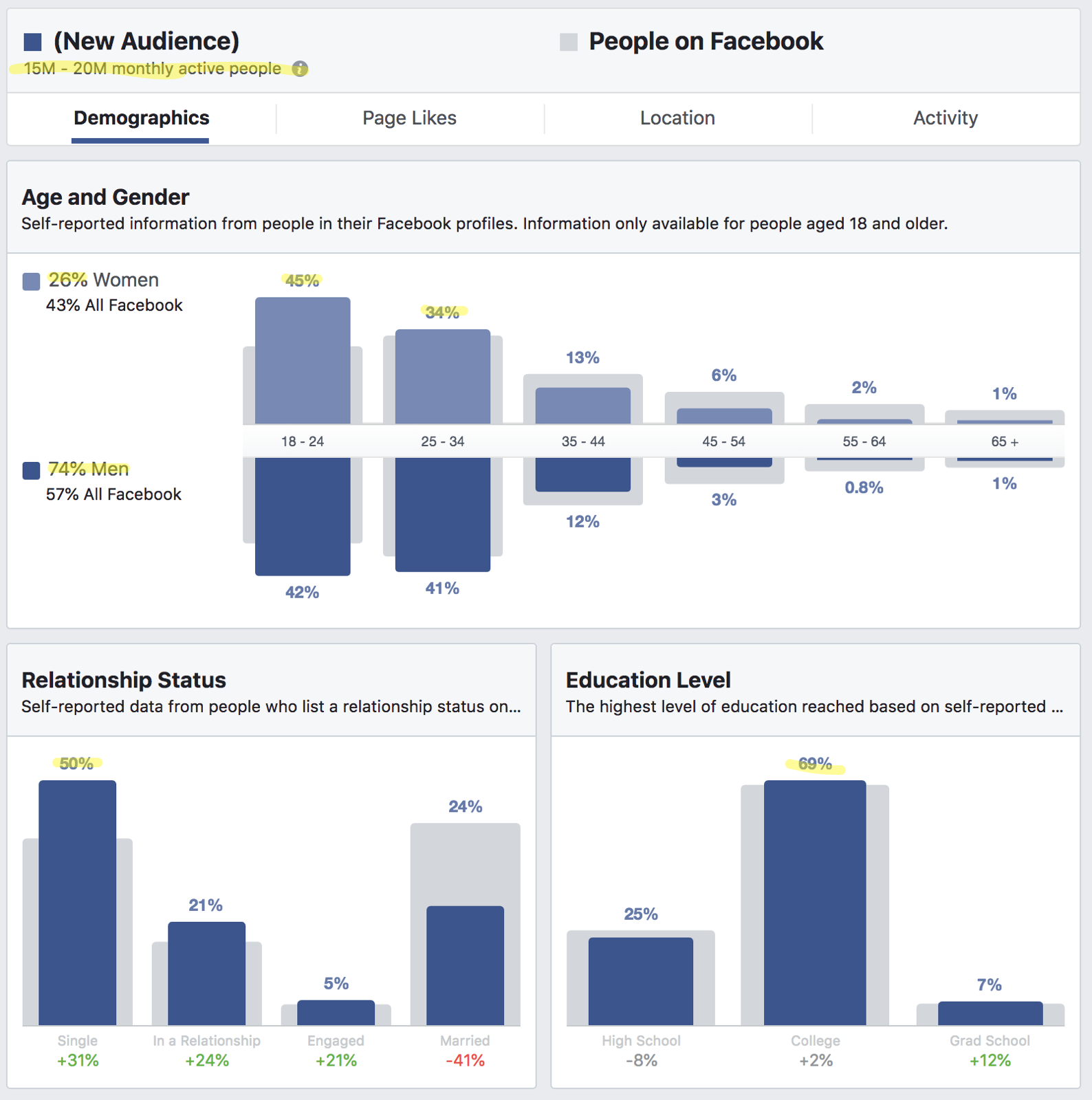
The audience that GaryVee and Julius Dein share on Facebook and Instagram is… a mass-audience of 15M-20M active users per month. They’re mostly men (75%) between 18 and 34. Most of them are single and went to college. The biggest chunk of this audience lives in the US (20%).

Here’s a quick overview to give you a better sense:

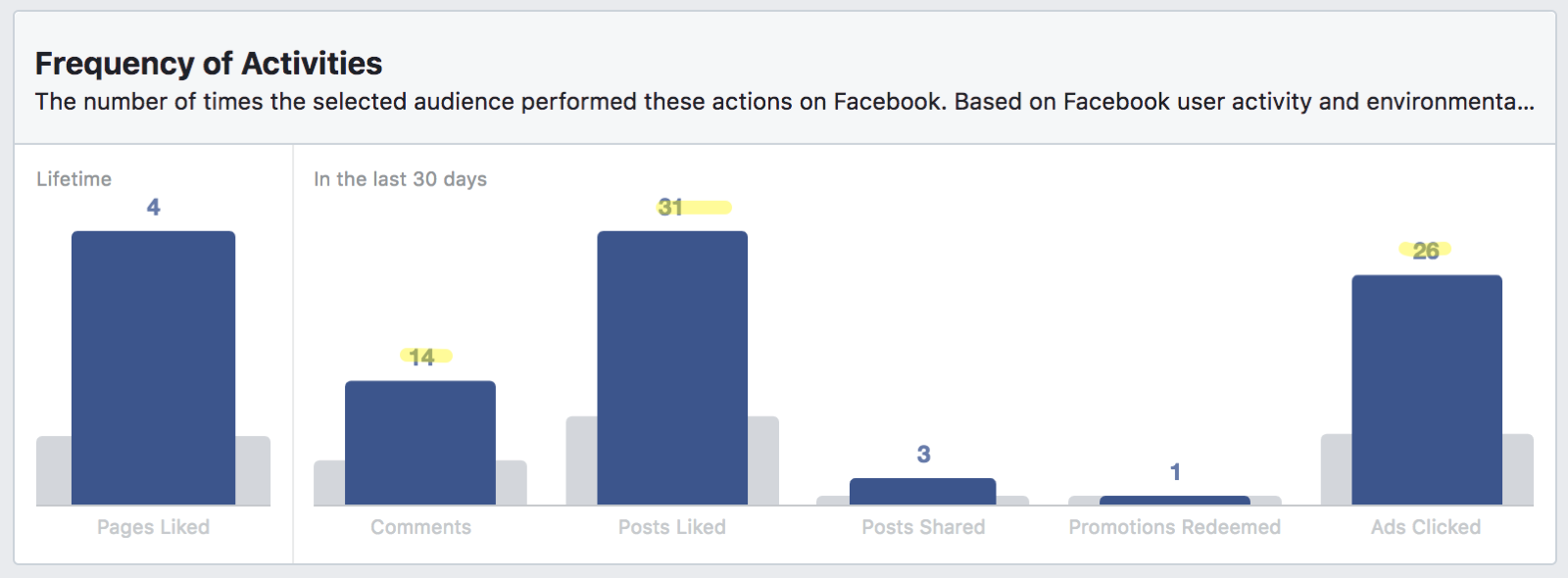
Activity

This audience is significantly more active across the board than anyone else. On average, a GaryVee/Julius Dein fan wrote 14 comments, liked 30 posts and clicked 26 ads in the past month.

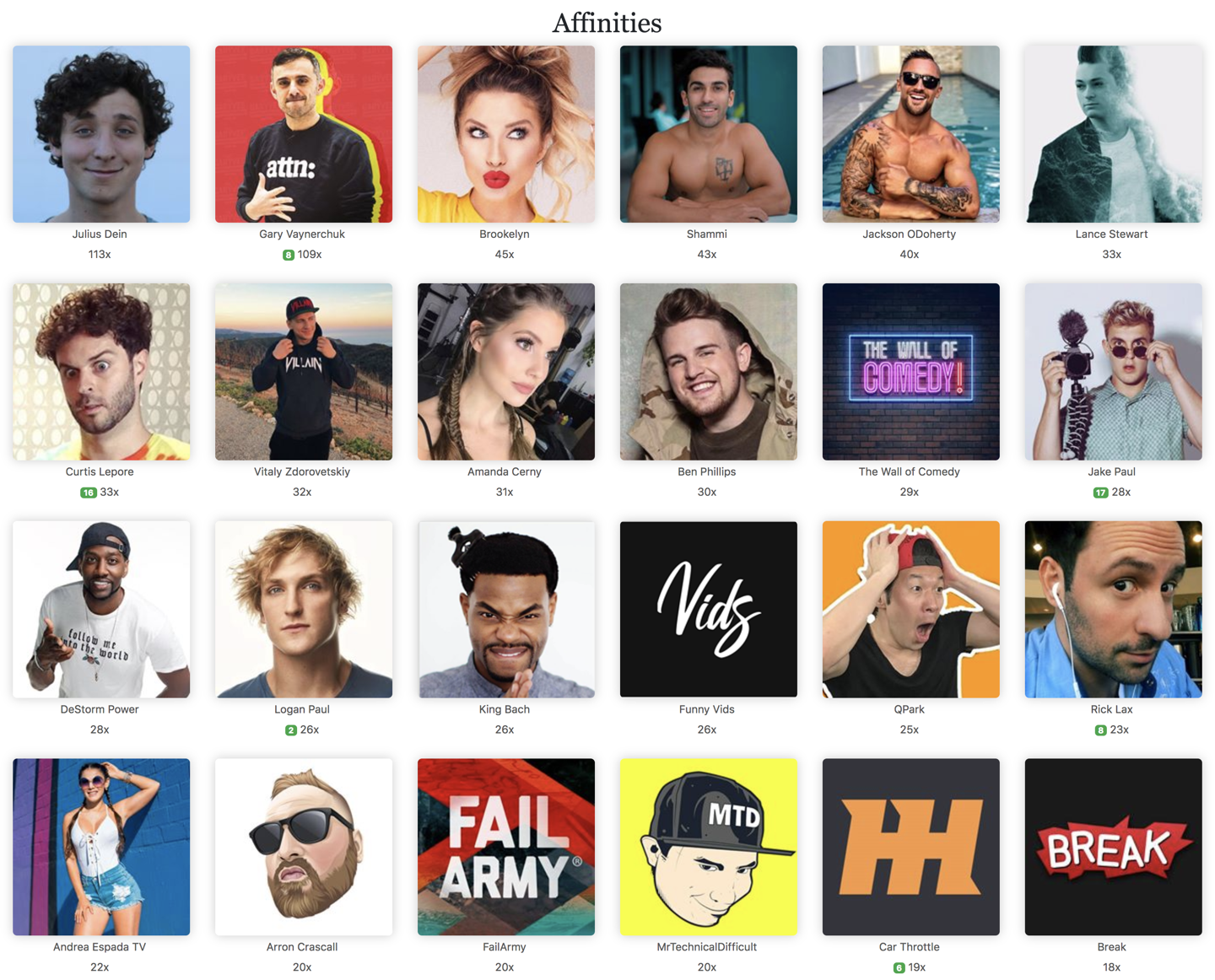
Who or what is relevant to this audience?

The brands that are highly relevant to this audience are very much personality-driven. As you can see here in this top 25 list, it’s all about people and their success/beauty/fun lifestyle:

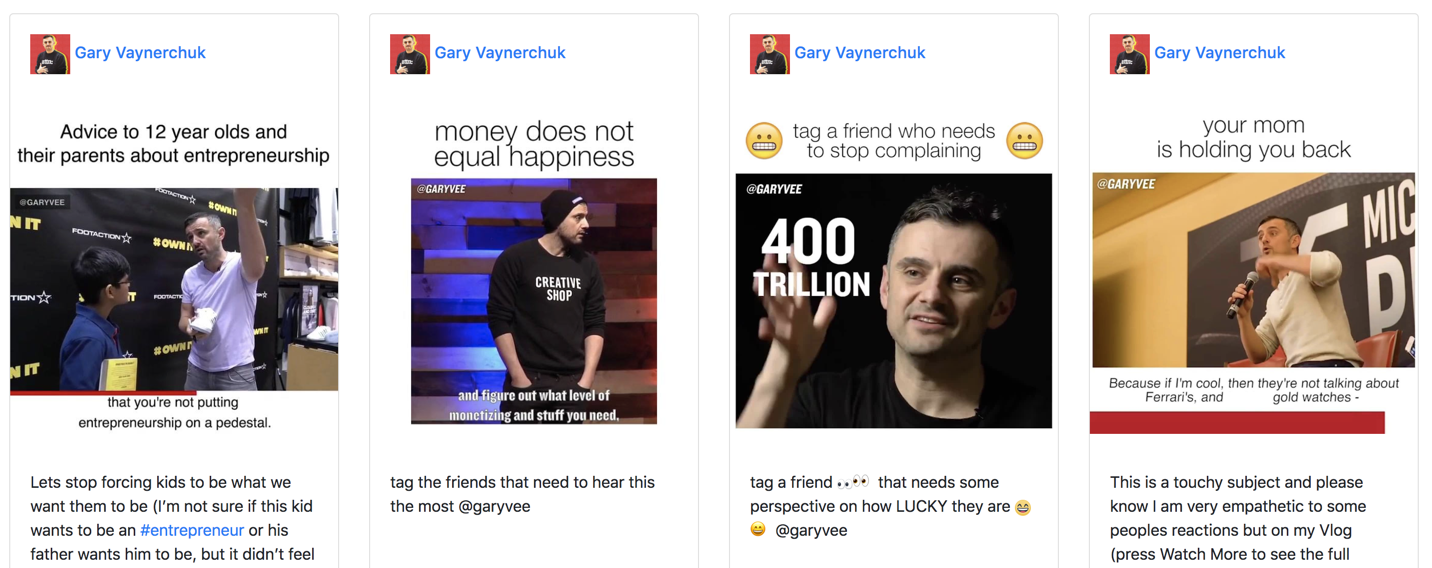
A few things I noticed: Not many of the brands this audience also very much likes run ads. GaryVee, Jake Paul and Curtis Lepore are the only ones running full-blown campaigns. From the look of these ads, they’re running mostly on Instagram.

GaryVee’s most interesting campaign is all about teaching entrepreneurship to this younger audience. I think he’s honing in to this age-group very well with attention-grabbing along the lines of “your mom is holding you back.”

What to do with this information?

My first instinct here is that this audience is FAR too large to effectively address. Go much, much smaller and more specific.

This is more of a “generation” of mostly men than a type of person (or persona) that you can serve  – I would highly recommend narrowing your focus down to a smaller sub-niche (250K or smaller) whose pains you can understand deeply and serve better.

Experiment: Field-testing My "Dream/Plan/Execute" Application for Ease-of-Use and Productivity

Theory: If I use my Dream/Plan/Execute MVP, THEN I’ll get more done than using Trello

Method: Use MVP (Monday to Monday) for one week

Prediction: I’ll want to continue to use it onwards

Day 1 (Tuesday)

So far, so good. I had broken down my book down to the chapter level and I felt pretty good not having to think about what’s next, but just have the next task pop up automatically.

Day 2 (Wednesday):

I felt pretty productive today, wrote 4 chapters in the book, and feel, so far, pretty calm about progress. I added the progress-bar yesterday which I enjoy seeing increase.

Day 3 (Thursday):

Today feels really good, I also added “make your bed, first thing” to my morning routine which kicked off a nice flow. Already covered more than 9 points for my book (I consolidated a bunch of “chapters” into paragraphs.)

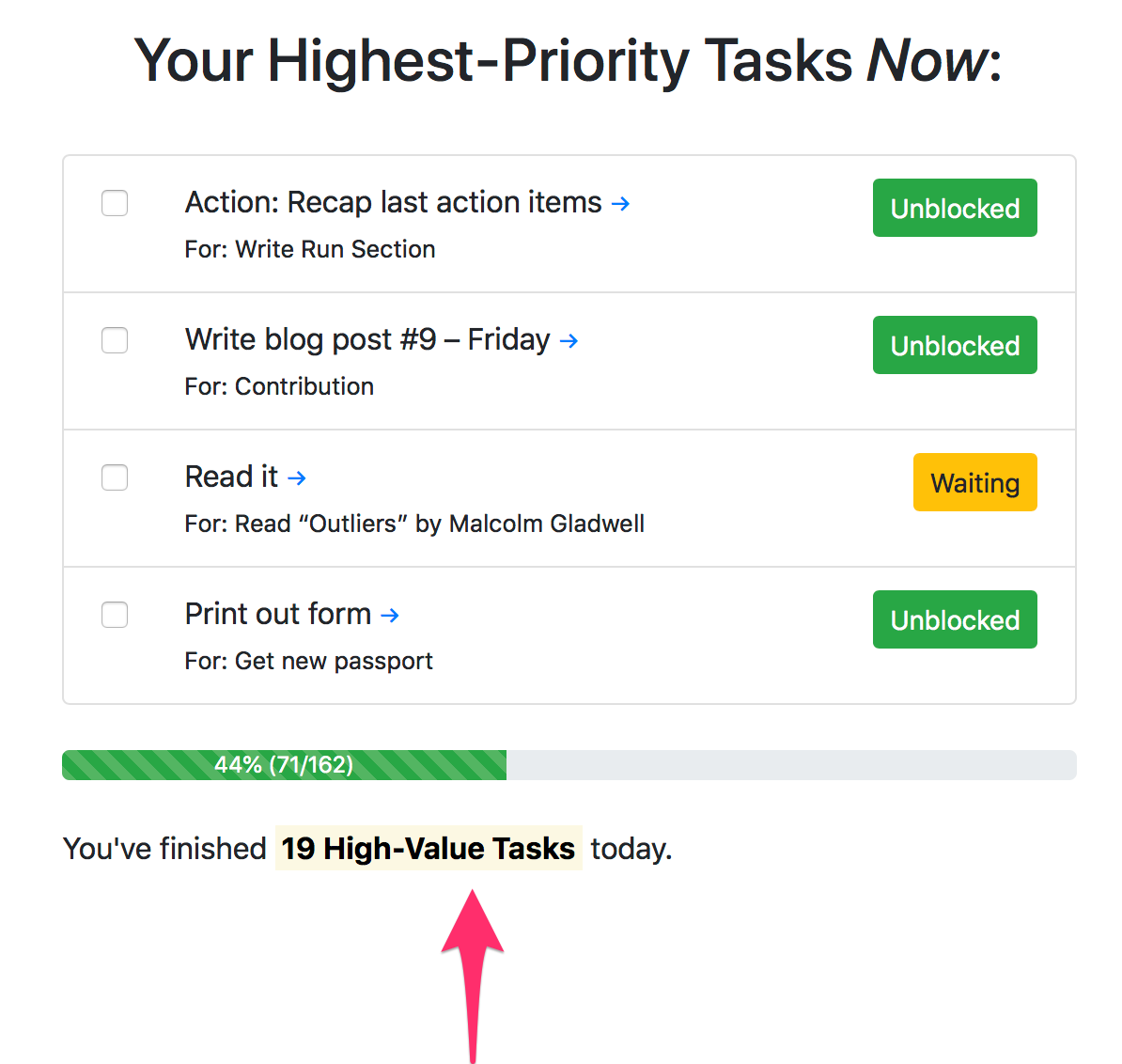
So far, today, I’ve gotten 19 high-value tasks done which is pretty neat. Oh, I added that count yesterday and I think it’s working well.

Day 4 - 7 (Friday and over the weekend)

I kept using it from Friday through Saturday. I took a break from working on Sunday.

Day 8 – Monday / JuDgEMenT DAy

Results

  • I used the app 6 out of 7 days
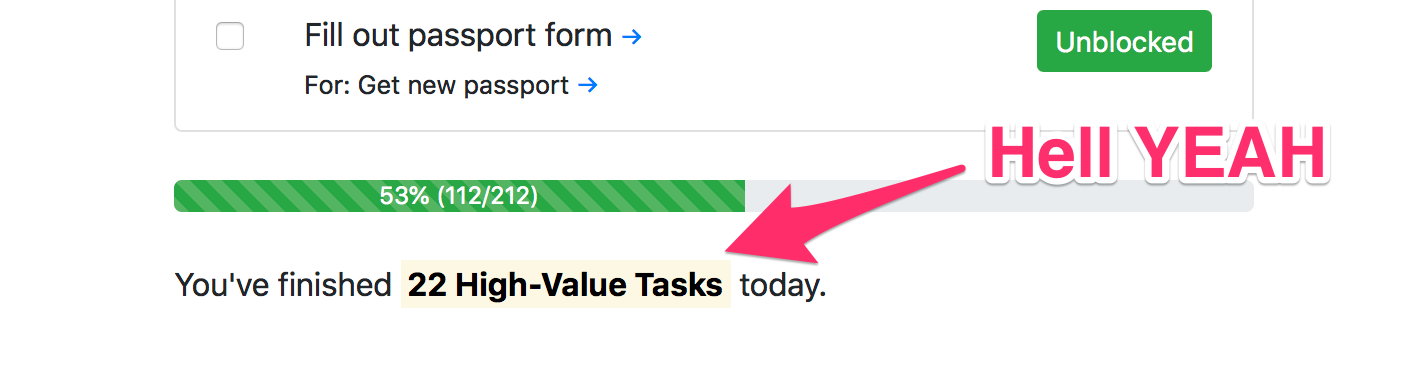
  • I’ve completed 112 small, but high-value tasks
  • So far I do not miss Trello.
  • I want continue to use it for another week.

Decision

Persevere! I’ll continue working on and with the application for another week.

Learnings

- What worked well:

  • Slicing down big tasks into tiny, tiny, tiny sub-tasks actually proved to work well for me. I was able to start and pick the smallest thing that usually takes about 5 minutes or less and get started instead of feeling overwhelmed.
  • The small “You finished X high-value tasks” message kept me motivated and excited
  • I feel like I’m making solid progress in key areas of my life
  • I like having the native app

- What was “Okay”:

  • The progress-bar is okay, but it gives me more value to look at today’s tasks
  • I upgraded to a maximum of 6 top-level goals and I’m curious to see if that helps
  • I’m not sure how to “plan for the week” with this interface
  • I’m not really using the “Plan” tab as much. Instead I do my planning on the goal-level
  • I’m unclear how “Meta” Personal Development is in regards to the app.

- What didn’t work so well:

  • I have had moments when I mixed planning and execution where it’s easy to feel overwhelmed.
  • I don’t yet love the “Goal” summary page (but it’s still helpful to have it)
  • I’ve mostly lost track of chores I have to do that live outside my goals
  • Today’s IPM felt messy and all over the place. There were timing factors, too.
  • When planning/adding tasks, the page-reload sucks when you’ve collapsed tasks before
  • It’s not good to represent recurring tasks/habit-forming activities

Related

Book Recommendation: "From Russia With Love" by Ian Fleming

HOLY SHIT. Oof. 

So, I completely forgot just how good this book was, back when I read it. I just finished “David & Goliath” and I felt like fiction and randomly picked up “From Russia With Love.” Many great things have already been said about it, so I will just give my 2 cent here. 
Imagine, this book sitting quietly in your lap. You pick it up. You draw it closer. You open it. And suddenly you’re pulled into a whirlwind of suspense, action and intrigue. Reading this book is like staring straight into the roaring engines of a Concorde. It’s loud. It’s violent. And it’s moving at 700 miles per hour. 
And you just. Can’t. Stop. Reading.

So, if you haven’t read it yet, you should. You can order it here. It’s worth every cent. Just be prepared: You won’t be able to put it down until you’re done with it.

PS: I’m reading so much because I set myself a new rule: No screens (Phone, iPad etc.) after 8pm. To improve my sleep. So, I’ve had much more time to spend reading than usual. It’s working out well so far. 

Productivity Experiment: My Dream/Plan/Execute Model in One App

I’m a huge procrastinator. Unless I set myself a goal, make a plan and have a clear, small next step, I’ll just waste my time.

So knowing that about myself, over the past years, I’ve experimented with different tools to manage my goals, plans and todos in different ways. The problem that I’ve run into over and over again was that all softwares usually just cover one part of my overall flow.

Currently my flow is :

  • I use Evernote to think through and write down my top-level goals
  • Then I copy over my top-level goals into Omni Outliner to break-down it into smaller, manageable pieces
  • Finally I copy over the tasks into Trello to create a backlog, often having to re-create the break-down by hand again.

Each of these softwares are great at what they do, please don’t get me wrong. But for a ideal, regular planning and execution flow this whole copy-and-pasting hasn’t been great.

What (I think) I want is this: I want one place to set goals, break-down into smaller and smaller tasks, be able to re-arrange and prioritize and finally, have one single list automatically that tells me what my next, highest-priority tasks are based on all the work I did before.

So, I built myself a simple app (Mac native and web) that allows me to:

  1. “Dream.” That’s where I define and write out my high-level goals. Usually once every few months.
  2. “Plan.” That’s where I take my high-level goals and break them down into small, manageable and attackable pieces. Usually weekly.
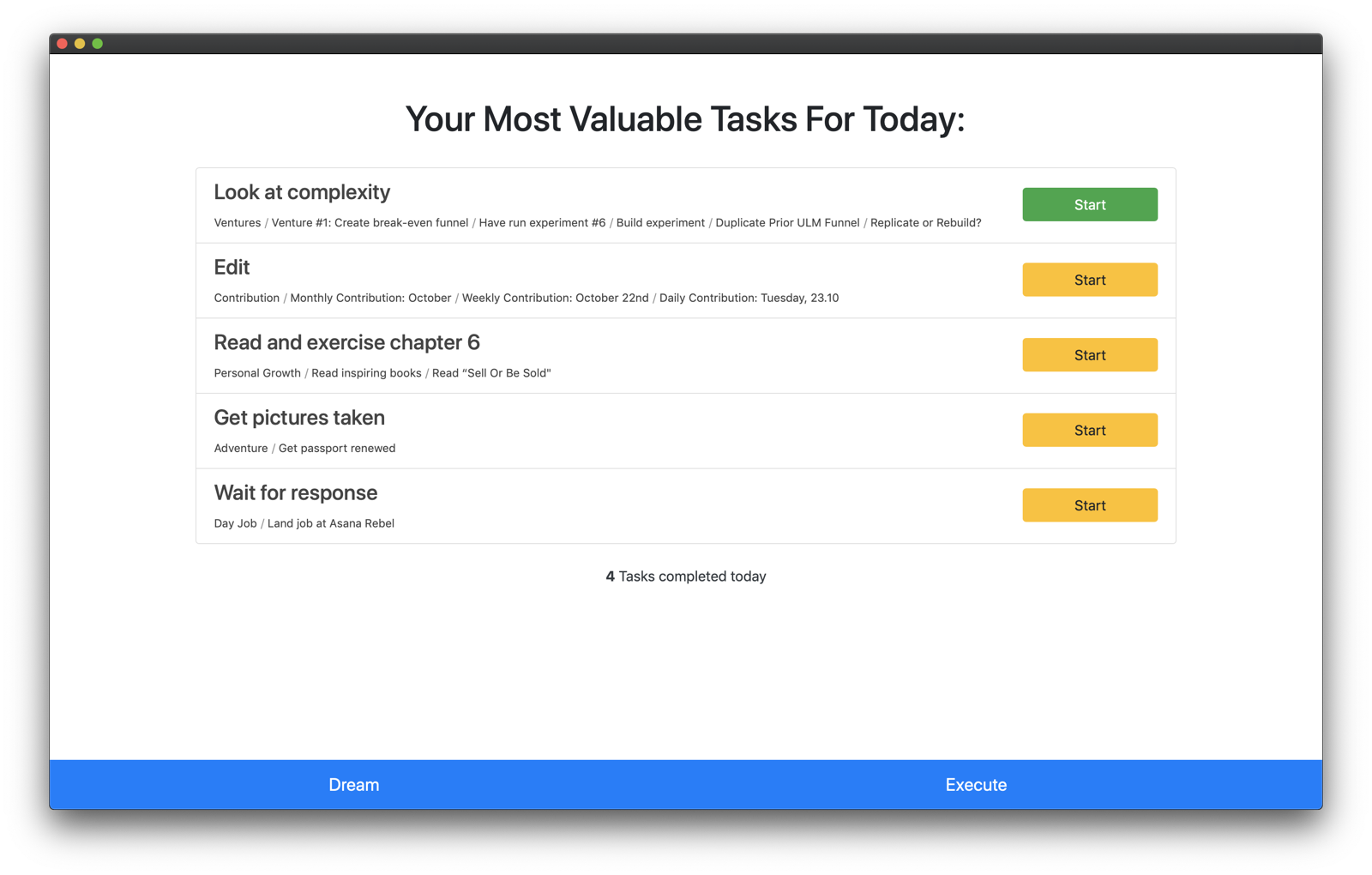
  3. “Execute.” That’s when I only want to see the most valuable tasks that I need to do right now. This is used daily.

So, here is what I came up with. Each tab represents one step in my workflow.

What I find particularly valuable is to have the Execute tab auto-generated based on my planning before. When I’m in execution mode I don’t want to think about anything except “What’s my next task?”

Dream… 

…Plan**…**

… and Execute!

As you can see, in Personal Development I’m test-driving this app.

IF it helps me move forward significantly better than my prior solution THEN it’s a success. Otherwise, the search continues.

But I can’t stress enough how much I enjoy having this one, single list of high-impact, high-value tasks generated for me (by me, too, during planning, but still…)

Well, I’m excited to see what happens. Either way, I’ll learn something new.

Currently Re-Reading: Malcom Gladwell's "David & Goliath"

It’s funny how, sometimes you can simply ‘ask’ your subconscious to pick the right book for you by just ‘mindlessly’ browsing your bookshelf. 

That exactly happened yesterday to me. I had just finished “A Moveable Feast” the day before and, since my new rule is to have no screen on after 8pm, I was ready to read something new. 

Just looking around, I quickly and without thinking picked out “David & Goliath” and within minutes of reading, I was hooked – again. I remember how much I enjoyed reading it a few years back (Maybe even while still in New York?) And, as magic will have it, It’s one of those stories that I can relate to very much at the moment.

So, I highly recommend it. 

A Moveable Feast

As part of my ongoing challenge to read every day, I recently re-discovered Hemingway’s “A Moveable Feast.” 

I picked it off my shelf the other day and couldn’t put it down. It’s a perfect book to get back into a daily reading habit because of its many short, beautifully-written chapters – or short-stories. It’s deeply personal and – maybe as a cliché 40-year old white man in the thick of his midlife-crisis – the stories pull all the right strings and hit all the right notes. 

I highly recommend you give it a spin.

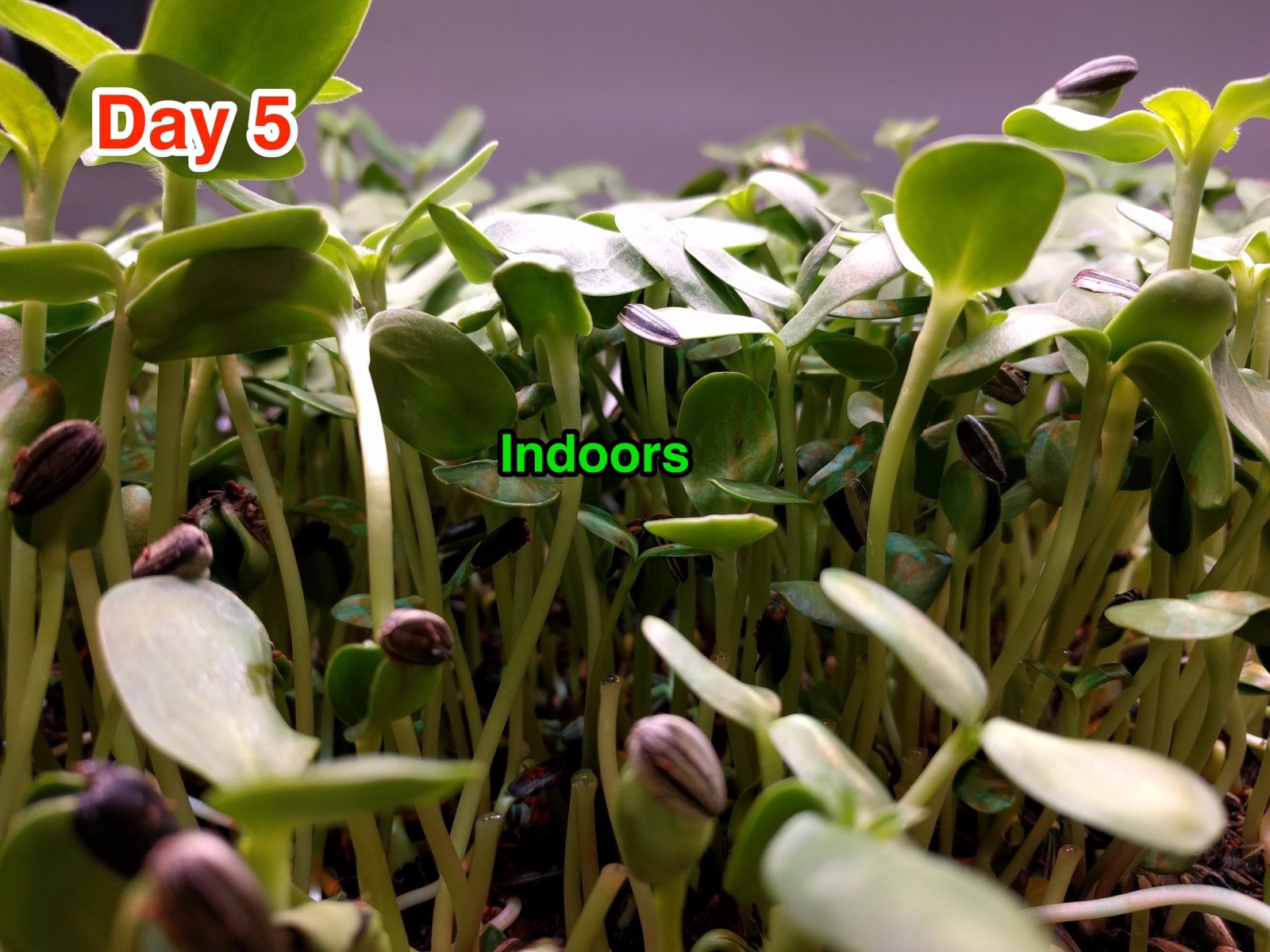
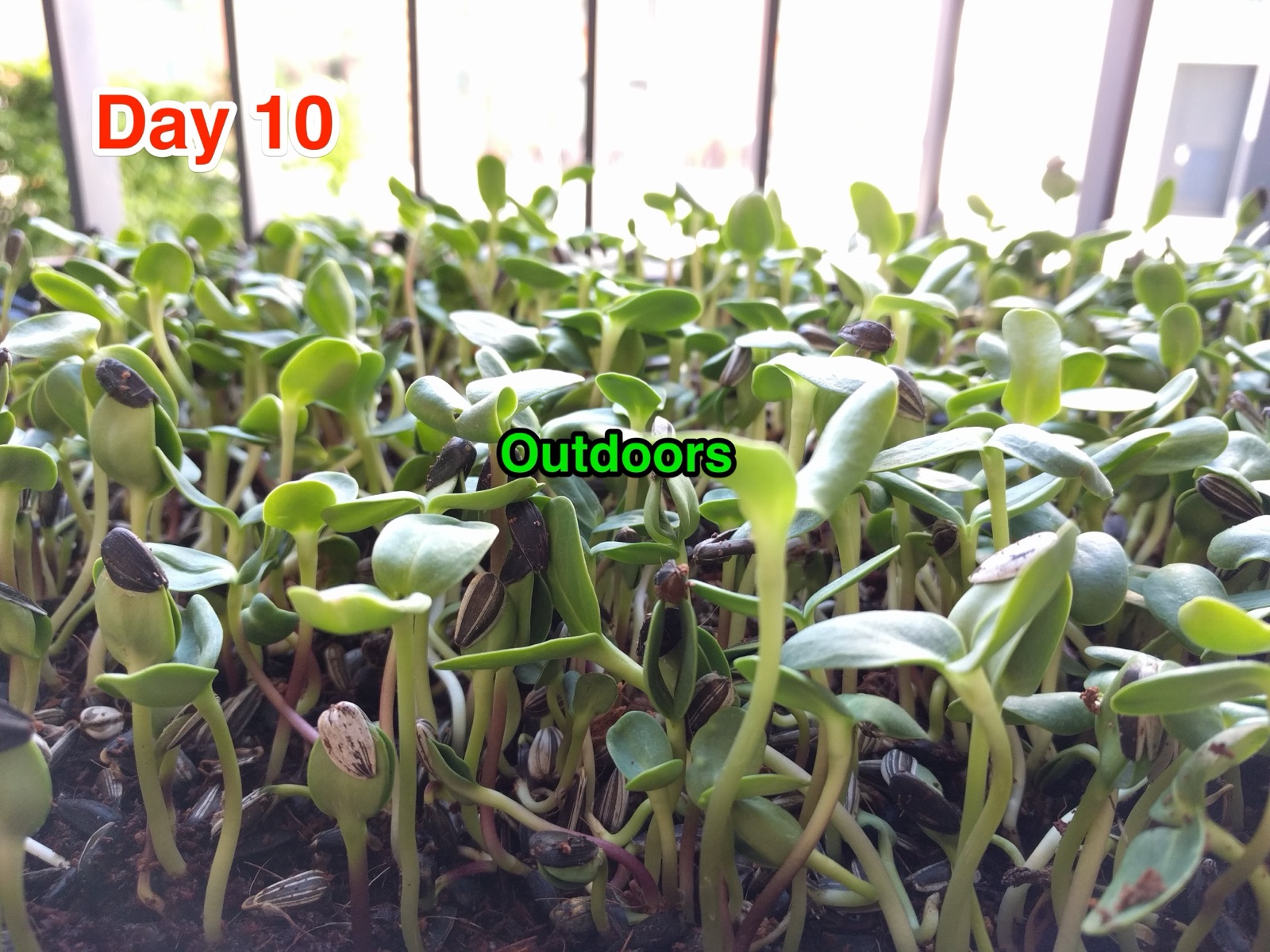
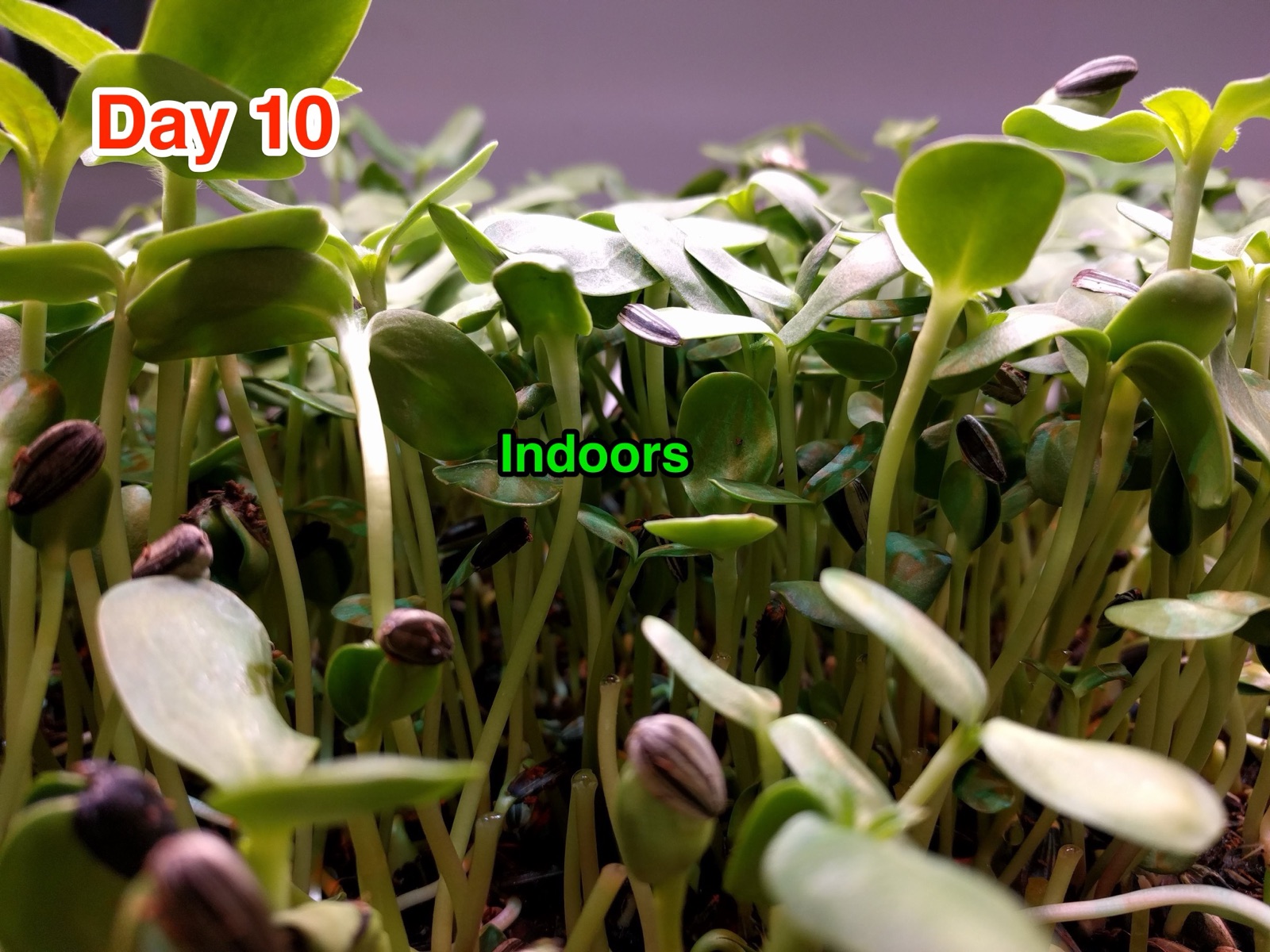
Microgreen Growth Experiment: Natural Sunlight vs. Indoor LED Light

This was an experiment I ran over the summer.

My question was if there was a significant difference in microgreen plant-growth from the light-source used.

My hypothesis was that sunflower microgreens will grow faster when using sun-light as opposed to growing them indoors under LED lamps.

Result

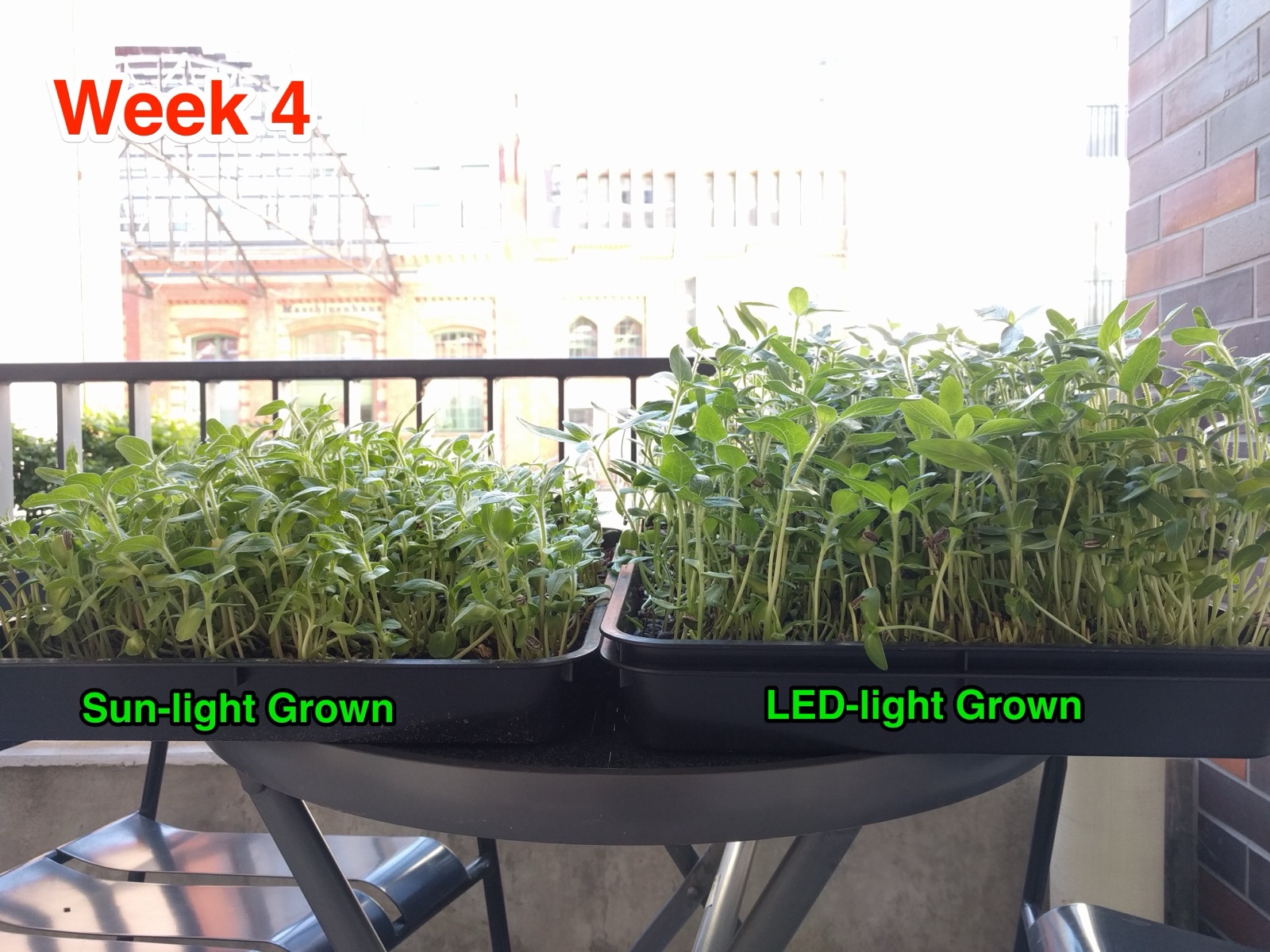
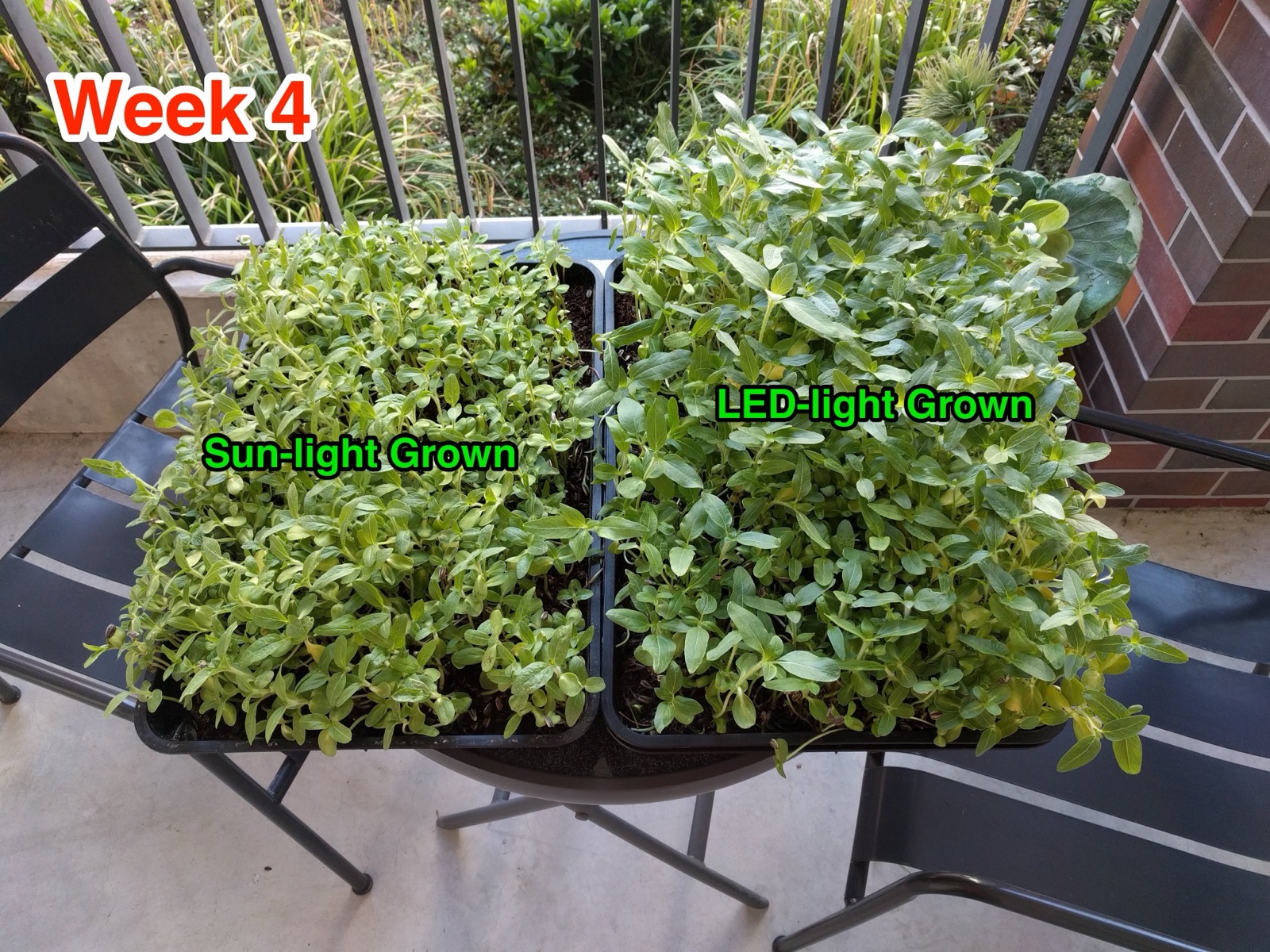
The result surprised me! I was wrong. In my experiment, the LED-grown sunflowers were significantly taller and faster growing. The LED-grown sunflowers also stayed ahead of the sun-light grown sunflower microgreens after I put them alongside the others on my balcony. The taste of indoor and outdoor plants was not noticeable.

Of course, you could say that because the LEDs are potentially weaker (I don’t know) than sun-light, the plants had to stretch much further quicker. That may totally be it. However, as a fan of eating the greens, I’m all for greens that grow bigger faster.

After about 4 weeks here is the result:

Experiment Setup

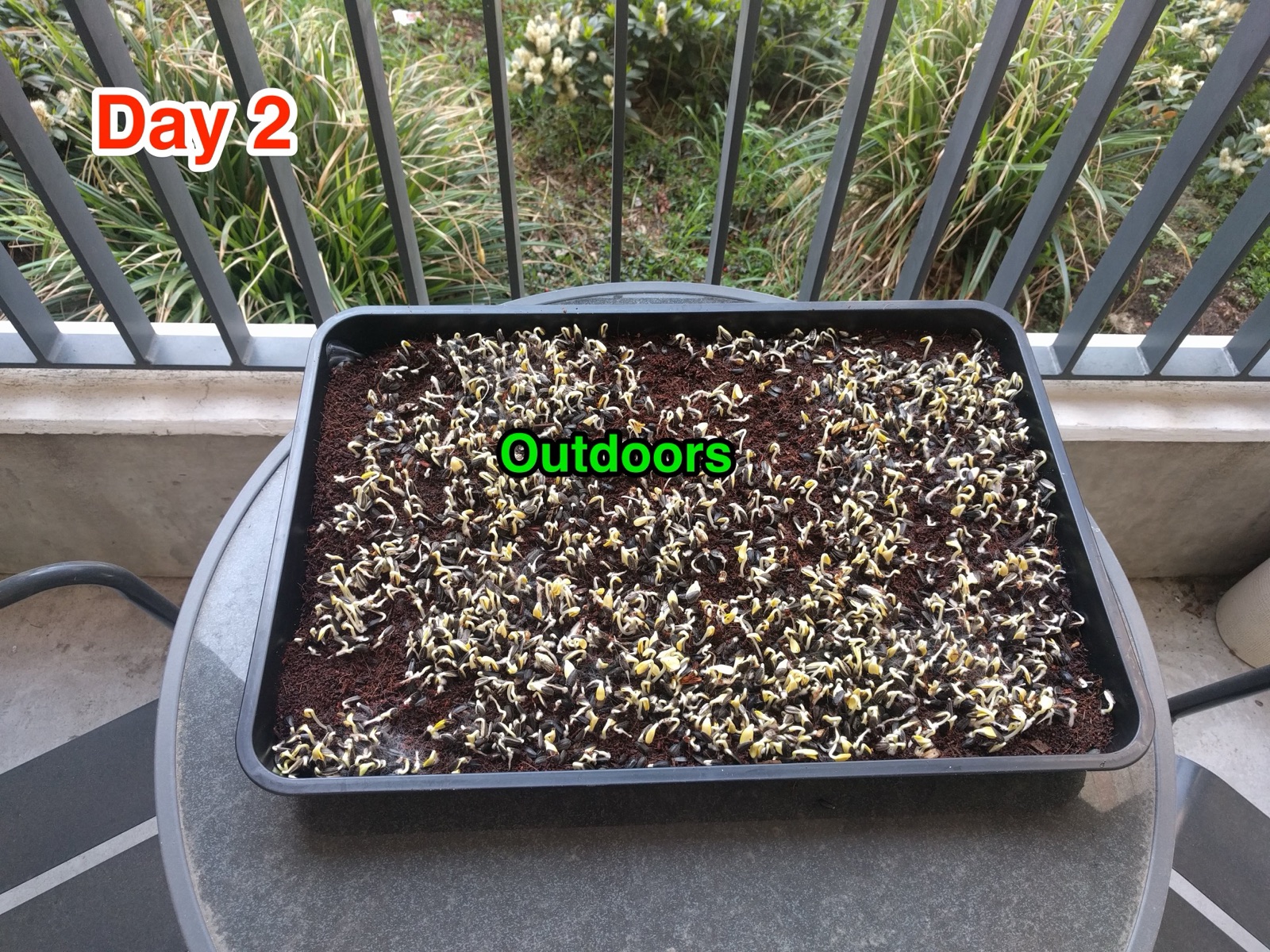
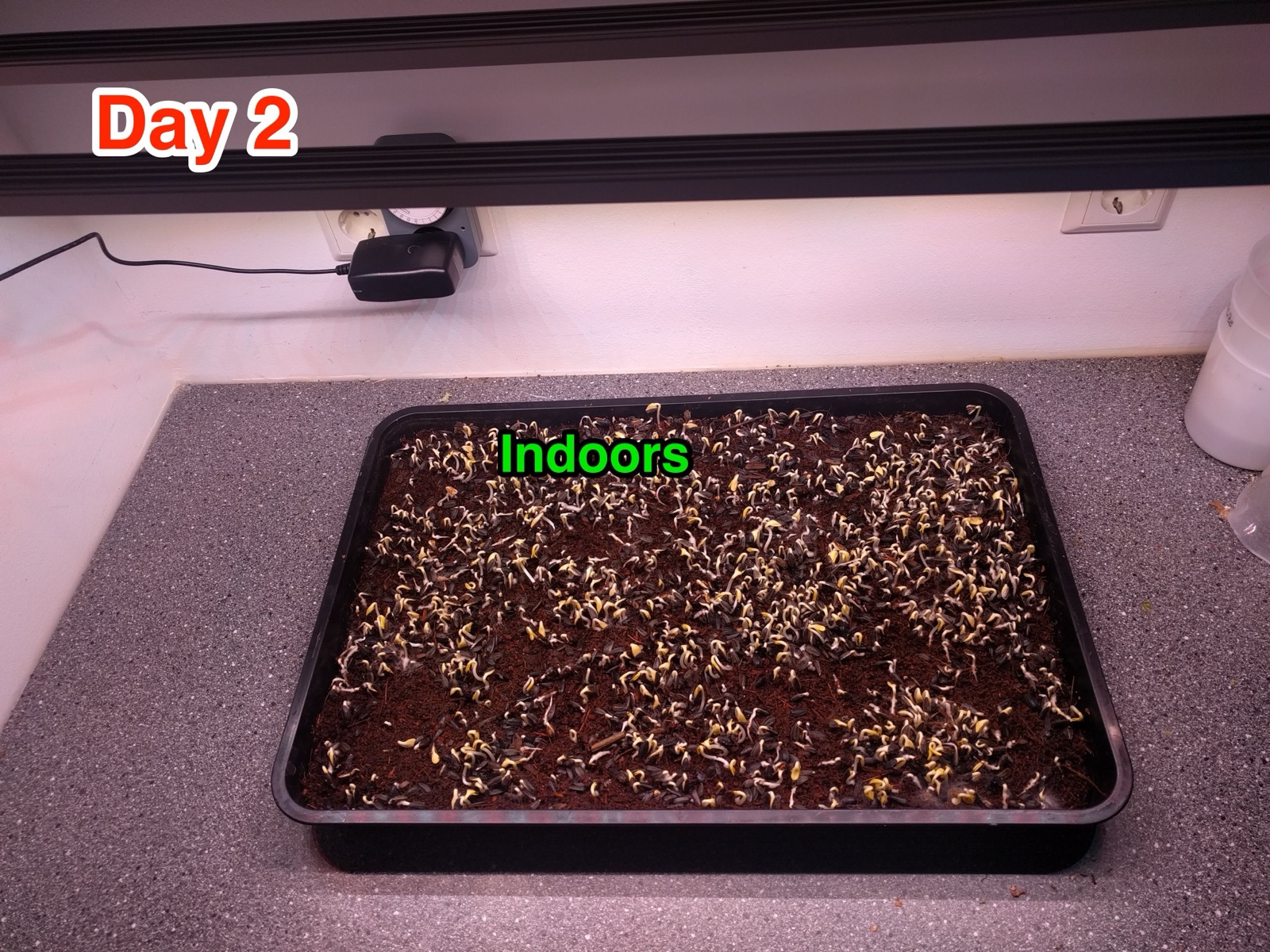
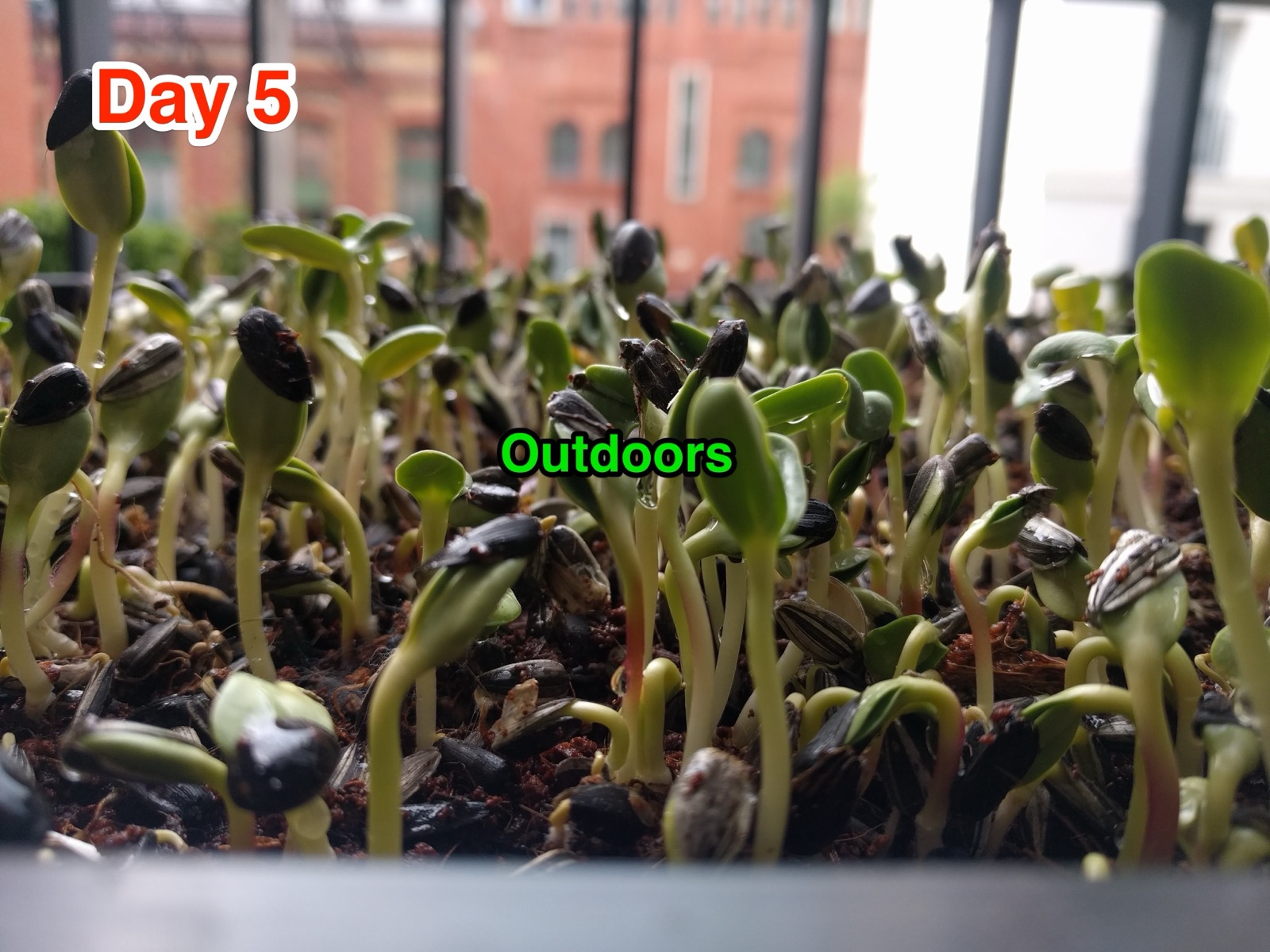
My setup was by no means 100% scientific. But I tried to start both growing pods out the exact same way:

  • Same seeds
  • Same amount of seeds
  • Same container
  • Same coconut-rind “soil” that I got from the supermarket.
  • Same germination process
  • Same germination time
  • Same amount of direct light per day ~10 hours
  • Same watering schedule

The difference in lighting was as follows:

  • For sun-light I used my south-facing balcony in the month of June.
  • For LED-light I used my 2 rows of SANLight Flex 20 Growth LEDs

Learnings

Well, first off I learned that my hypothesis was wrong and that the indoor plants grew and matured faster AND continued to keep that head-way until the end. As I mentioned before, there was no (to me) noticeable difference in taste.

Conclusion

Come next year I have already planned the next iteration of this experiment.

In the meantime I will enjoy growing my delicious sunflower microgreens at home, in the middle of the Winter, dreaming of Summer.

See Adventures in Indoor Farming – Growing Mung Bean Microgreens

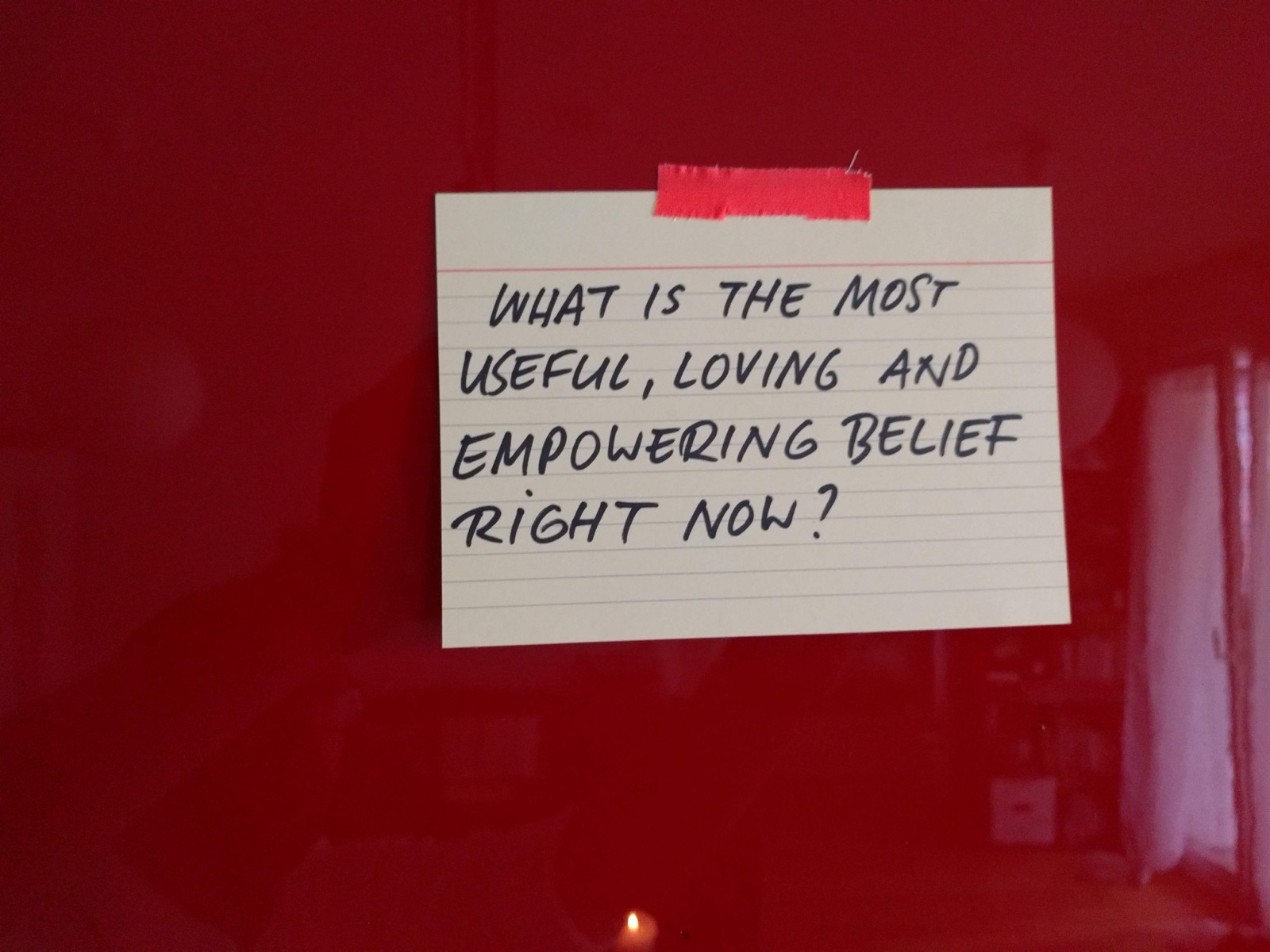
Ask Yourself: What is the most useful, loving and empowering belief I need right now?

I wanted to share this note I made with you because it has helped me take those ‘down’-moments, usually in-between tasks or activities to reflect and come up with empowering thoughts.

I found that asking this simple question “What is the most useful, loving and empowering belief I need right now?” allows my sub-conscious to come up with great answers. So instead of only rehearsing empowering beliefs once a day, this reminder helps me pick and choose the belief that I need at that moment.

It’s simple and very effective for me and maybe you can use it, too!