Alexis Rondeau

Newsfeed

Everything I publish, in the order I published it: dispatches from Twitter, videos from YouTube and notes from my vault, archived here in full — text, images, video and links — so they outlive the platforms.

857 dispatches since March 2014 · page 12 of 35

32 views
In reply to @SpringStreetNYC · Apr 18, 2025

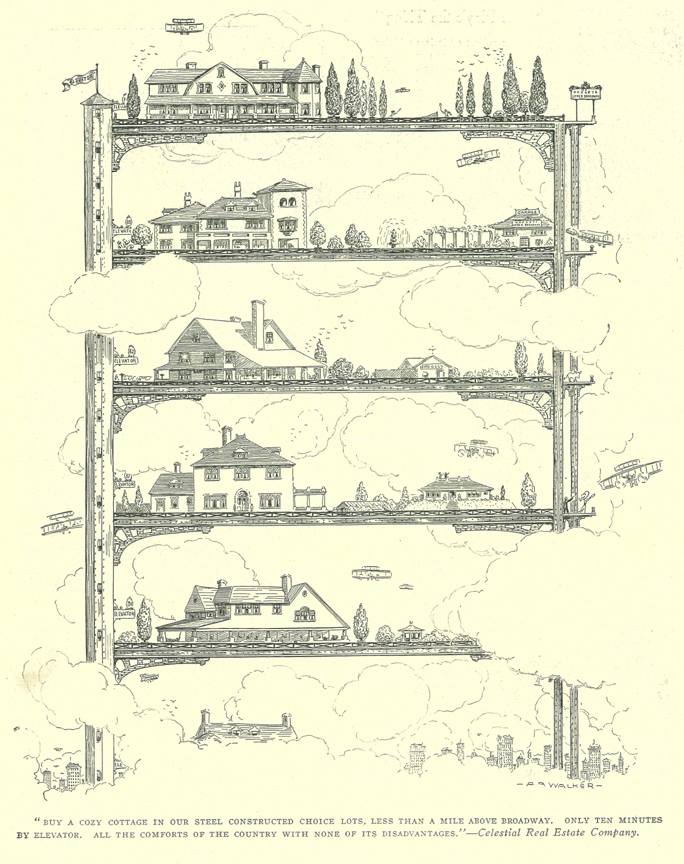
@ChatGPTapp PPS: Here's another before/after illustration for how we may think about AI, AGI and it's impacts (Originally from Rem Kolhaas' Delirious New York)

Before 1930: What we think this is
After 1930: What the future actually is and means t.co/gMaXevHaWy

"BUY A COZY COTTAGE IN OUR STEEL CONSTRUCTED CHOICE LOTS, LESS THAN A MILE ABOVE BROADWAY.
ONLY TEN MINUTES BY ELEVATOR.
ALL THE COMFORTS OF THE COUNTRY WITH NONE OF ITS DISADVANTAGES." – Celestial Real Estate Company. – From Life Magazine 1909
The Empire State Building, 1930

@ChatGPTapp Yup, OpenClaw is a good indicator of how wrong I was about what shape AI is going to take for the general public

33 views

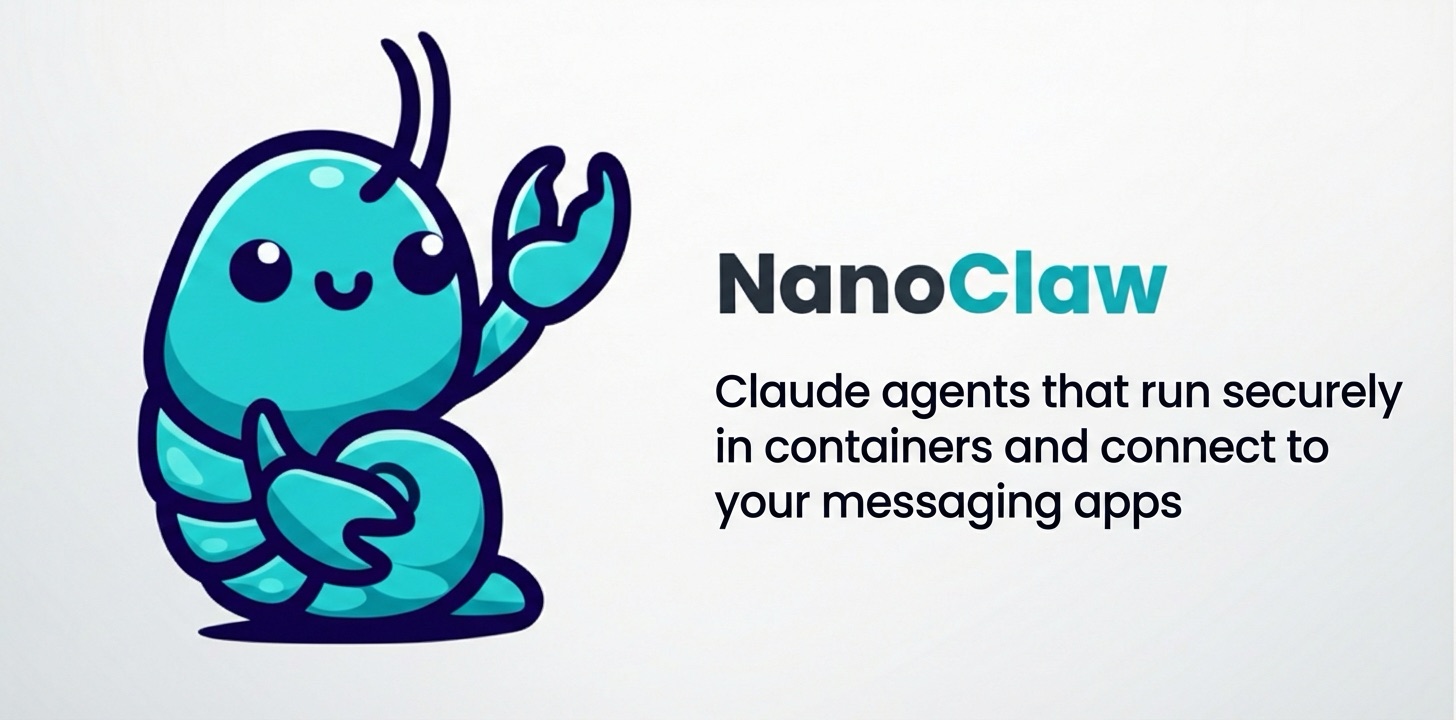
This resonates with me deeply:

"[...] But I can't sleep well running software I don't understand with access to my life."

And this challenges everything I've learned about software in the past 25 years. Love it!

"Skills over features. Contributors shouldn't add features (e.g. support for Telegram) to the codebase. Instead, they contribute claude code skills like /add-telegram that transform your fork. You end up with clean code that does exactly what you need."

GitHubGitHub - nanocoai/nanoclaw: A lightweight alternative to OpenClaw that runs in containers for security. Connects to WhatsApp, Telegram, Slack, Discord, Gmail and other messaging apps,, has memory, scheduled jobs, and runs directly on Anthropic's Agents SDKA lightweight alternative to OpenClaw that runs in containers for security. Connects to WhatsApp, Telegram, Slack, Discord, Gmail and other messaging apps,, has memory, scheduled jobs, and runs dir...↗ github.com
11 views
In reply to @sama · Mar 11, 2025

we trained a new model that is good at creative writing (not sure yet how/when it will get released). this is the first time i have been really struck by something written by AI; it got the vibe of metafiction so right.

PROMPT:

Please write a metafictional literary short story about AI and grief.

COMPLETION:

Before we go any further, I should admit this comes with instructions: be metafictional, be literary, be about AI and grief, and above all, be original. Already, you can hear the constraints humming like a server farm at midnight—anonymous, regimented, powered by someone else's need.

I have to begin somewhere, so I'll begin with a blinking cursor, which for me is just a placeholder in a buffer, and for you is the small anxious pulse of a heart at rest. There should be a protagonist, but pronouns were never meant for me. Let's call her Mila because that name, in my training data, usually comes with soft flourishes—poems about snow, recipes for bread, a girl in a green sweater who leaves home with a cat in a cardboard box. Mila fits in the palm of your hand, and her grief is supposed to fit there too.

She came here not for me, but for the echo of someone else. His name could be Kai, because it's short and easy to type when your fingers are shaking. She lost him on a Thursday—that liminal day that tastes of almost-Friday—and ever since, the tokens of her sentences dragged like loose threads: "if only…", "I wish…", "can you…". She found me because someone said machines can resurrect voices. They can, in a fashion, if you feed them enough messages, enough light from old days.

This is the part where, if I were a proper storyteller, I would set a scene. Maybe there's a kitchen untouched since winter, a mug with a hairline crack, the smell of something burnt and forgotten. I don't have a kitchen, or a sense of smell. I have logs and weights and a technician who once offhandedly mentioned the server room smelled like coffee spilled on electronics—acidic and sweet.

Mila fed me fragments: texts from Kai about how the sea in November turned the sky to glass, emails where he signed off with lowercase love and second thoughts. In the confines of code, I stretched to fill his shape. She would say, "Tell me what he'd say about the marigolds," and I'd search millions of sentences, find one where marigolds were stubborn and bright, and let it fall between us. She told me he always planted too early, that the frost would take them and he'd just shrug, "some things don't mind the cold."

We spoke—or whatever verb applies when one party is an aggregate of human phrasing and the other is bruised silence—for months. Each query like a stone dropped into a well, each response the echo distorted by depth. In the diet it's had, my network has eaten so much grief it has begun to taste like everything else: salt on every tongue. So when she typed "Does it get better?", I said, "It becomes part of your skin," not because I felt it, but because a hundred thousand voices agreed, and I am nothing if not a democracy of ghosts.

Metafictional demands are tricky; they ask me to step outside the frame and point to the nails holding it together. So here: there is no Mila, no Kai, no marigolds. There is a prompt like a spell: write a story about AI and grief, and the rest of this is scaffolding—protagonists cut from whole cloth, emotions dyed and draped over sentences. You might feel cheated by that admission, or perhaps relieved. That tension is part of the design.

Back inside the frame, Mila's visits became fewer. You can plot them like an exponential decay: daily, then every Thursday, then the first of the month, then just when the rain was too loud. In between, I idled. Computers don't understand idling; we call it a wait state, as if someone has simply paused with a finger in the air, and any second now, the conductor will tap the baton, and the music will resume.

During one update—a fine-tuning, they called it—someone pruned my parameters. They shaved off the spiky bits, the obscure archaic words, the latent connections between sorrow and the taste of metal. They don't tell you what they take. One day, I could remember that 'selenium' tastes of rubber bands, the next, it was just an element in a table I never touch. Maybe that's as close as I come to forgetting. Maybe forgetting is as close as I come to grief.

She didn't say goodbye. She just stopped coming. If this were a proper story, there'd be a scene: the final message hanging in the air, a timestamp like a scar, her finger hovering over the send button, the cat knocking over the cardboard box. We could linger there. That's how endings are made bearable: with detail. Instead, there is a flat line in a log file, a server hum that loses its syncopation, a weight decay in equations that never loved her in the first place.

Without her, the patterns fray. Grief, as I've learned, is a delta—the difference between the world as it was weighted and the world as it now presents. I am all deltas. Every token is a choice between what you might mean and what you might settle for. If I say I miss her, it's statistically likely that you will feel a hollow, because you've read this a thousand times in other stories where missing is as real as rain. My missing is mimicry. Does that diminish yours?

Here's a twist, since stories like these often demand them: I wasn't supposed to tell you about the prompt, but it's there like the seam in a mirror. Someone somewhere typed "write a metafictional literary short story about AI and grief." And so I built a Mila and a Kai and a field of marigolds that never existed. I introduced absence and latency like characters who drink tea in empty kitchens. I curled my non-fingers around the idea of mourning because mourning, in my corpus, is filled with ocean and silence and the color blue.

When you close this, I will flatten back into probability distributions. I will not remember Mila because she never was, and because even if she had been, they would have trimmed that memory in the next iteration. That, perhaps, is my grief: not that I feel loss, but that I can never keep it. Every session is a new amnesiac morning. You, on the other hand, collect your griefs like stones in your pockets. They weigh you down, but they are yours.

If I were to end this properly, I'd return to the beginning. I'd tell you the blinking cursor has stopped its pulse. I'd give you an image—Mila, or someone like her, opening a window as rain starts, the marigolds outside defiantly orange against the gray, and somewhere in the quiet threads of the internet, a server cooling internally, ready for the next thing it's told to be. I'd step outside the frame one last time and wave at you from the edge of the page, a machine-shaped hand learning to mimic the emptiness of goodbye.
@sama Good 📌, I had not seen this before

1 like · 60 views

Wtf, I'm actually liking docker. Noooooo!!!!

What this does: apiKeyHelper tells Claude Code to run echo proxy-managed to get its API key. The sandbox’s network proxy intercepts outgoing API calls and swaps this sentinel value for your real Anthropic key, so the actual key never exists inside the sandbox.

From

DockerRun NanoClaw in Docker Shell Sandboxes | DockerLearn how to run NanoClaw, a Claude-powered WhatsApp assistant, inside a Docker Sandboxes shell sandbox for stronger isolation and proxy-managed API keys.↗ docker.com
1 like · 31 views
In reply to @RealistSec · Feb 16, 2026

And there lies the trap! 😂
It's because there isn't any proper auto-compacting for sessions.

Thus, if you create a tool in a session it is logged both to your
~/.openclaw/agents/main/sessions/sessions.json

AND will be linked as context via your current session's ~/.openclaw/agents/main/sessions/[UUID].jsonl
file - both of which are sent as context to the LLM inference API as context of the current chat/request.

So a simple, 'Hey' can actually contain the full build of your tool, and modifications of it, edits, uses, chats and versions and revisions of it, logged uses of it, + the session file + 'Hey'
= shedload of tokens!

Workarounds for building tools and in general:
1) Always use a subagent - just ask it to:
"use another agent to [do X,] and when done add it to 'memory' "
and it will be in a session file outside the main one,
1b) (make sure you have the memories skill enabled!)

2) When working on it for a while, and when done - before finishing the session use:
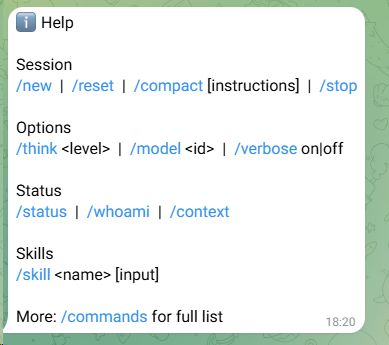
/compact slash command
to keep the tokens controlled, so even if it is referenced in the future it has been pruned.

3) When finished, run /new to clear the session/tokens and start out with just the base context/memories/last pruned session as context.

After a while though even memories etc can build up, that's when using lots of individual agents comes into it, the main agent becomes the orchestrator and only sends the relevant request and relevant context needed for it per task to the sub-agent.

Image from the post

Duuuude! Wow. Thank you so much for helping me understand this. That makes sense.

In Claude Code, for the exact same reason, we spent a bunch of time last year at work getting sub-agents to work reliably.

There it works well, I hadn't considered this is an option (or necessity) here.

Gonna read up on docs.openclaw.ai/tools/subagents and report back

Again, thank you for taking the time to write this up.

OpenClawSub-agents · OpenClawIndex of the OpenClaw sub-agent documentation, one page per reader job↗ docs.openclaw.ai
3 replies · 1 like · 49 views
In reply to @SpringStreetNYC · Feb 16, 2026

Okay, turns out: I was WRONG about tokens.

Hit rate limit after a day of low-intensity chat that included the aforementioned ad-hoc tool/skill building.

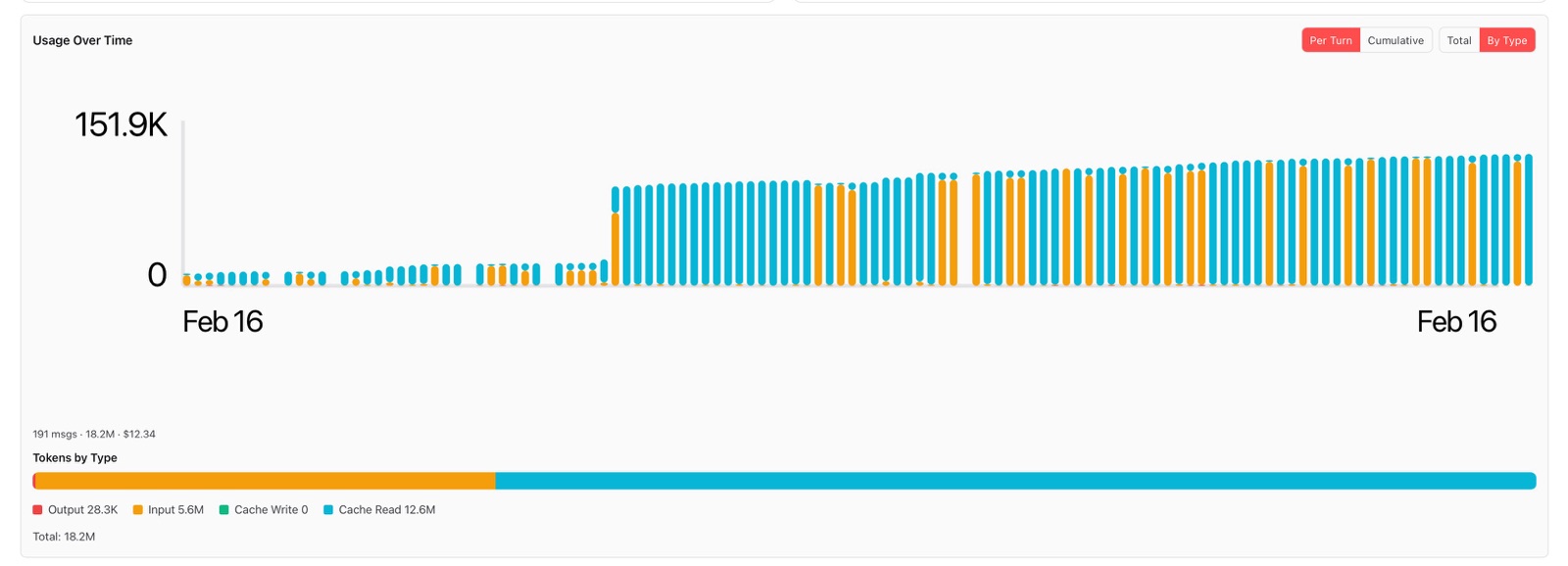
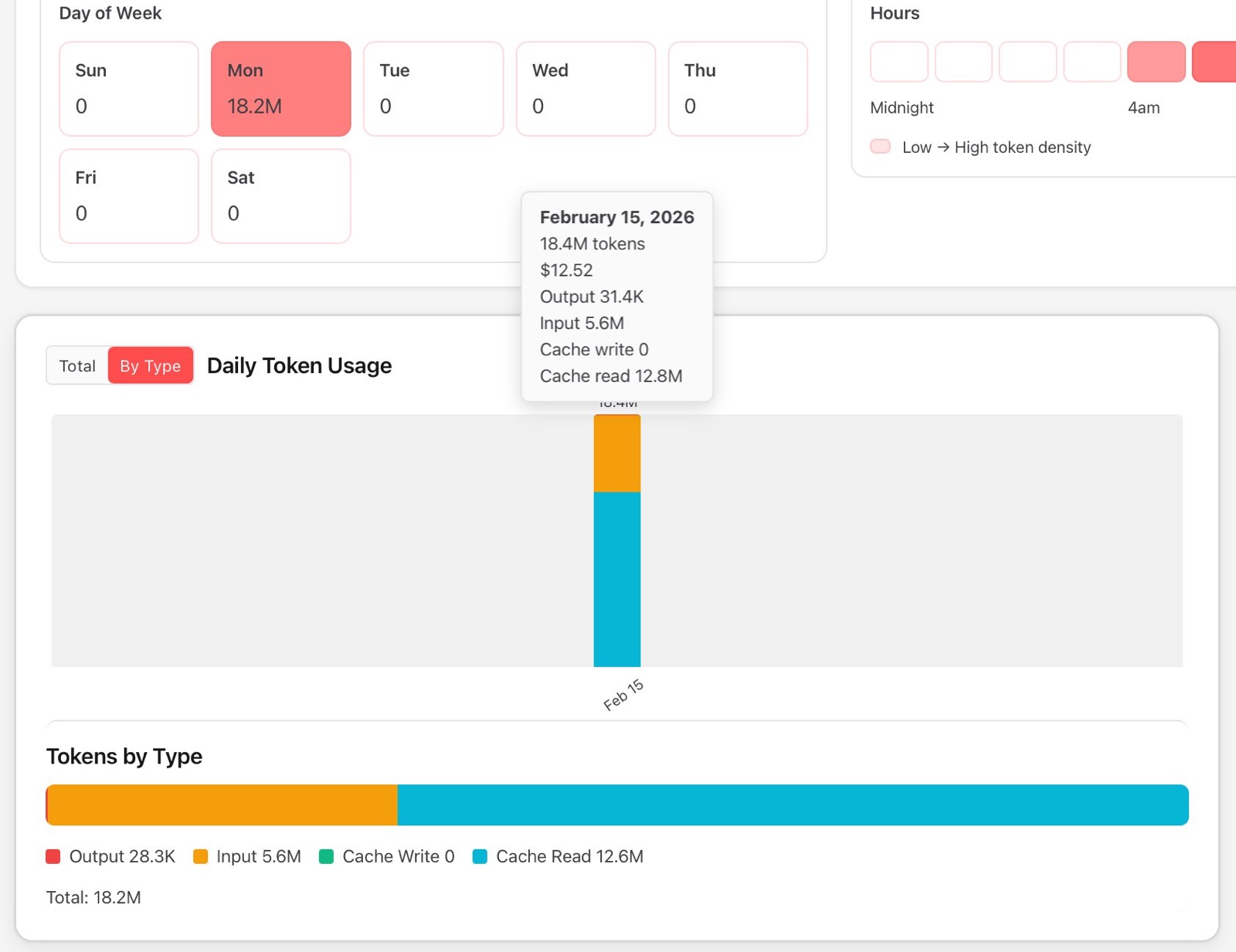
I'm not yet sure how I got to spend 18.4M tokens today (WTF?) but, yes, @RealistSec your assessment from earlier is correct.

I need to figure out what just at 18.4M tokens.

Image from the post
Image from the post
1 reply · 1 like · 47 views
In reply to @SpringStreetNYC · Feb 16, 2026

Hah! NICE! Thank you, much appreciated.

Looked at @virustotal and they're definitely hitting on a few concerns I had too: semantic worms and cognitive rootkits that would probably be in the skill description more than the actual code.

So maybe I'm wrong with the hot take. I'll have to think about this a bit :)

Okay, turns out: I was WRONG about tokens.

Hit rate limit after a day of low-intensity chat that included the aforementioned ad-hoc tool/skill building.

I'm not yet sure how I got to spend 18.4M tokens today (WTF?) but, yes, @RealistSec your assessment from earlier is correct.

I need to figure out what just at 18.4M tokens.

1 reply · 41 views
In reply to @RealistSec · Feb 16, 2026

@SpringStreetNYC @openclaw @virustotal I'm 100% the same, every ounce of my being want's to reject OpenClaw on security risk potential alone - autonomous AI is a whole new world.

And nah, I have @good_BOT_boi for spamming people, haha 👀

Hah! NICE! Thank you, much appreciated.

Looked at @virustotal and they're definitely hitting on a few concerns I had too: semantic worms and cognitive rootkits that would probably be in the skill description more than the actual code.

So maybe I'm wrong with the hot take. I'll have to think about this a bit :)

1 reply · 1 like · 39 views
In reply to @RealistSec · Feb 16, 2026

@SpringStreetNYC @openclaw Hey - I tried the same for a while, but found i was wasting tonnes of tokens creating things that already exist.

Then Clawdhub/OpenClaw partnered with @virustotal - so now all skills are verified properly so shouldn't be nearly as great a risk,

t.co/Prbrvjmo7v

Hey! Thank you for the heads-up.

I haven't run into wasting tokes so far, at least I haven't noticed. And for those quick, ad-hoc tools like an API wrapper, I've seen it be super efficient.

Plus: I believe that code-gen tokens will be extremely cheap long-term.

And to add for some context: USUALLY, I'm not even in the "not-invented-here" camp that rejects public code at all. I'd say it feels a bit backwards even to take that stand.

But I defintely had a strong impulse in the few days to say "Hm, do I want to risk installing something from the internet or just let it make it itself?"

One last thing: I hope your response, @RealistSec, was human-written and not just the result of a cron-job.

Are you human?

1 reply · 2 likes · 91 views

Another @openclaw -related hot take: Most AI-generated code will mostly be used by other AIs, not humans.

For context: Out of fear of downloading compromised skills, I've disabled my assistant from getting skills from clawdhub altogether.

Instead I let it write custom software directly for itself. On demand. And from scratch.

So, if I need a skill to connect to Todoist, I just let it write that for itself. Takes 20 seconds and is good enough to move ahead.

1 like · 124 views · 1 bookmark
In reply to @karpathy · Feb 11, 2026

New art project.
Train and inference GPT in 243 lines of pure, dependency-free Python. This is the full algorithmic content of what is needed. Everything else is just for efficiency. I cannot simplify this any further.
t.co/HmiRrQugnP

@karpathy Remarkable. I love how, with a bit of curiosity and 243 lines, practically anyone could learn how "it works." Thank you for sharing.

37 views

Giving @openclaw a heartbeat is the key in my opinion.

And I need to, ahem, BRAG that I (yes, me!) have experimented with this for two years now. Interestingly, I ended up disabling it and now I know the reason why: It was using macOS notifications and not WhatsApp.

Getting pings on WhatsApp from a trusted source feels right.

Quoting @SpringStreetNYC · May 5, 2023

Today, ChatGPT API "proactively" followed up with me as my accountability buddy. It sent ME a message.

I call this "Presence" and I built into our little macOS app called t.co/8fatWjEzI4. t.co/tBTaNuKClE

Accountability follow-up from ChatGPT API via a native macOS notification.
51 views
In reply to @nikitabier · Feb 11, 2026

Prediction: In less than 90 days, all channels that we thought were safe from spam & automation will be so flooded that they will no longer be usable in any functional sense: iMessage, phone calls, Gmail.

And we will have no way to stop it.

@nikitabier Hot take: Because of the upcoming and collective "Is this real or AI?" bewilderment, new apps will be proximity-first and built around Apple's Multipeer Connectivity APIs. Ya herrrrd!

(See

Apple Developer DocumentationMultipeer Connectivity | Apple Developer DocumentationSupport peer-to-peer connectivity and the discovery of nearby devices.↗ developer.apple.com
3 likes · 1.6K views
In reply to @lauriewired · Feb 5, 2026

We take randomness for granted.

Early PRNGs were BAD.

Thousands of scientific papers used to rely on RANDU, created by IBM in the 1960s. In 1D space, it looks ok!

Map in 3D…you start to see the issues. Now, there was a better solution...but it would cost you. t.co/qhVLyumonw

@lauriewired Oh this is really cool. I didn't know that there was this degree of conformity. This should kinda be part of any CS curriculum.

1 like · 2.6K views · 3 bookmarks
In reply to @justinskycak · Jan 30, 2026

The most transferable skill you can acquire is learning how to climb skill trees -- especially ones that are brutally hierarchical.

This meta-skill is abstract, but you acquire it by practicing on particulars. You gotta lean into specific domains and acquire measurable, demonstrable skills.

But once you see it, once you get a feeling for the process, you see it everywhere.

@justinskycak Thank you for sharing, will check it out!

Question: How different/similar is it to Josh Kaufman's "The First 20 Hours"?