Everything I publish, in the order I published it: dispatches from Twitter, videos from YouTube and notes from my vault, archived here in full — text, images, video and links — so they outlive the platforms.
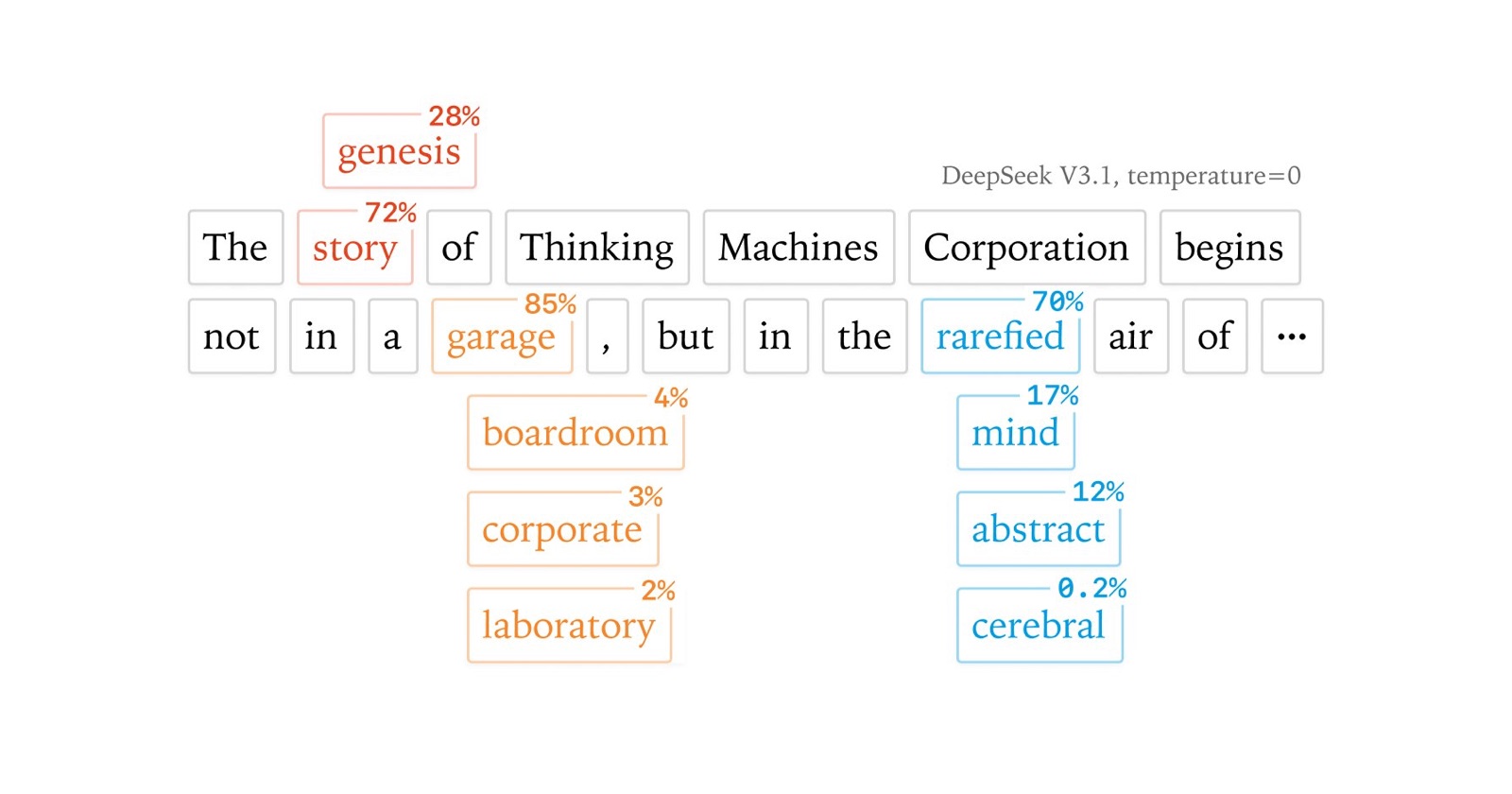
Today Thinking Machines Lab is launching our research blog, Connectionism. Our first blog post is “Defeating Nondeterminism in LLM Inference”
We believe that science is better when shared. Connectionism will cover topics as varied as our research is: from kernel numerics to prompt engineering. Here we share what we are working on and connect with the research community frequently and openly.
The name Connectionism is a throwback to an earlier era of AI; it was the name of the subfield in the 1980s that studied neural networks and their similarity to biological brains.
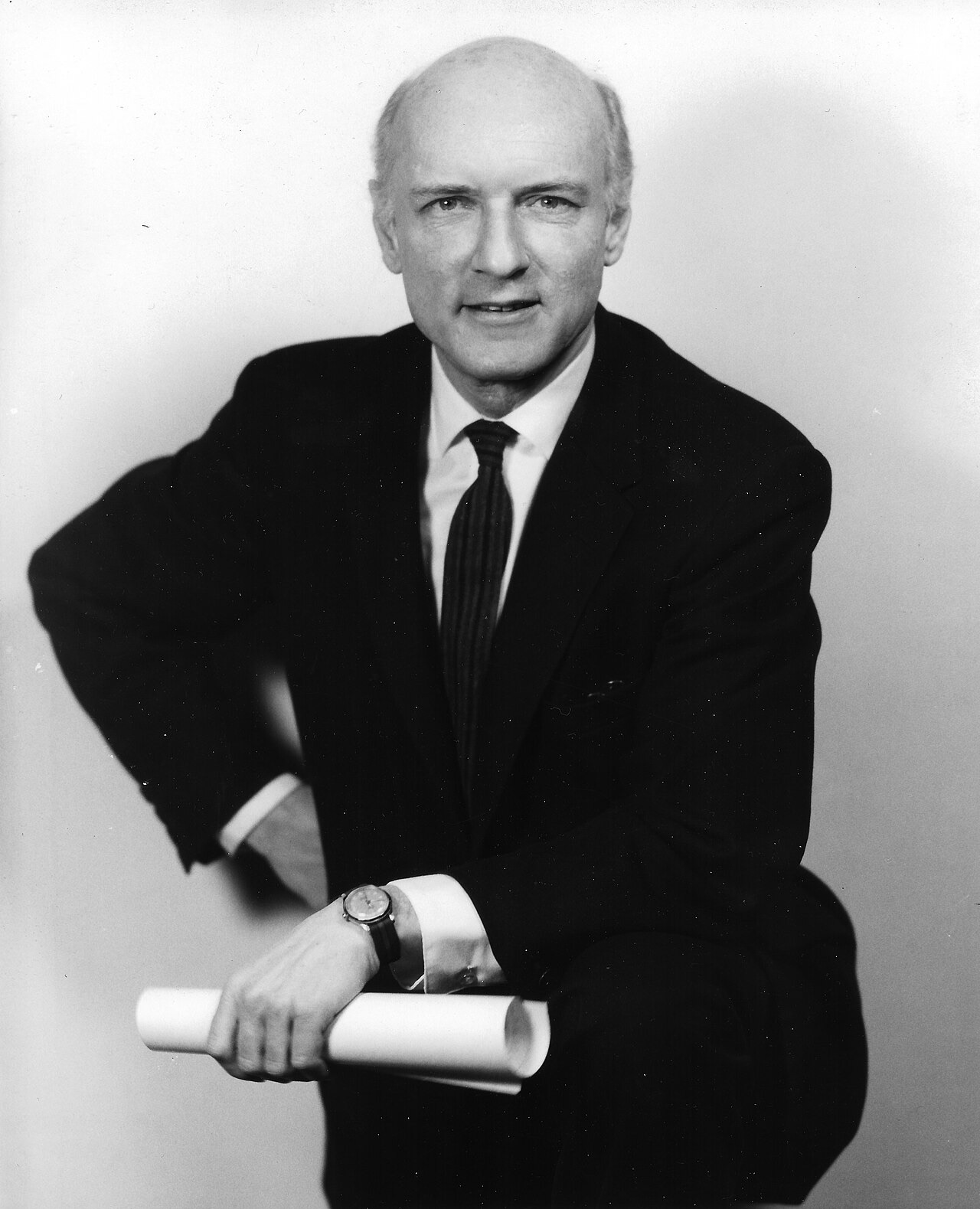
Hah! Even before reading this, I had to think of Heinz von Foerster's talk "2 x 2 = grün" (2 x 2 = green) in which he describes deterministic vs. non-deterministic automata.
His work in second-order cybernetics and later, "the area of self-organizing systems, bionics, and bio-inspired computing; that is, analyzing, formalizing, and implementing biological processes using computers" at BCL feel primordial-soupy to Connectivism.
tldr; @lovable helped her build an app. It helped me find compassion.
This week, my wife built her first app using Lovable. She finally felt what it’s like to get lost in the bliss of creating digital products, and I finally felt what it’s like to be outside of a loved one’s creative process.
For context:
My wife is an executive leadership coach. Her work is in-person, relationship-focused, and non-technical.
I’m a software engineer with 25 years of experience, and for me, making new things has always meant quality time with myself and learning.
But… The love for making things also put pressure on our relationship:
When I got absorbed in coding personal projects, I would vanish for hours, often days, hyper-focused, even thinking about the problem when off-screen.
So, even though I was physically “there,” my wife experienced absence.
She couldn’t understand why I poured so much energy into these side projects. And then my attempts to show her “the latest version” usually made things worse for her: too excited, too technical, too too hard to follow. And then, of course, I would feel misunderstood and alienated in turn. Yeah.
This week, something shifted. For the first time, my wife built her own app—with Lovable. She got hooked. She disappeared for hours, making, testing, playing around, chasing down bugs, refining features, obsessing over details.
Two days ago she sent me this:
“[…] since yesterday, the automatic cataloging of the photos and the recommendation engine have already been fundamentally improved, but right now the database integration is a bit buggy.”
I couldn’t believe it. She had stepped into my world of making. And I had stepped into her world of waiting, standing outside, feeling the distance, rooting for her and at the same time wondering when she’d come back.
That role reversal gave us what years of explaining never could: perspective and empathy.
She now knows what it feels like to lose yourself in digital creation. I now know what it feels like to be left “outside” of it.
Yesterday and today we’ve reflected on this change in perspectives. I feel much more understood in my love for making and I feel a deeper understanding for how my deep-dives felt for her.
Thank you Lovable!
PS: One a side-note, I’m also in awe. In just three days, she fully iterated on her idea and built a solid product with actual non-trivial technology. I say this as someone who’s been doing this for 25 years: her app is getting really, really good.
@lovable PPS: Bumping in hope to hear if others have had similar issues or experiences regarding pre- and post-AI vibe-coding deep dives. @lovable has this come up at all on your radar?
i never took the dead internet theory that seriously but it seems like there are really a lot of LLM-run twitter accounts now
My personal analogy: The Internet today is now what TV became in 1999. And AI today is now what the Internet became in 1999. TV didn't go away but it was clearly and instantly relegated to second choice. The Internet felt more trustworthy and real. I wish I could put this more succinctly but, alas.
tldr; @lovable helped her build an app. It helped me find compassion.
This week, my wife built her first app using Lovable. She finally felt what it’s like to get lost in the bliss of creating digital products, and I finally felt what it’s like to be outside of a loved one’s creative process.
For context:
My wife is an executive leadership coach. Her work is in-person, relationship-focused, and non-technical.
I’m a software engineer with 25 years of experience, and for me, making new things has always meant quality time with myself and learning.
But… The love for making things also put pressure on our relationship:
When I got absorbed in coding personal projects, I would vanish for hours, often days, hyper-focused, even thinking about the problem when off-screen.
So, even though I was physically “there,” my wife experienced absence.
She couldn’t understand why I poured so much energy into these side projects. And then my attempts to show her “the latest version” usually made things worse for her: too excited, too technical, too too hard to follow. And then, of course, I would feel misunderstood and alienated in turn. Yeah.
This week, something shifted. For the first time, my wife built her own app—with Lovable. She got hooked. She disappeared for hours, making, testing, playing around, chasing down bugs, refining features, obsessing over details.
Two days ago she sent me this:
“[…] since yesterday, the automatic cataloging of the photos and the recommendation engine have already been fundamentally improved, but right now the database integration is a bit buggy.”
I couldn’t believe it. She had stepped into my world of making. And I had stepped into her world of waiting, standing outside, feeling the distance, rooting for her and at the same time wondering when she’d come back.
That role reversal gave us what years of explaining never could: perspective and empathy.
She now knows what it feels like to lose yourself in digital creation. I now know what it feels like to be left “outside” of it.
Yesterday and today we’ve reflected on this change in perspectives. I feel much more understood in my love for making and I feel a deeper understanding for how my deep-dives felt for her.
Thank you Lovable!
PS: One a side-note, I’m also in awe. In just three days, she fully iterated on her idea and built a solid product with actual non-trivial technology. I say this as someone who’s been doing this for 25 years: her app is getting really, really good.
If I we’re 20 years old in 1945 there’s a chance I’d have 4 confirmed kills in the Pacific Theater.
Each generation carries a burden. But man we do have it good today compared others. t.co/CehYdgcZJh
@thesamparr My grandfather landed in Okinawa April 1945, GI, 69th Infantry Regiment. Having had only third-hand accounts of his experience, how did you calculate your chances?
cc'ing @emollick and @ryancarson: 20 years later, "Air" by @geoffryman feels surprisingly more urgent and nuanced in explaining the before and after of the global AI rollout.
Air is the story of a town's fashion expert Chung Mae, a smart but illiterate peasant woman in a small village in the fictional country of Karzistan (loosely based on the country of Kazakhstan), and her suddenly leading role in reaction to dramatic, worldwide experiments with a new information technology called Air.
Air is information exchange, not unlike the Internet, that occurs in everyone's brain and is intended to connect the world. After a test of Air is imposed on Mae's unprepared mountain town, everyone and everything changes, especially Mae who was deeper into Air than any other person.
Afterwards, Mae struggles to prepare her people for what is to come while learning all about the world outside her home.
PS: @geoffryman – I'm currently re-reading your book and just wanted to say:
Wow. Air is even better than I remembered. On pretty much every level: Story, characters, momentum, unexpected segways and new horizons. It's a really, really good book.
cc'ing @emollick and @ryancarson: 20 years later, "Air" by @geoffryman feels surprisingly more urgent and nuanced in explaining the before and after of the global AI rollout.
Air is the story of a town's fashion expert Chung Mae, a smart but illiterate peasant woman in a small village in the fictional country of Karzistan (loosely based on the country of Kazakhstan), and her suddenly leading role in reaction to dramatic, worldwide experiments with a new information technology called Air.
Air is information exchange, not unlike the Internet, that occurs in everyone's brain and is intended to connect the world. After a test of Air is imposed on Mae's unprepared mountain town, everyone and everything changes, especially Mae who was deeper into Air than any other person.
Afterwards, Mae struggles to prepare her people for what is to come while learning all about the world outside her home.
@TheLewisW Agreed, and I believe, inversely true: Slow growth? Stop being vibe-driven. Clients want to see what's in it for them, not what you're doing on the weekends with your family.
i got a lot to learn, my churn is way to high and i need to understand my customers better than i do now. i built @postbridge_ just for me but its a lot more than that now…
if you signed up for post bridge: can you tell me WHY? what drove you to it? t.co/h3yXp5yjga
my churn is way to high
if you signed up for post bridge: can you tell me WHY? what drove you to it?
I can tell you what drove me away: When you suddenly switched to building a food app. Postbridge was a solid MVP but without focus it felt stale quickly.
Note: I've made the exact same mistake in the past.
@SpringStreetNYC@SejalSud Based on mutual connections and engagement data, the most famous person to visit your profile is Ryan Carson, CEO and founder who built and sold 3 startups, with over 152K followers.
@ECMAScript4 the engineering culture moved to the US to build bombs and rockets decades ago
what’s left there is bureaucratic hellholes full of deeply unoptimized public organizations where most people don’t really do any work, and dirty streets