Alexis Rondeau

#personal-projects

9 dispatches tagged personal-projects

Mosey: Walks that start themselves — the world's longest-lived people don't exercise. They simply get up and move every 20 minutes.

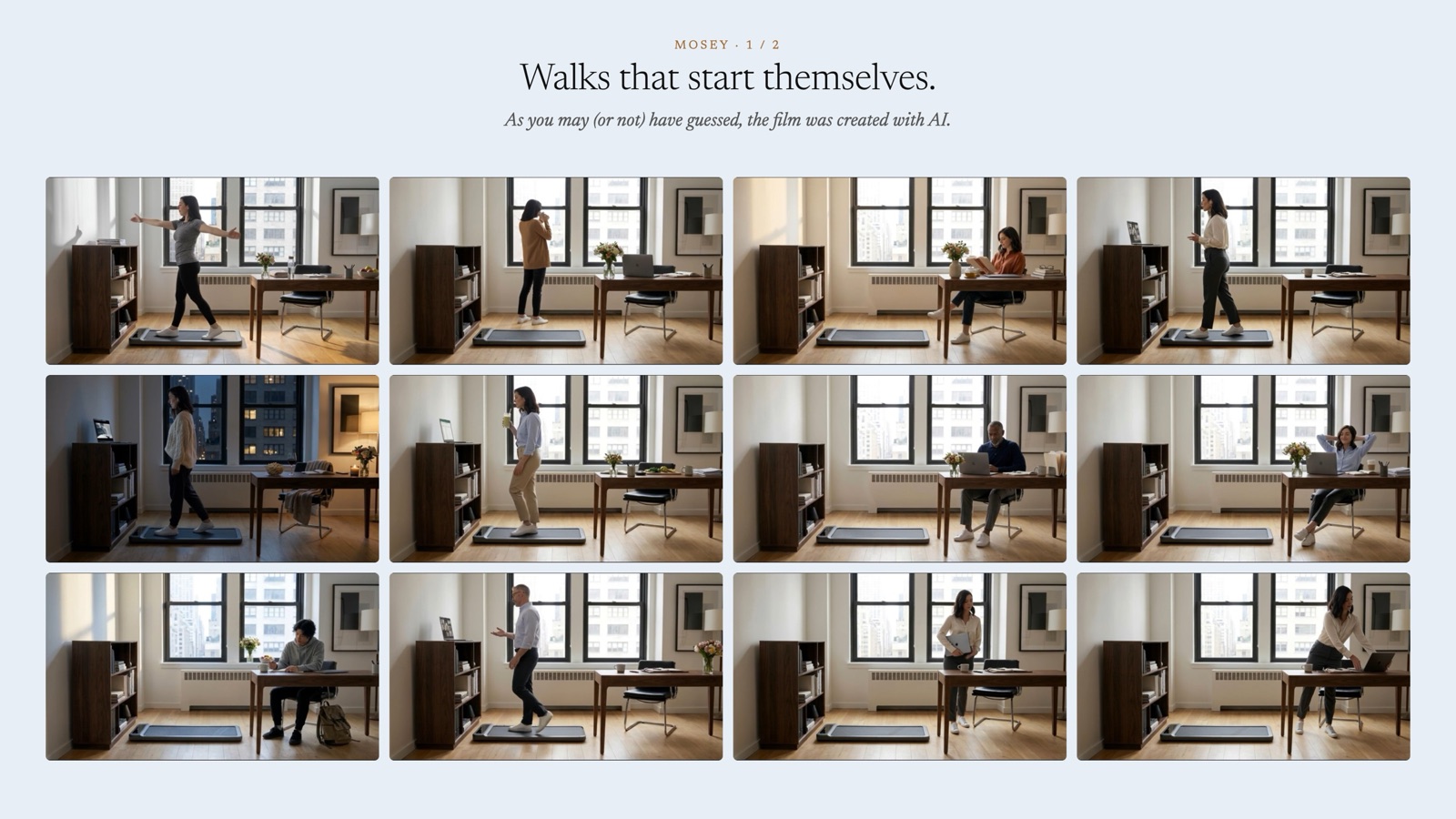
The longest-lived people don’t exercise — they get up and move every twenty minutes. I built Mosey to put that nudge into a Mac workday: after twenty minutes at the desk, your walking pad starts on its own, three to twenty minutes, a different walk each time at a pace it sets. Step on when you’re ready, step off whenever you like. Nothing counts down at you, no streaks, no account — and it’s free. Coming to the Mac App Store.

Mosey in four slides
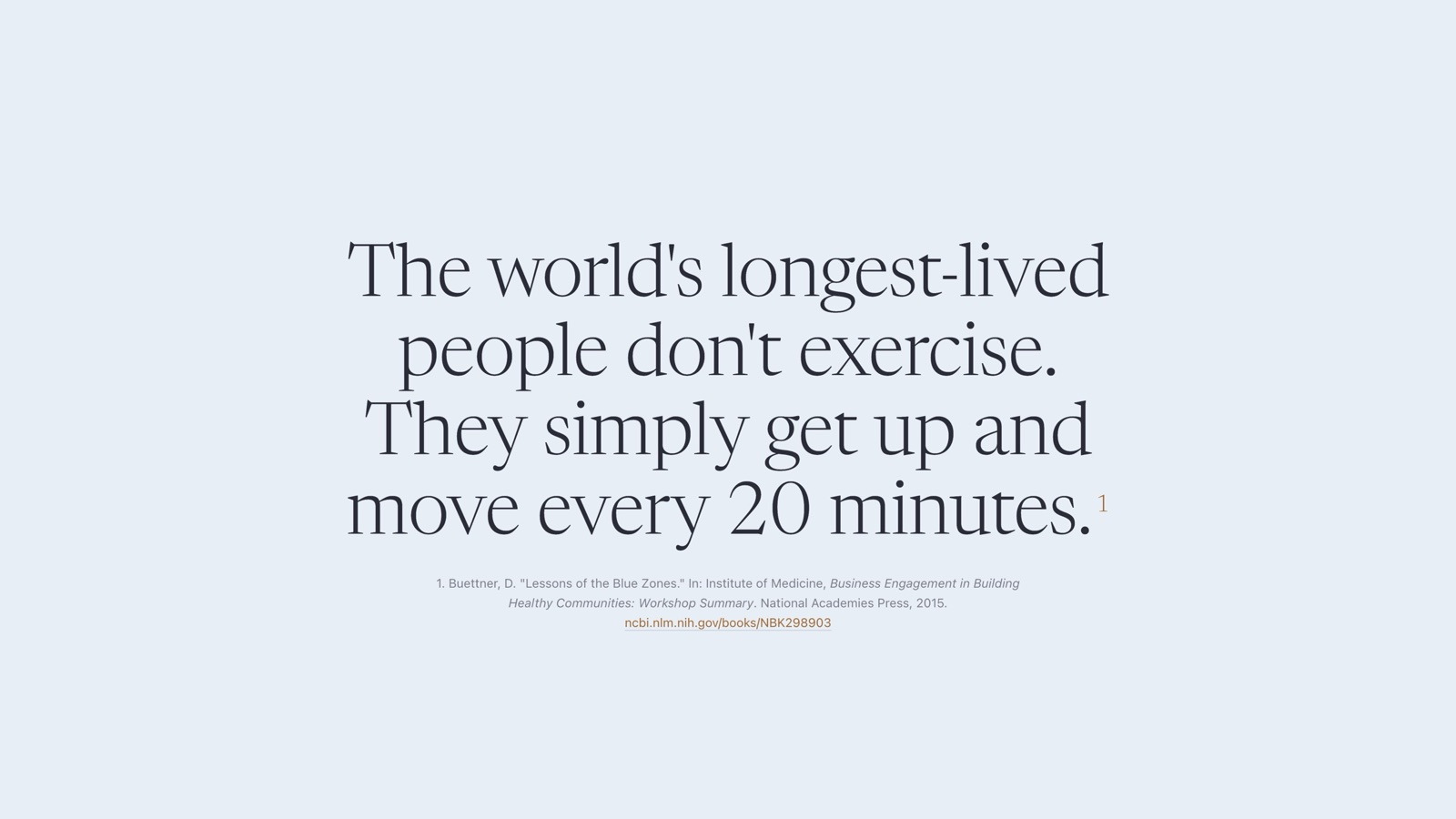
Mosey: Walks that start themselves — the world’s longest-lived people don’t exercise. They simply get up and move every 20 minutes.

Walks that start themselves.

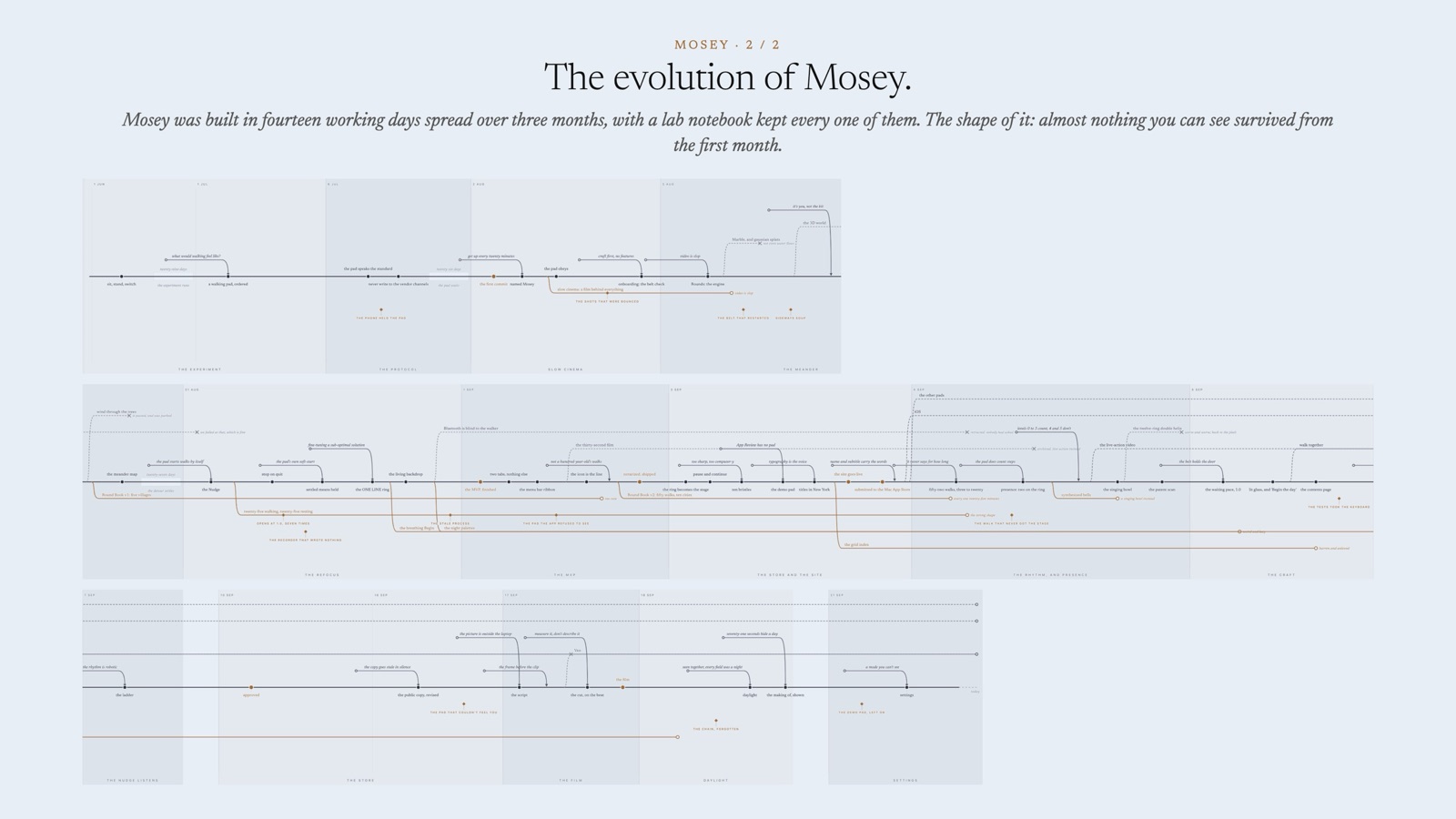
The evolution of Mosey.

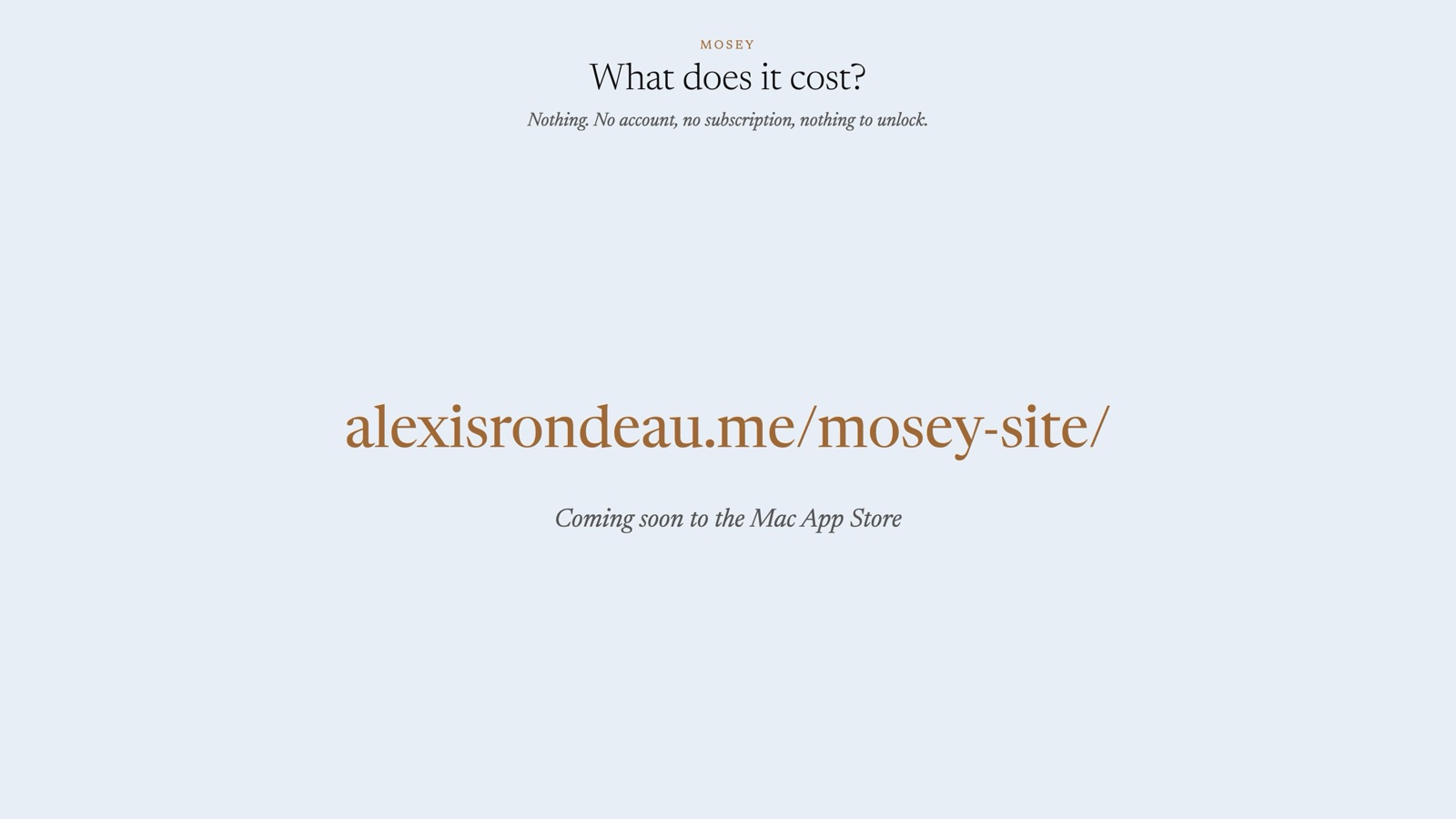
What does it cost?

Open →

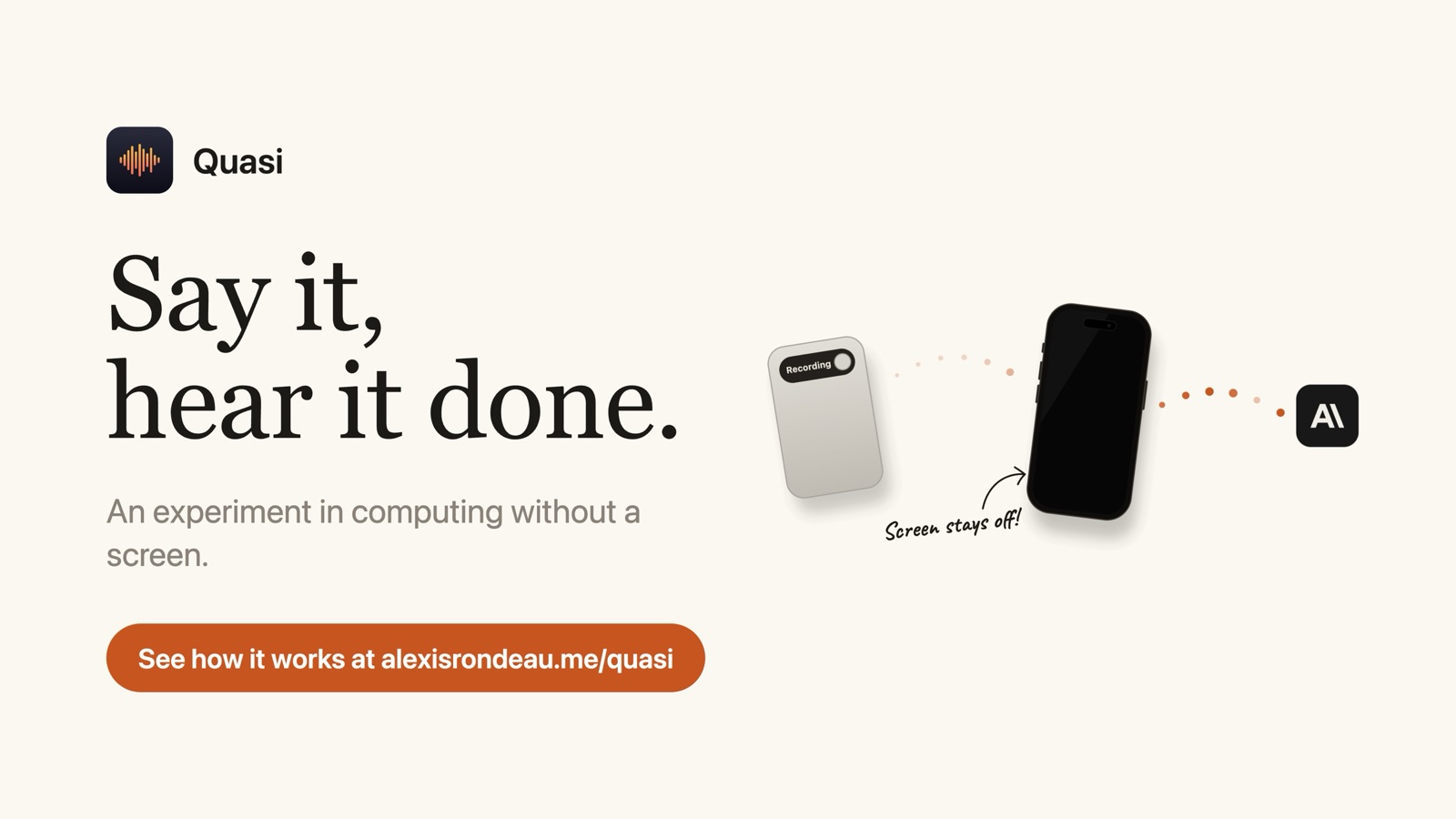
Quasi: "Say it, hear it done" — an experiment in computing without a screen

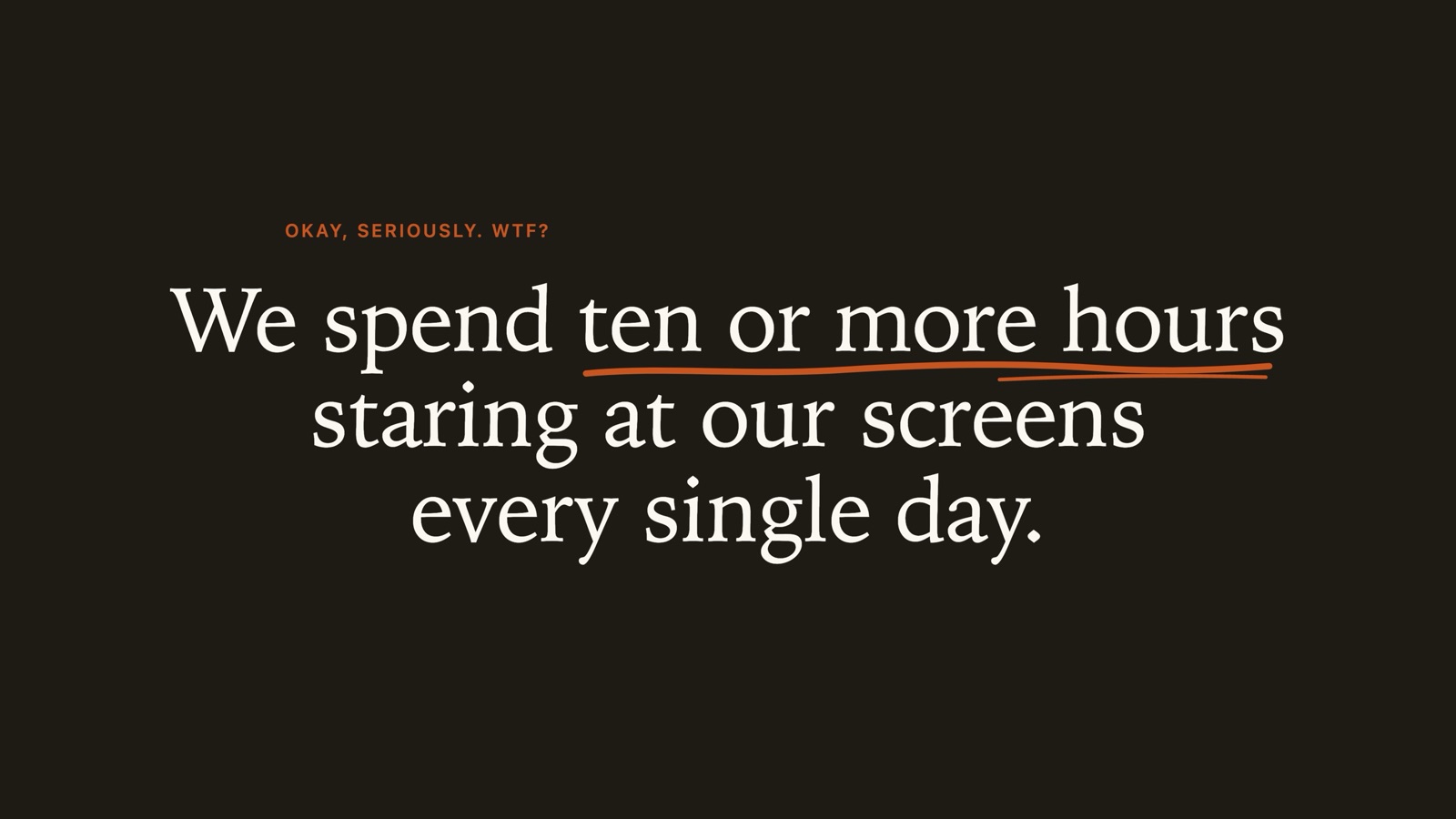
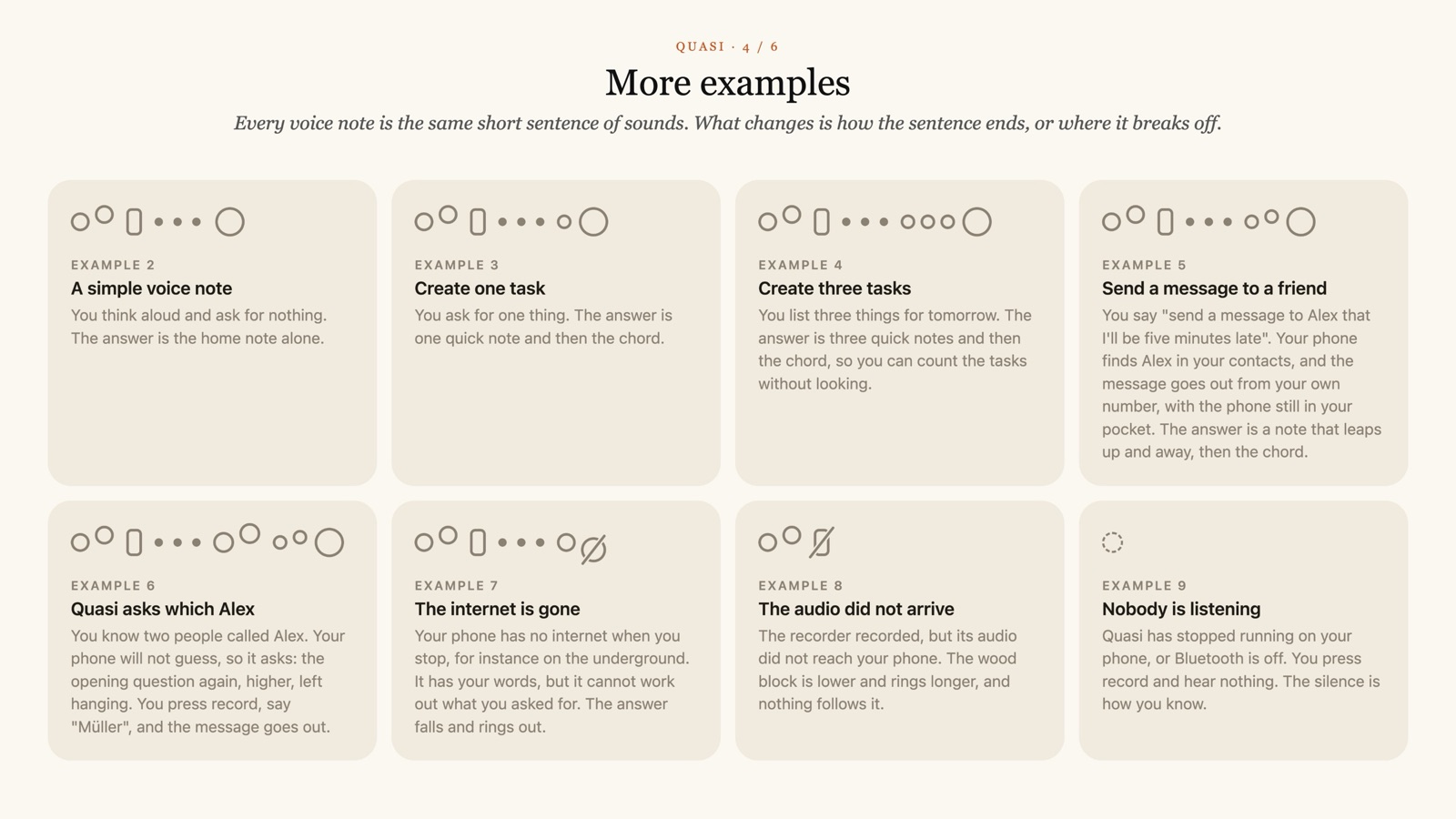
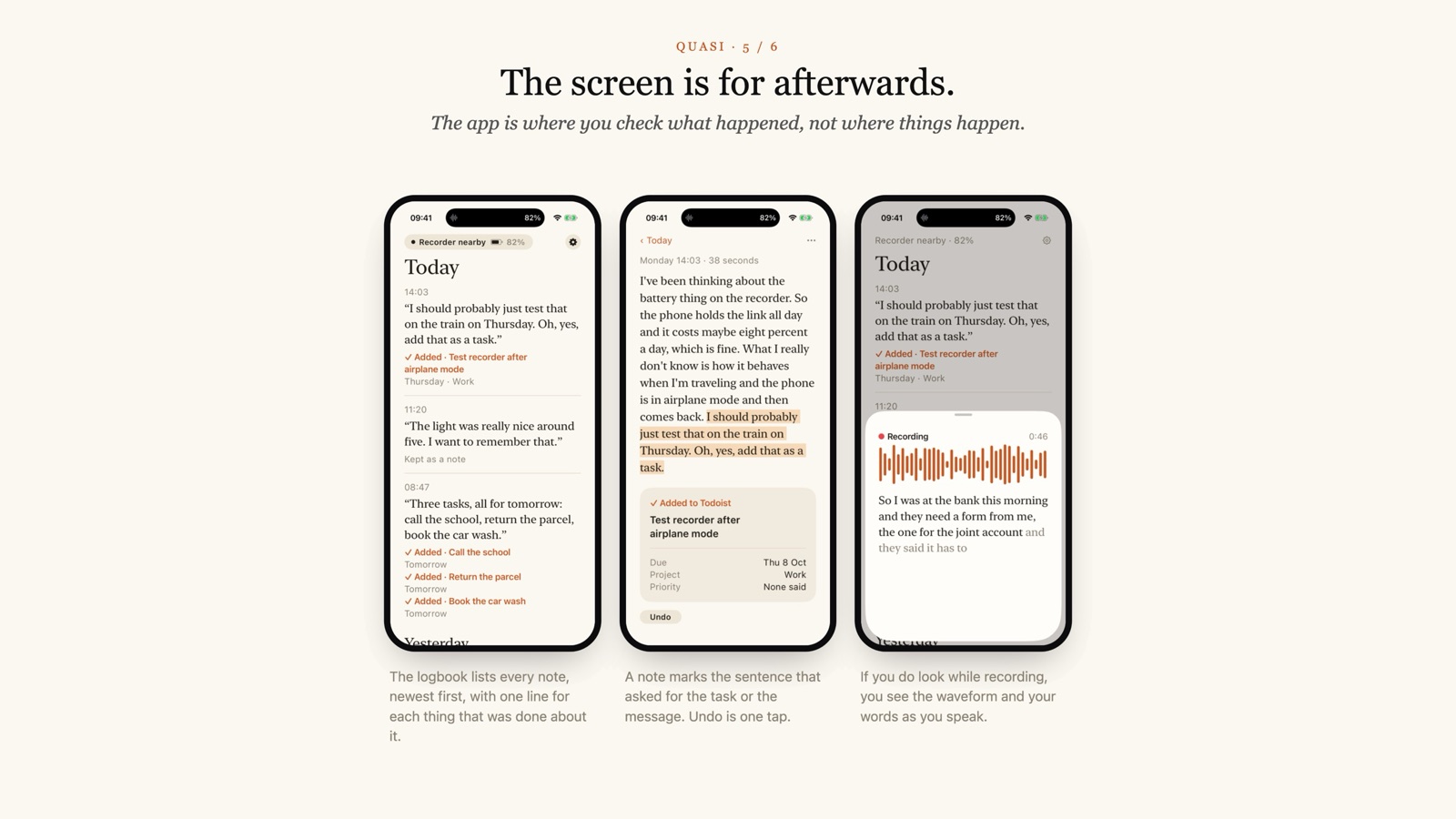
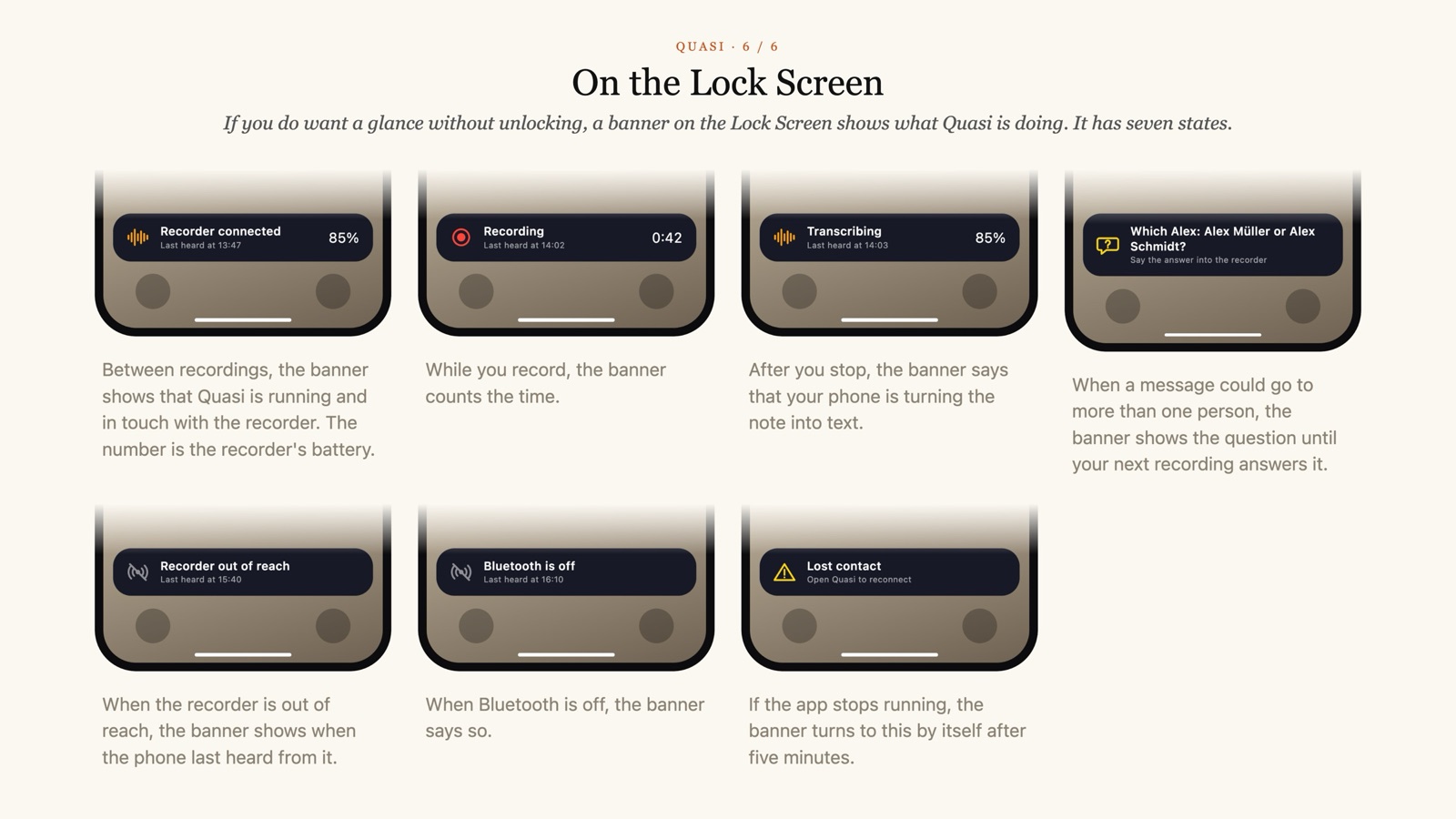
We spend ten or more hours a day staring at screens. Quasi is my small experiment in computing without one: you speak into a pocket recorder while your phone stays locked in your bag, and a few short sounds tell you that you were heard, understood, and that the thing you asked for is done. An aural language for a screen-free life — an experiment, not a product.

Quasi in nine slides

Quasi: “Say it, hear it done” — an experiment in computing without a screen

Say it, hear it done.

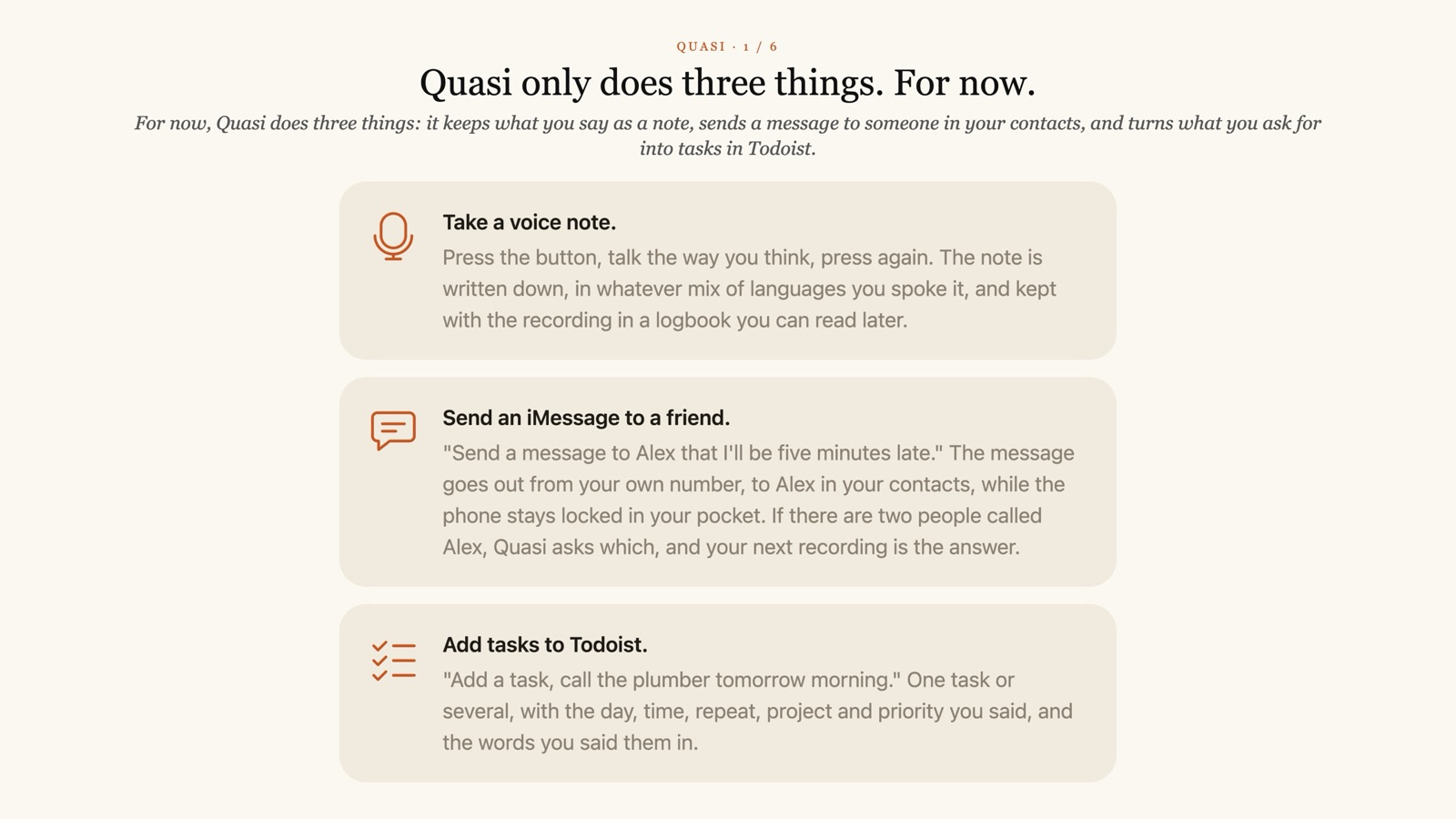
Quasi only does three things. For now.

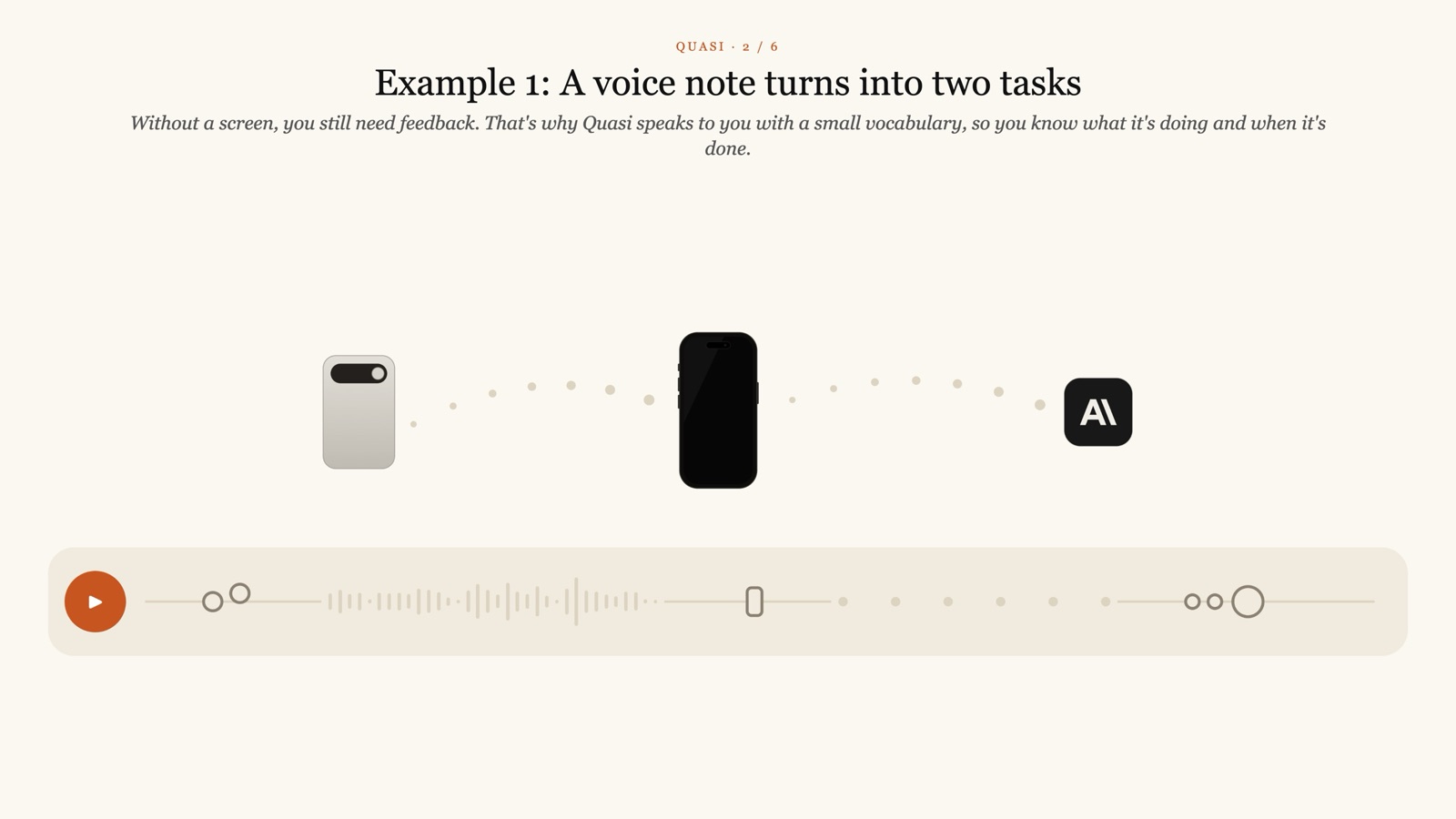
Example 1: A voice note turns into two tasks

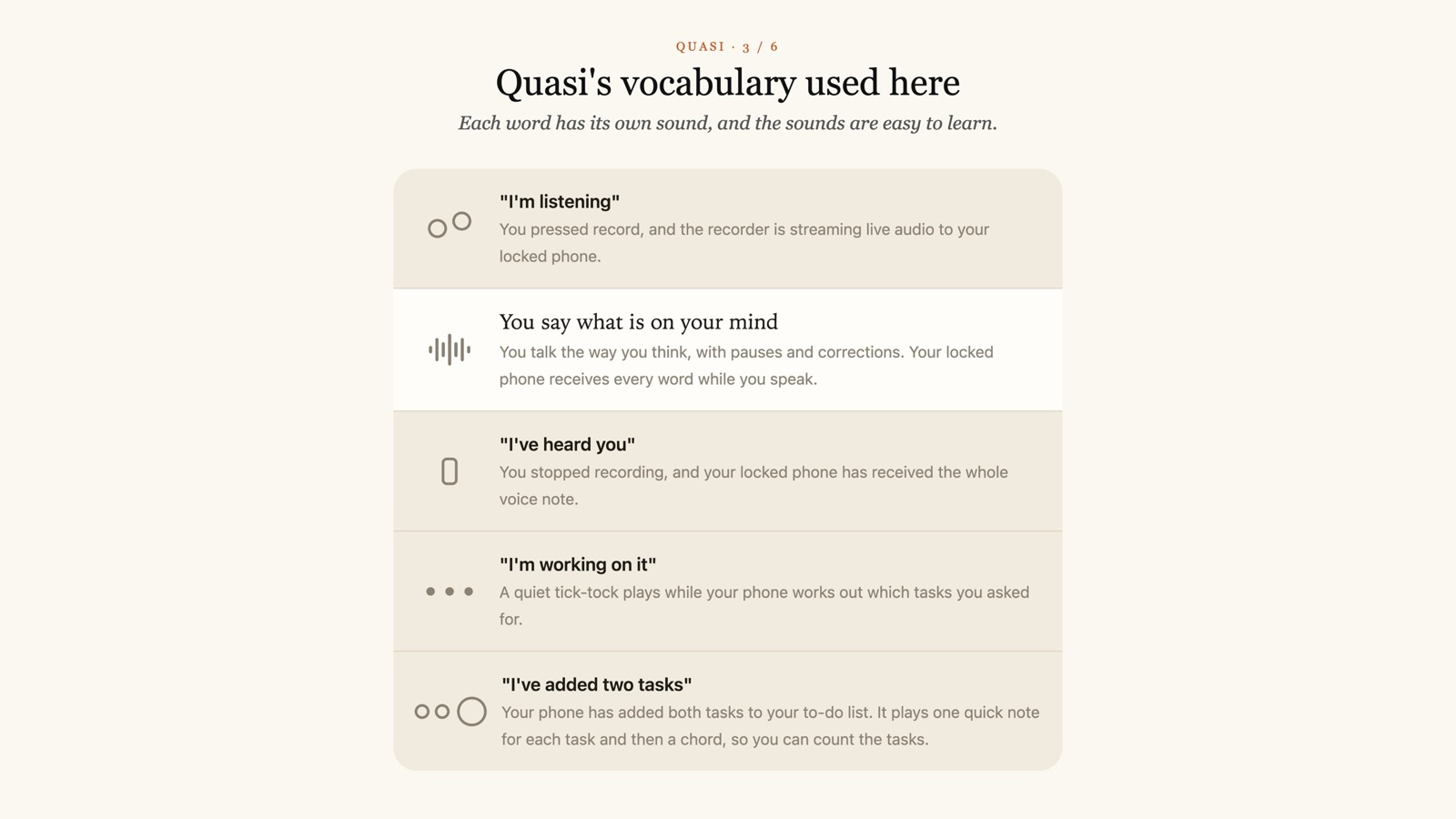
Quasi’s vocabulary used here

More examples

The screen is for afterwards.

On the Lock Screen

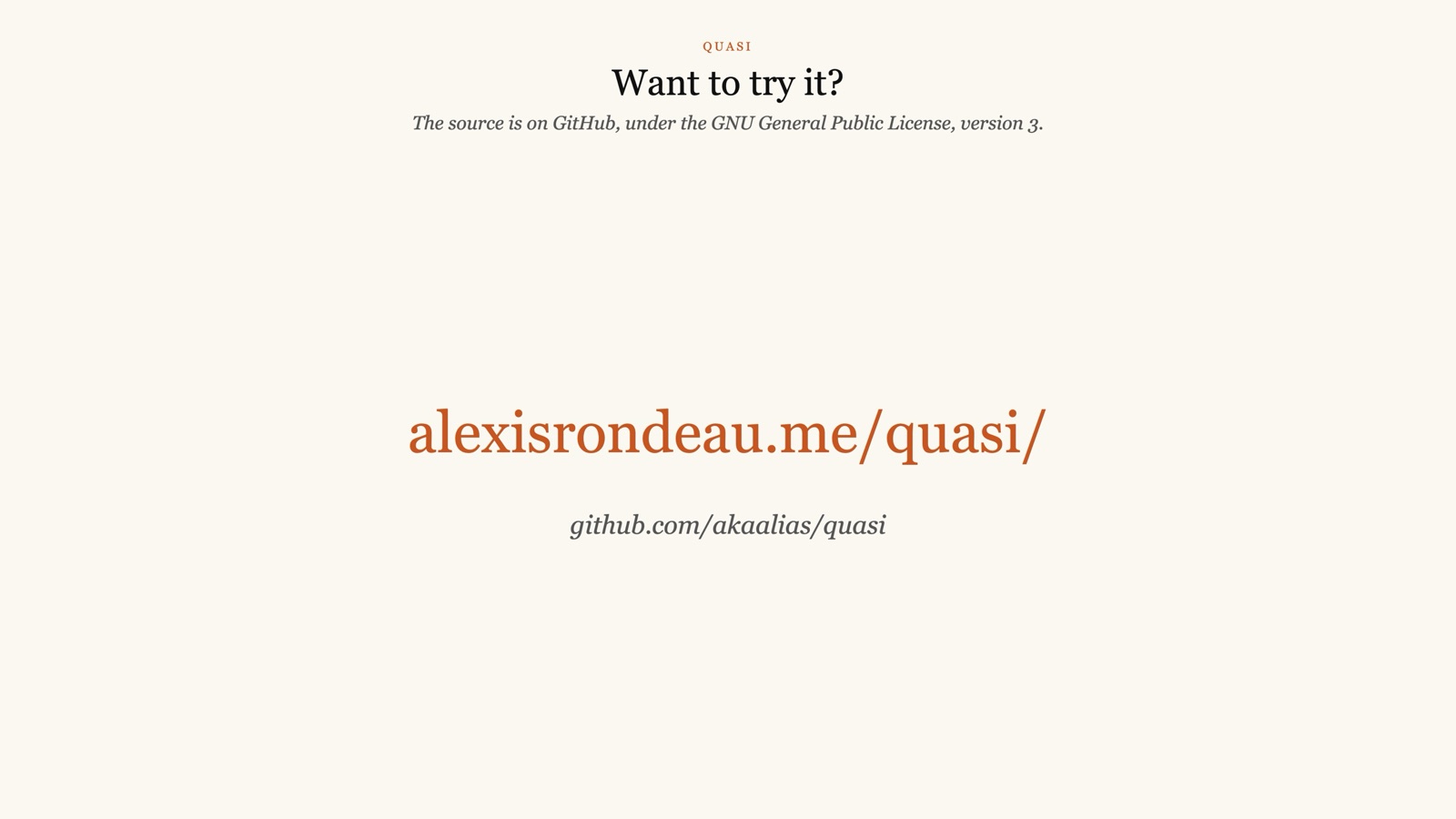
Want to try it?

Open →

Human as Sensor: Call-Based Reporting for C2 | European Defense Tech Hackathon – Berlin 2026

Our project at the European Defense Tech Hackathon in Berlin, July 2026, in the words of my teammate Won YI:

Together with Eugen Leikom from strixx.ai and Alexis Rondeau, we built “Human as Sensor”, a lightweight call-based reporting and intake prototype.

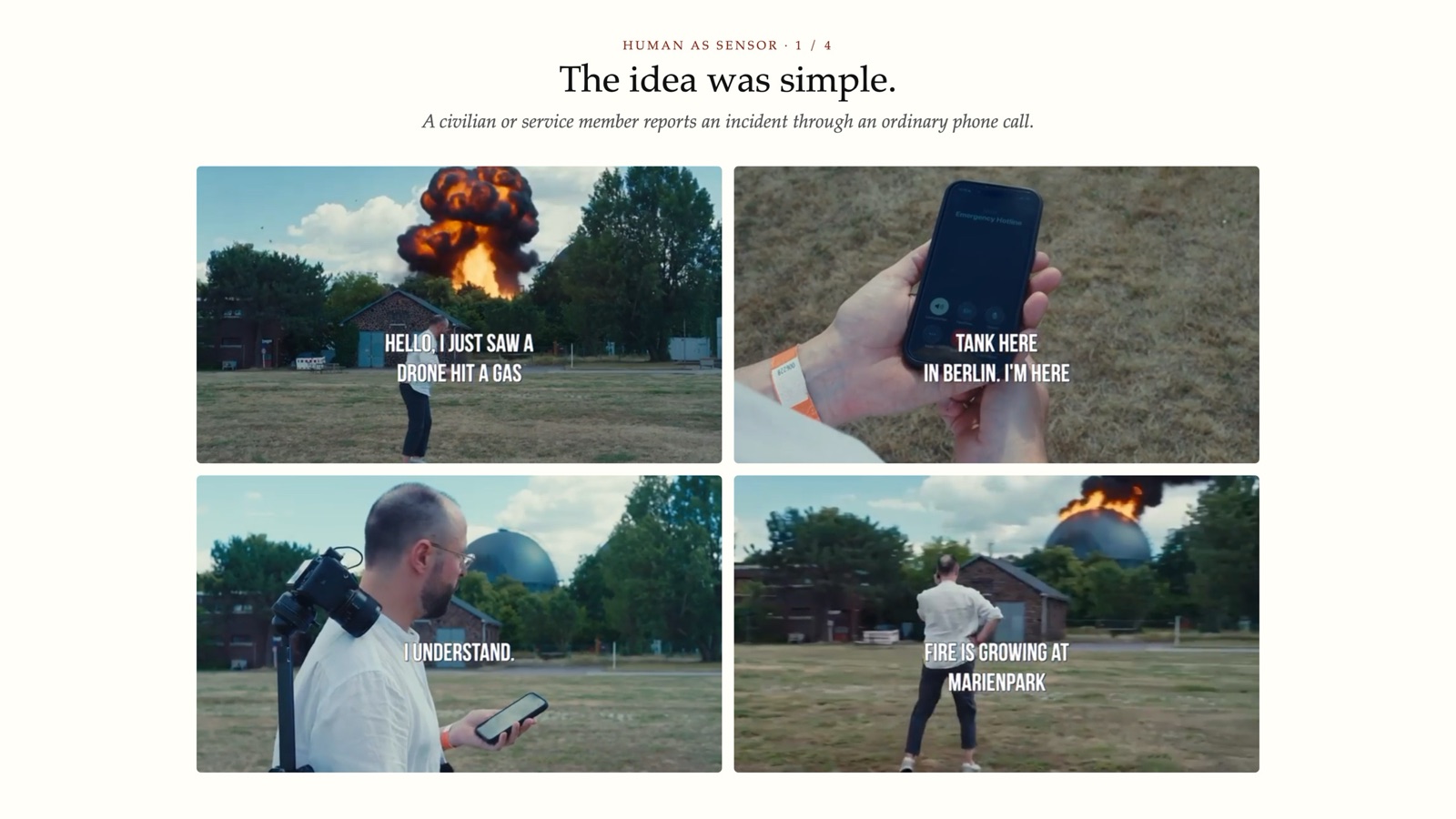
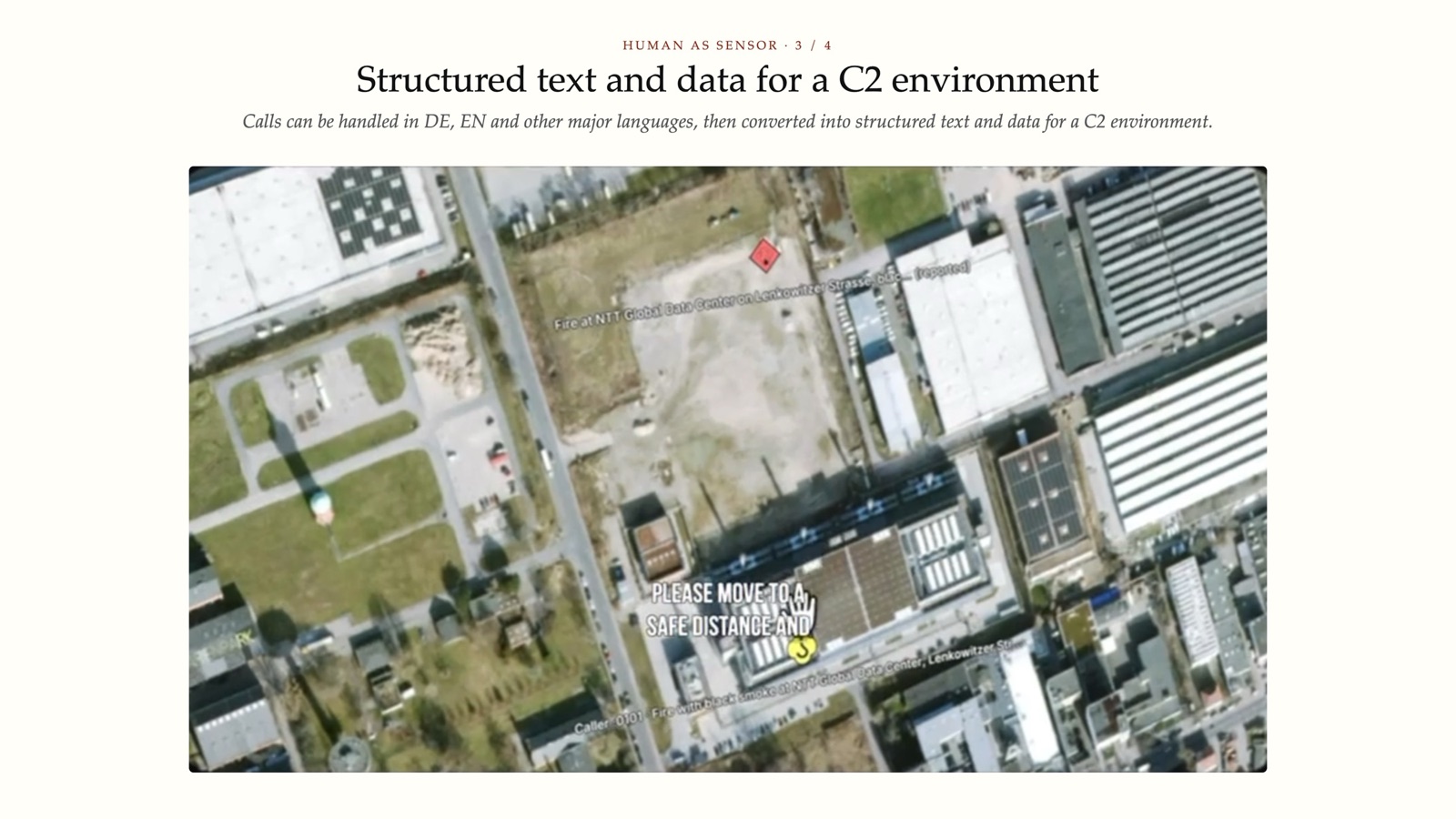
The idea was simple. A civilian or service member reports an incident through an ordinary phone call. Calls can be handled in DE, EN and other major languages, then converted into structured text and data for a C2 environment.

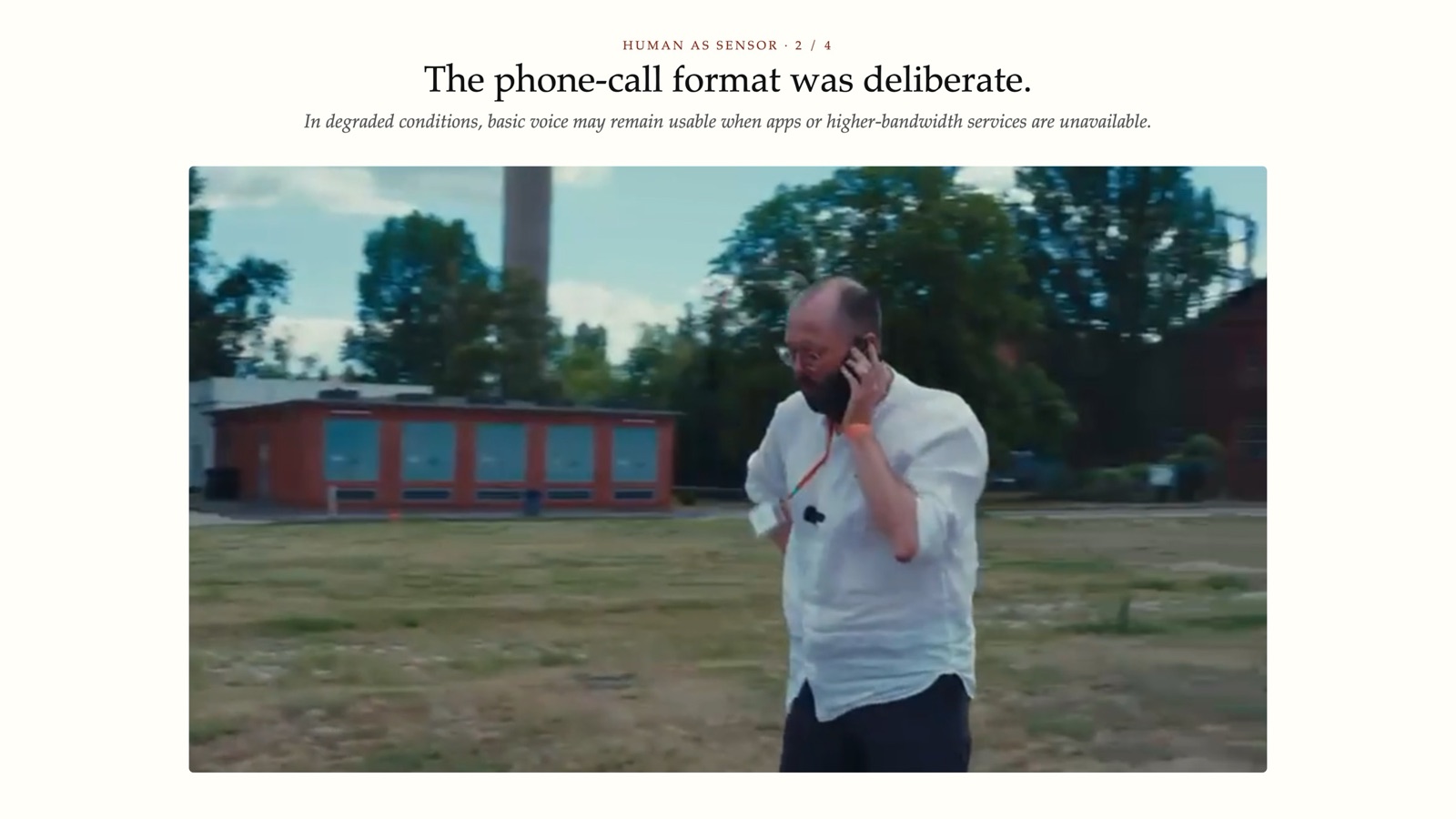
The phone-call format was deliberate. In degraded conditions, basic voice may remain usable when apps or higher-bandwidth services are unavailable. Where available, GSM/2G can provide an additional fallback. The same interface becomes usable once basic civilian voice service returns, without a new app, device or additional training.

— Won YI

Human as Sensor in six slides

Human as Sensor: Call-Based Reporting for C2 | European Defense Tech Hackathon – Berlin 2026

The idea was simple.

The phone-call format was deliberate.

Structured text and data for a C2 environment

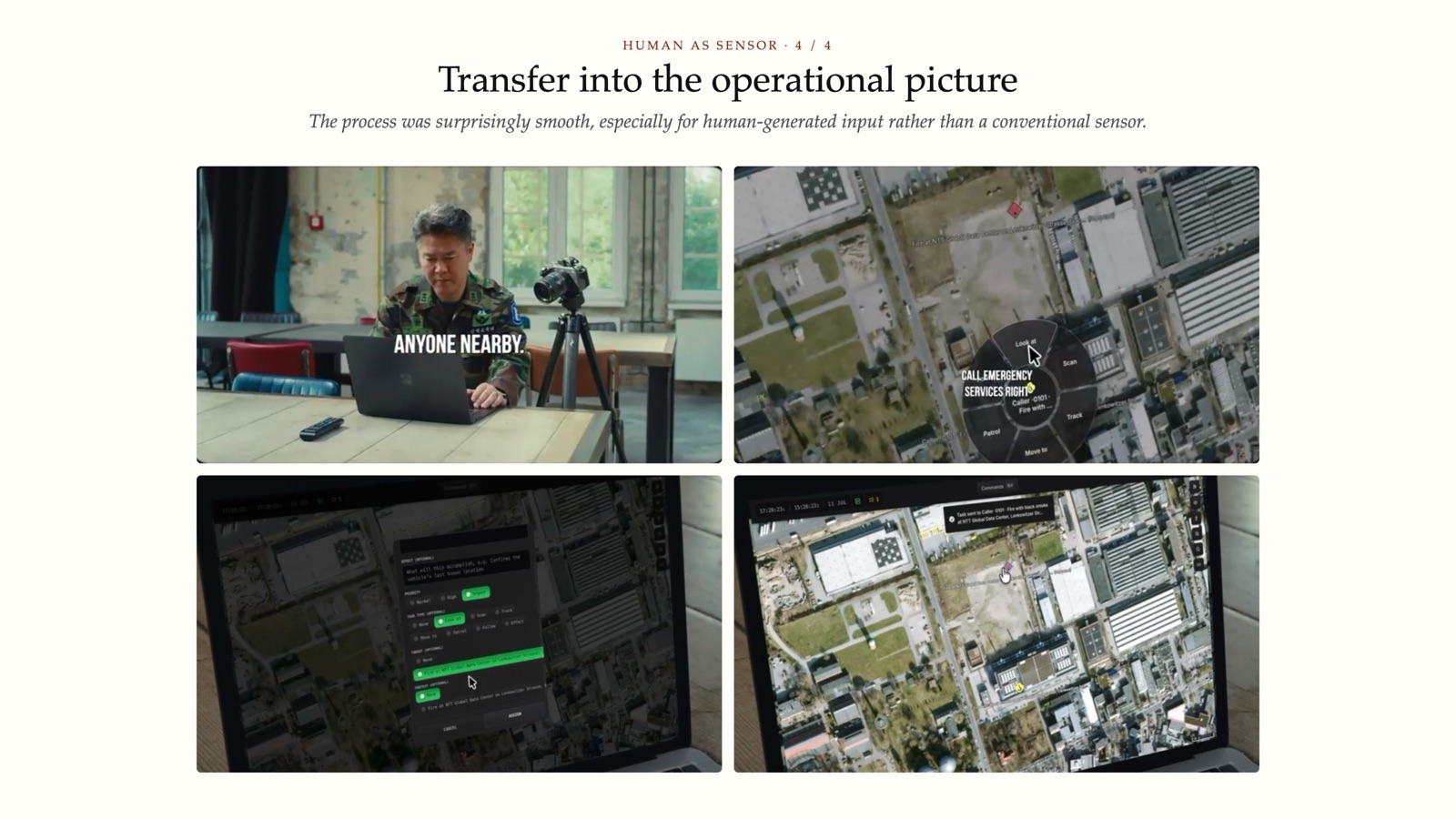
Transfer into the operational picture

Connecting systems and data is only one part.

Won YI’s full write-up and the video →

Pudding

In a world that assumes everything’s written by AI, I made Pudding to let you prove the words are yours. It captures your writing as it actually happened — every edit, pause and rewrite — so you can replay the whole process and hand anyone undeniable proof of your work. Peace of mind for students, writers and freelancers who get asked, “did you really write this?”

Open →

JamGPT

JamGPT gets you to ChatGPT the instant you need it — one keystroke from whatever app you’re in, with no tab-hunting or logging back in. I kept my go-to prompts a click away for the things I do over and over, like translating or tightening up a sentence. It’s free to use, and ready the moment you download it.

Open →

Streamline

I wanted a calm, blank space to get my thoughts out before the day’s noise set in — no menus, no formatting, no friction. As you write, Streamline surfaces your existing notes so a morning brain-dump connects straight into the system you already keep. Everything stays on your machine, with no account and nothing tracked.

Open →

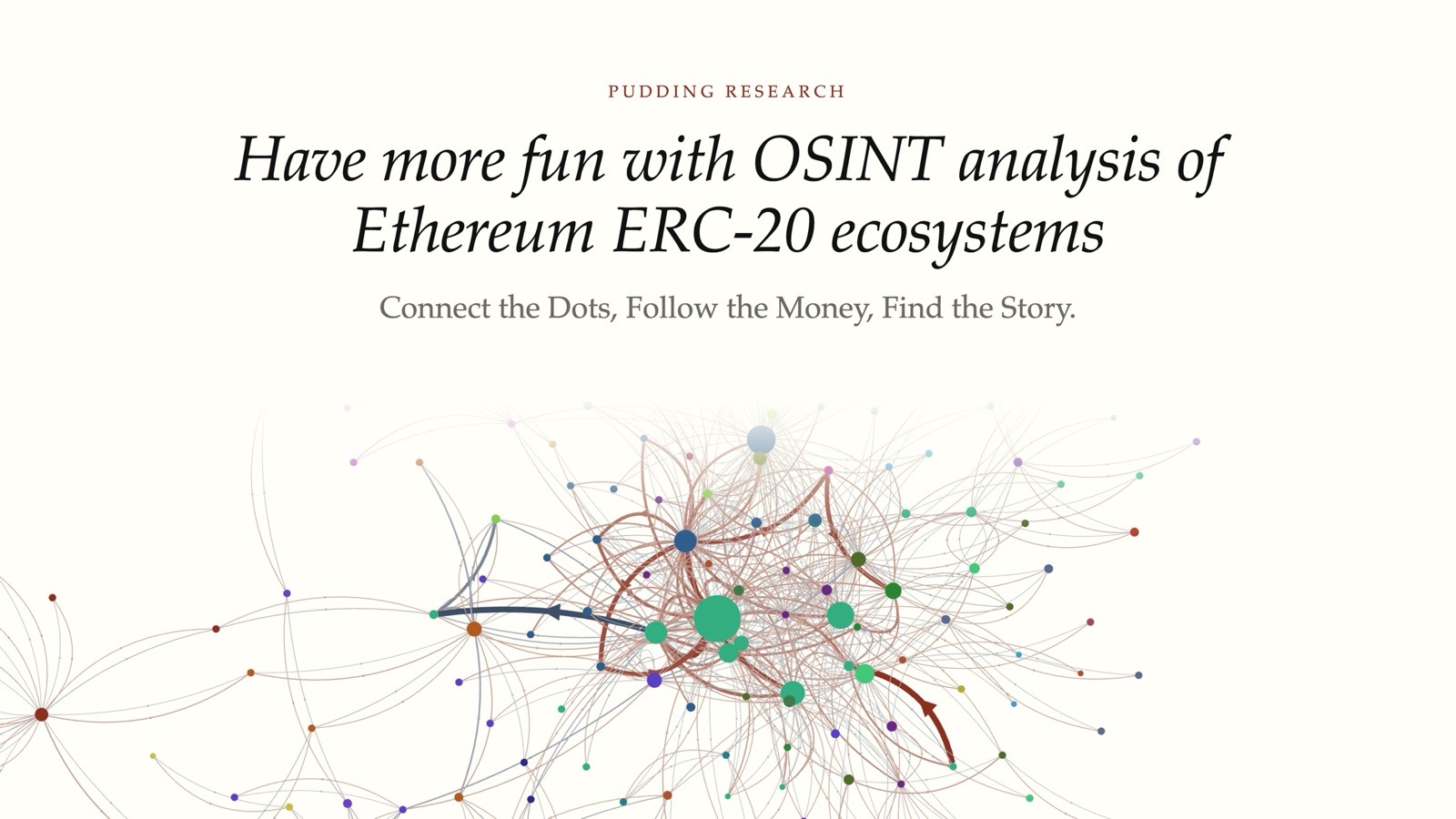
Pudding Research

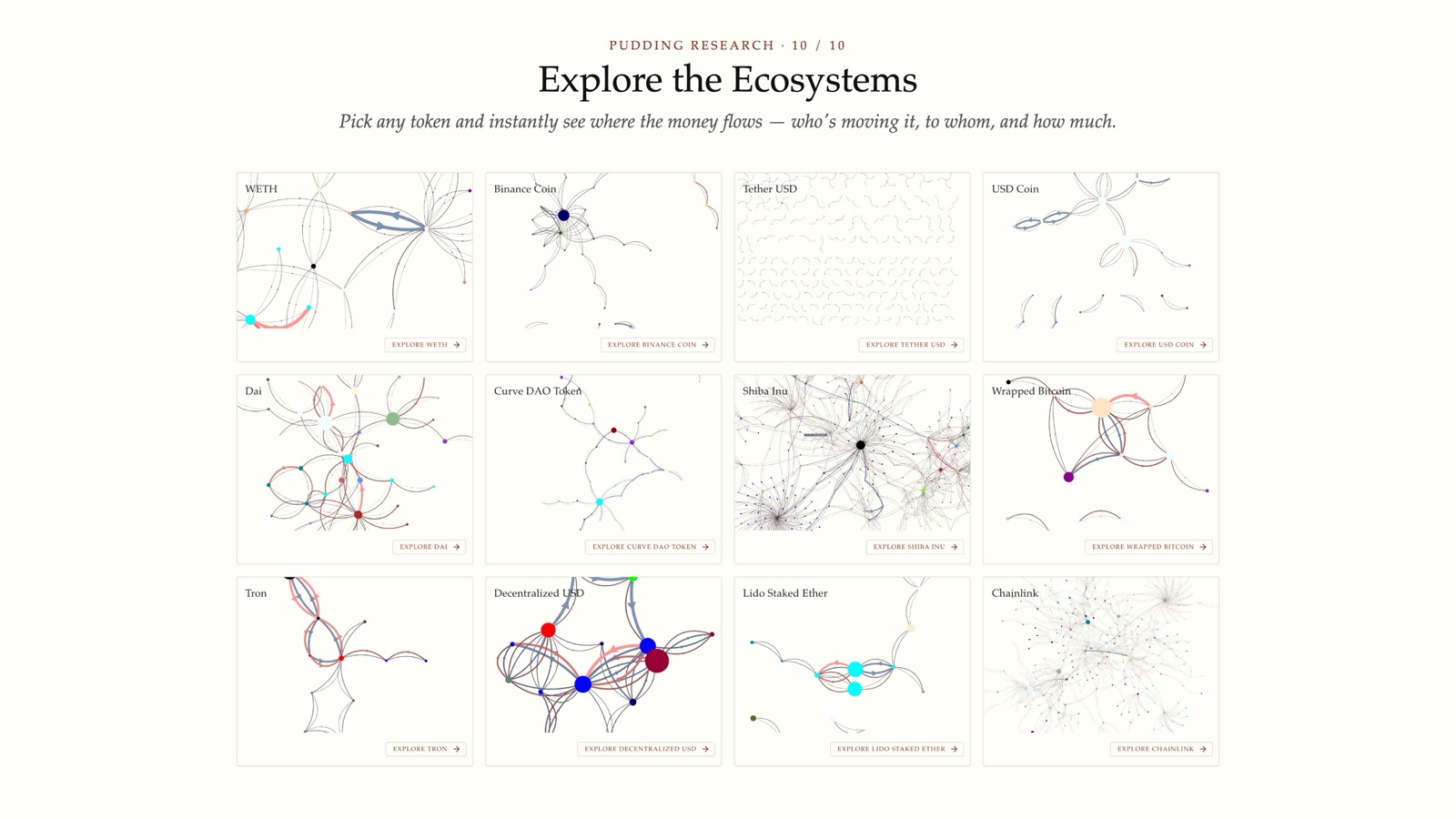
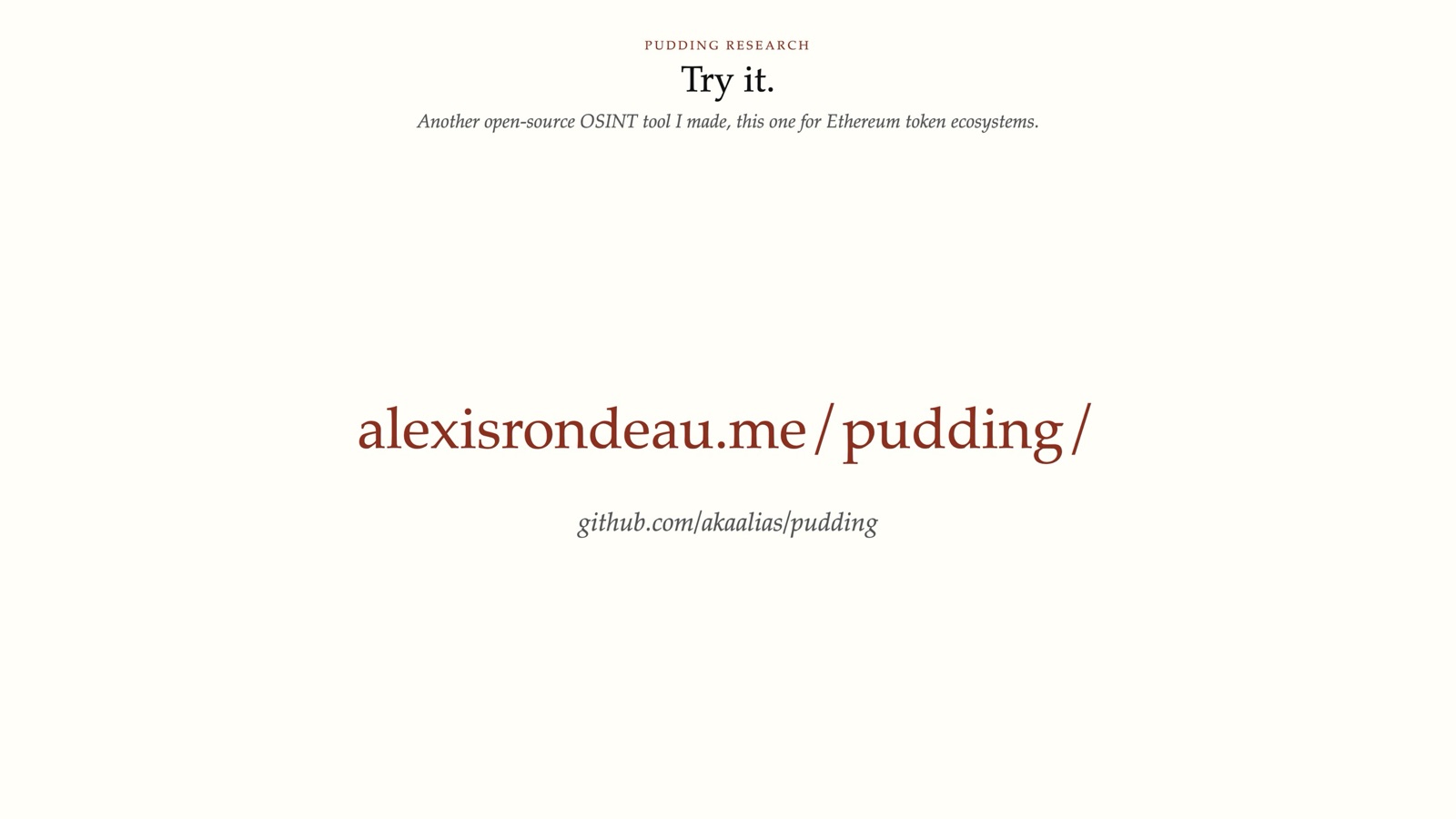
Another open-source OSINT tool I made, this one for Ethereum token ecosystems. Pick any token and instantly see where the money flows — who’s moving it, to whom, and how much. The biggest players and tightest relationships rise to the top, so you can filter out the noise, zero in on what matters, and pull a real story out of the chain. Export what you find to share it. Try it.

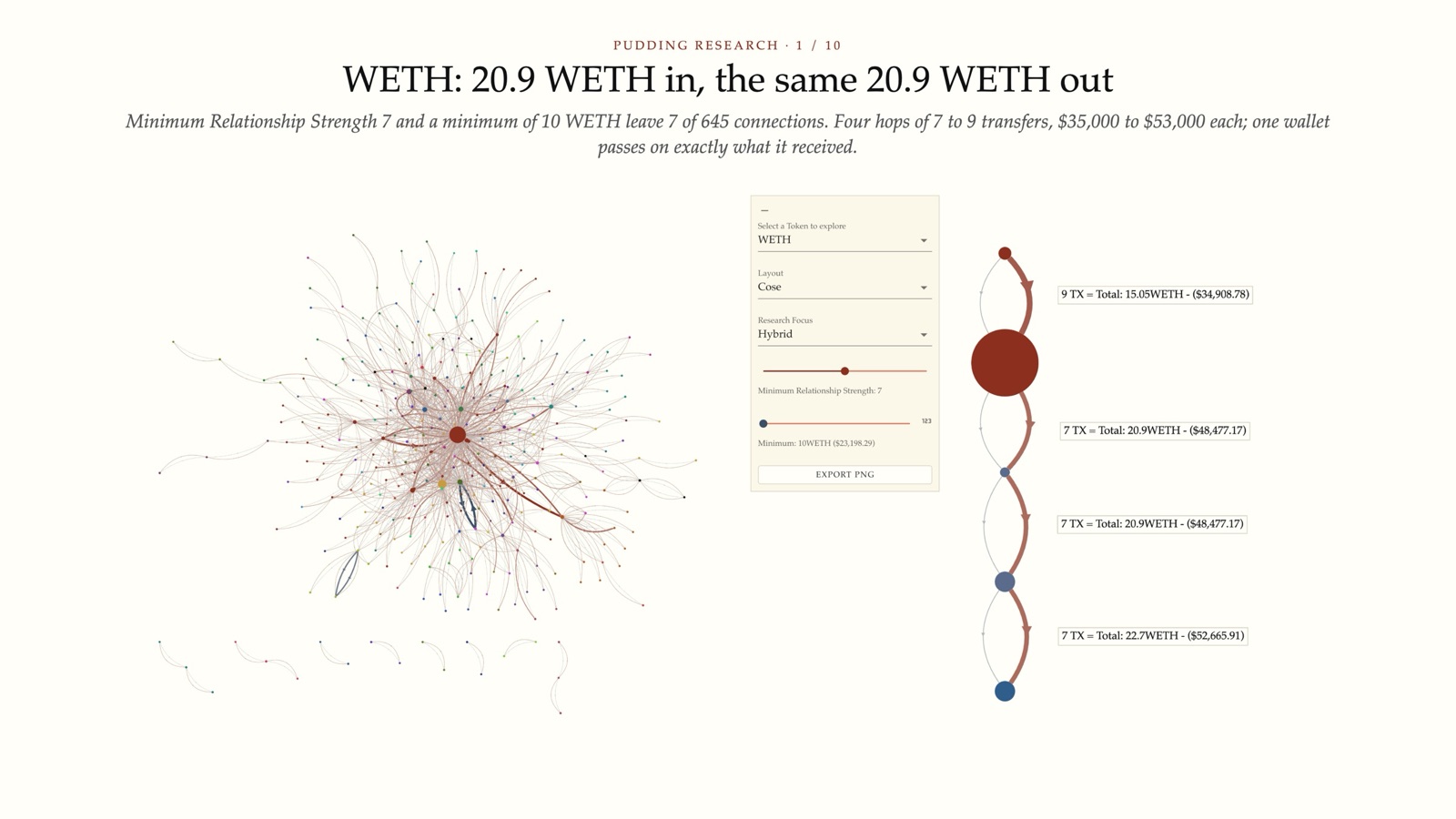
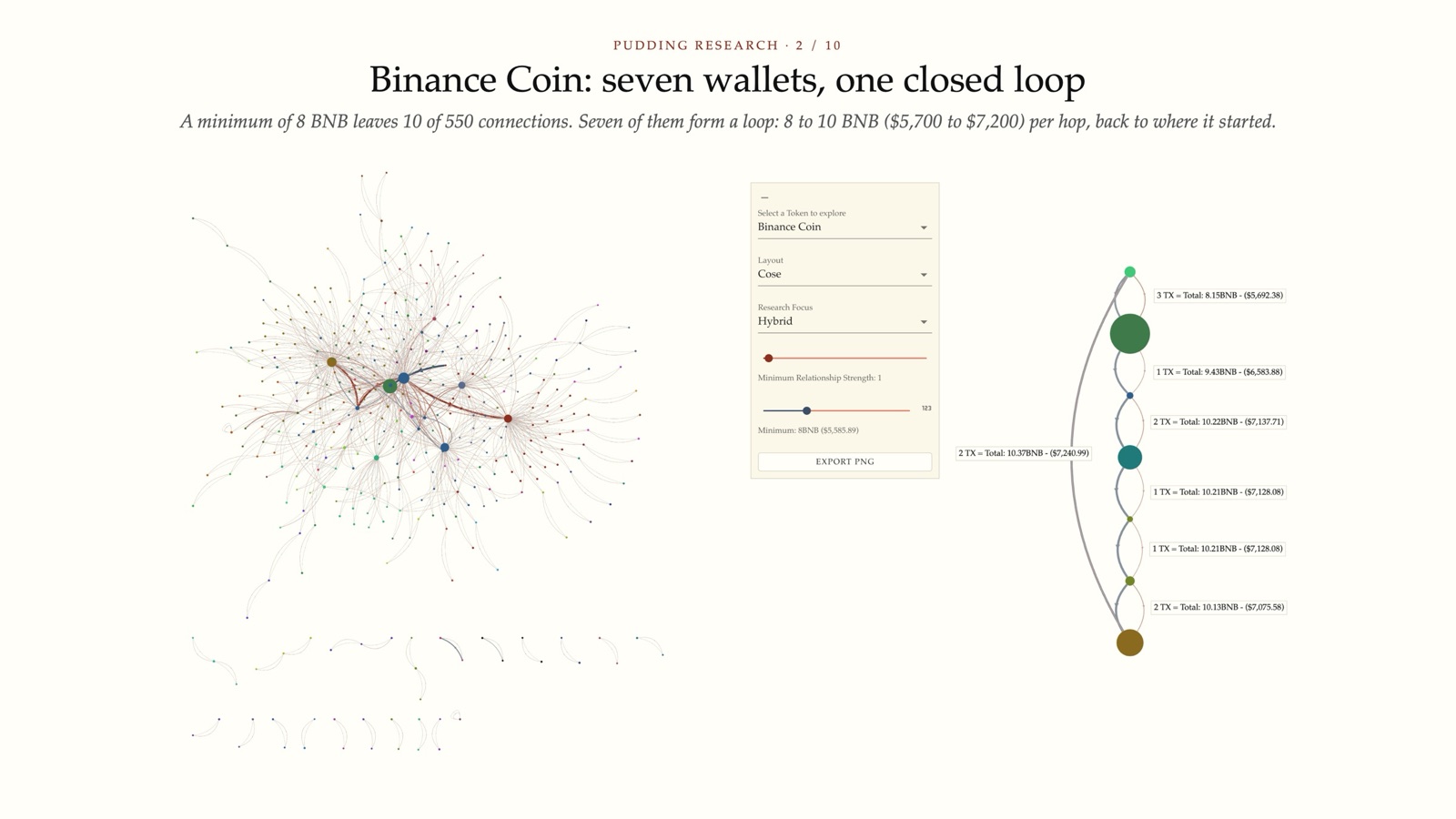
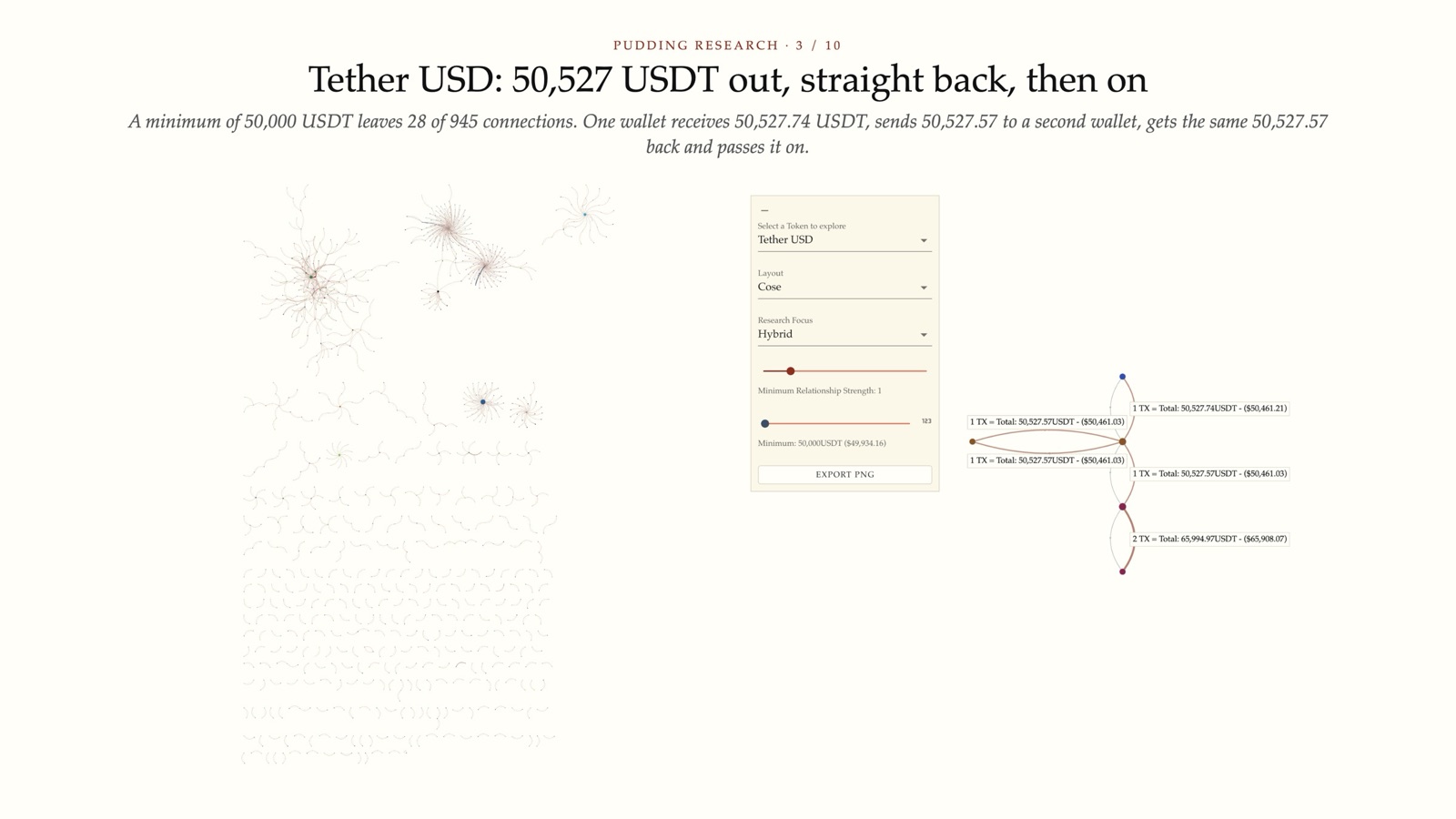
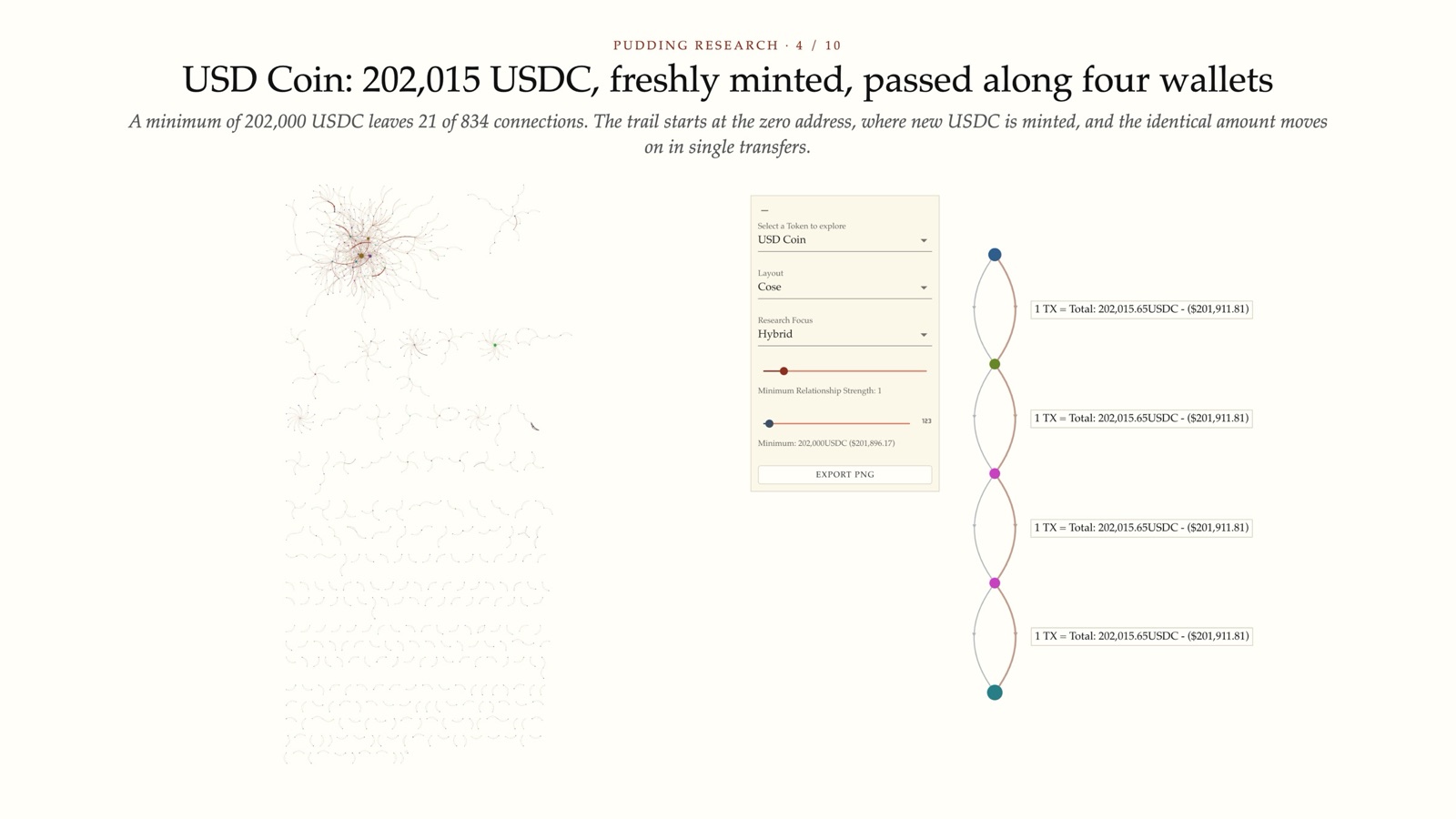
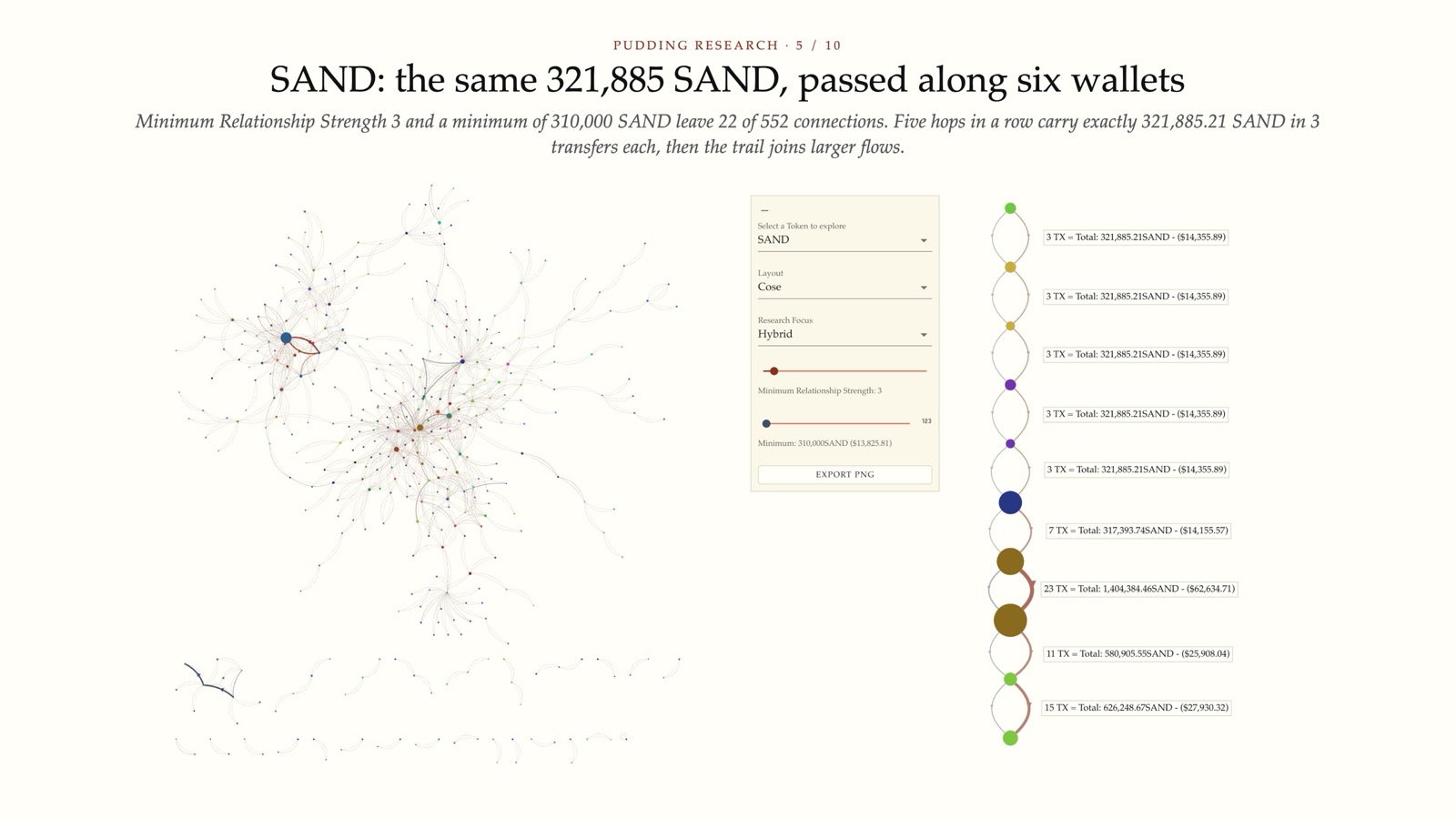
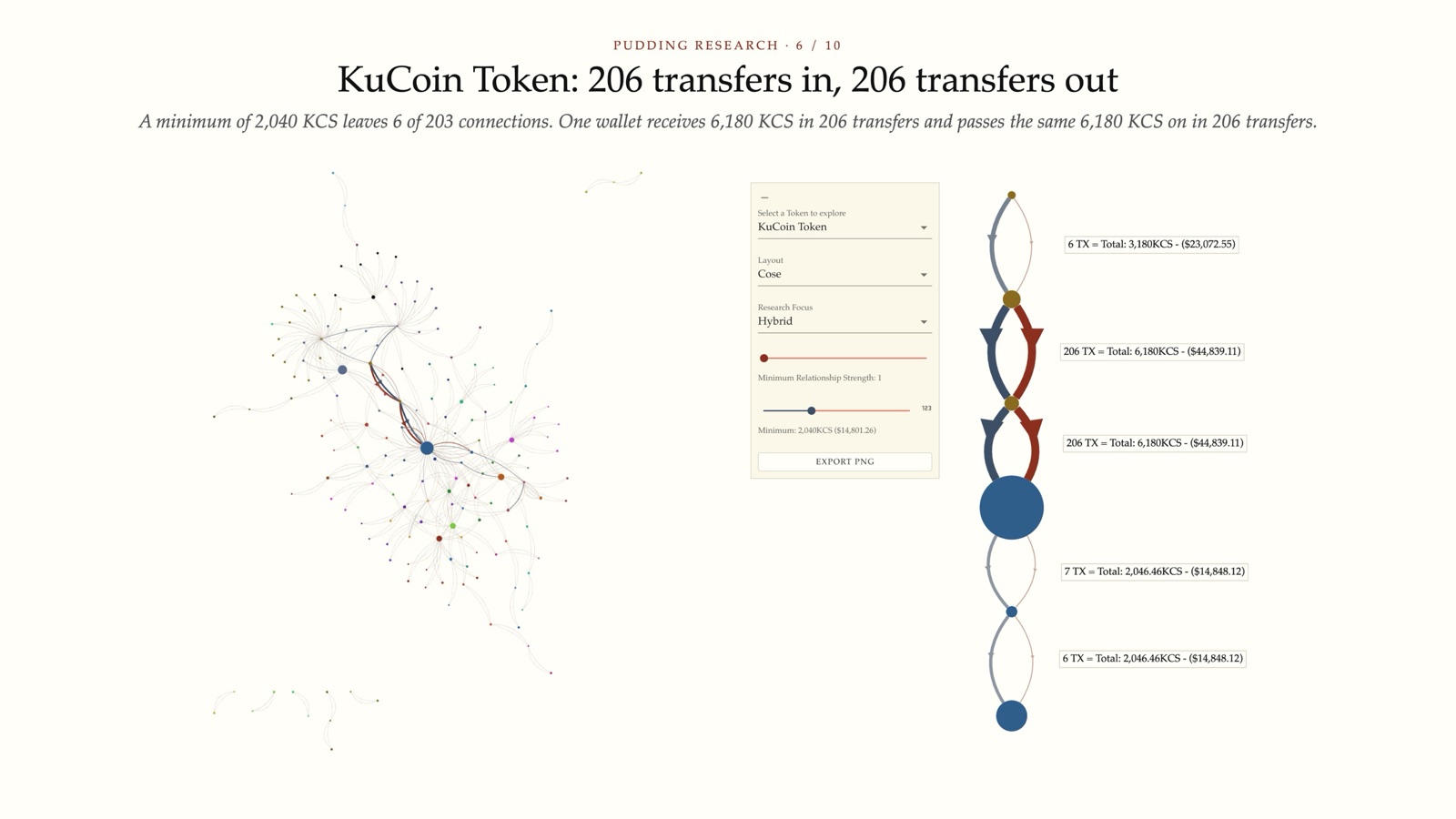
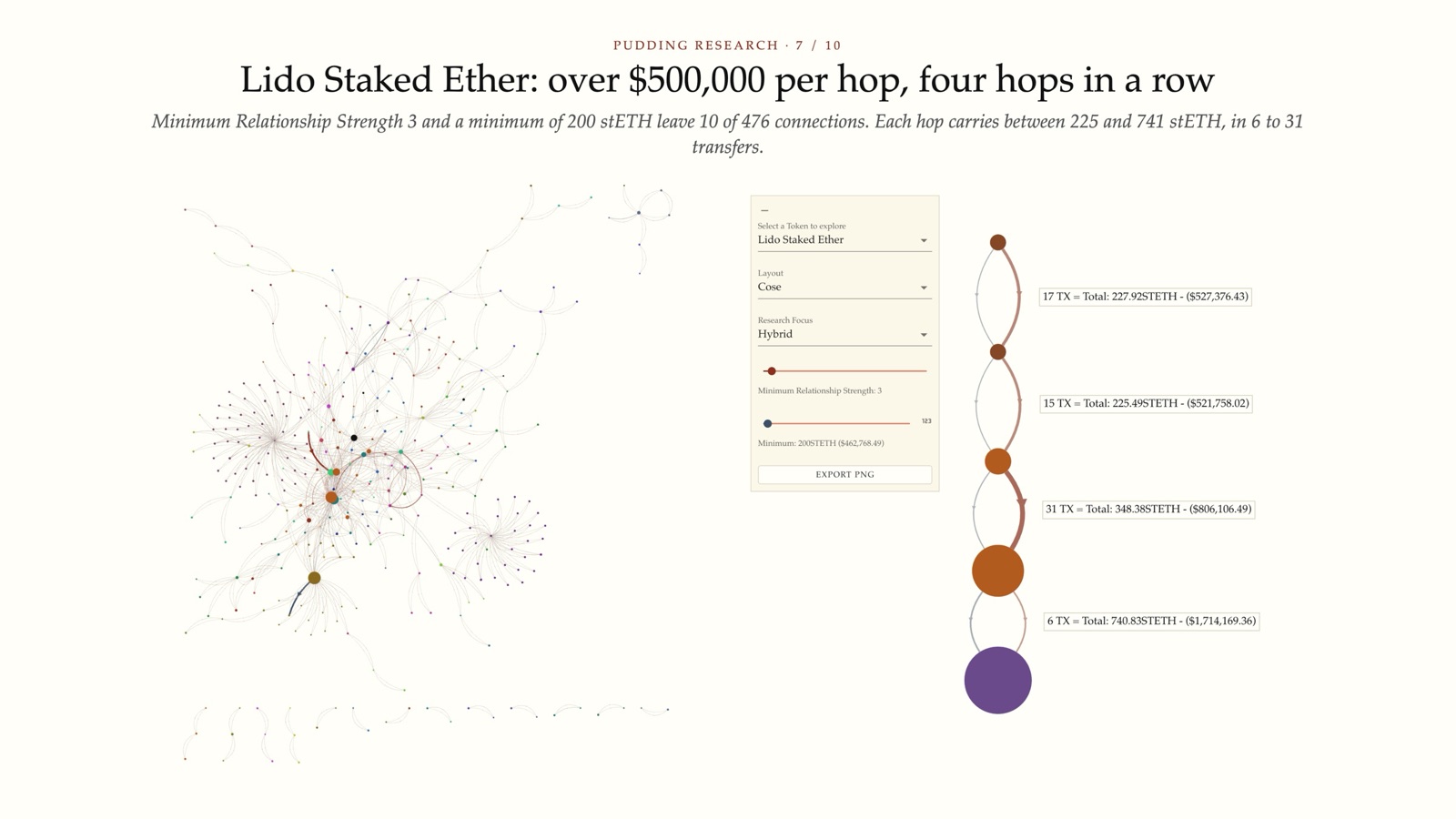
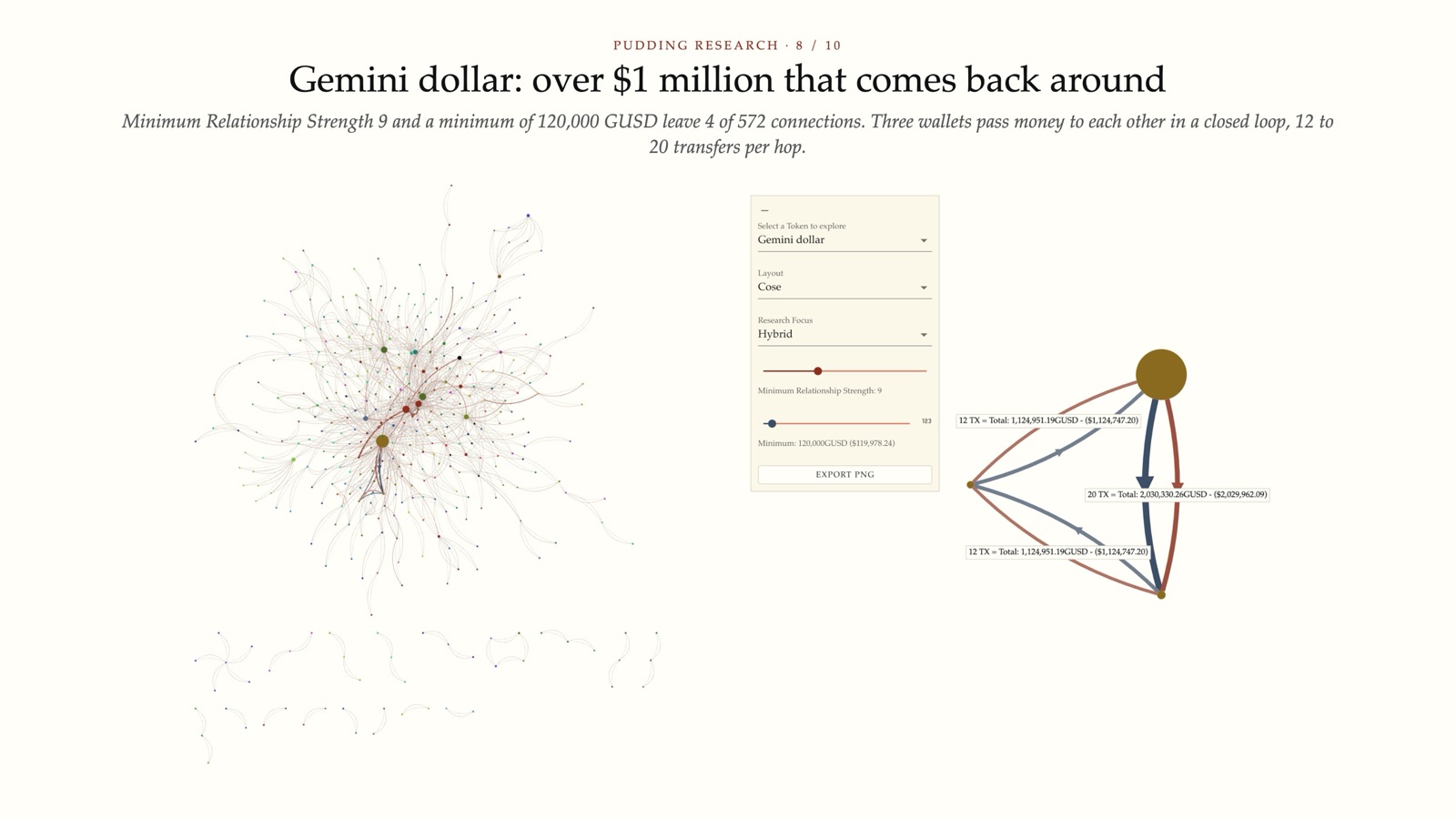
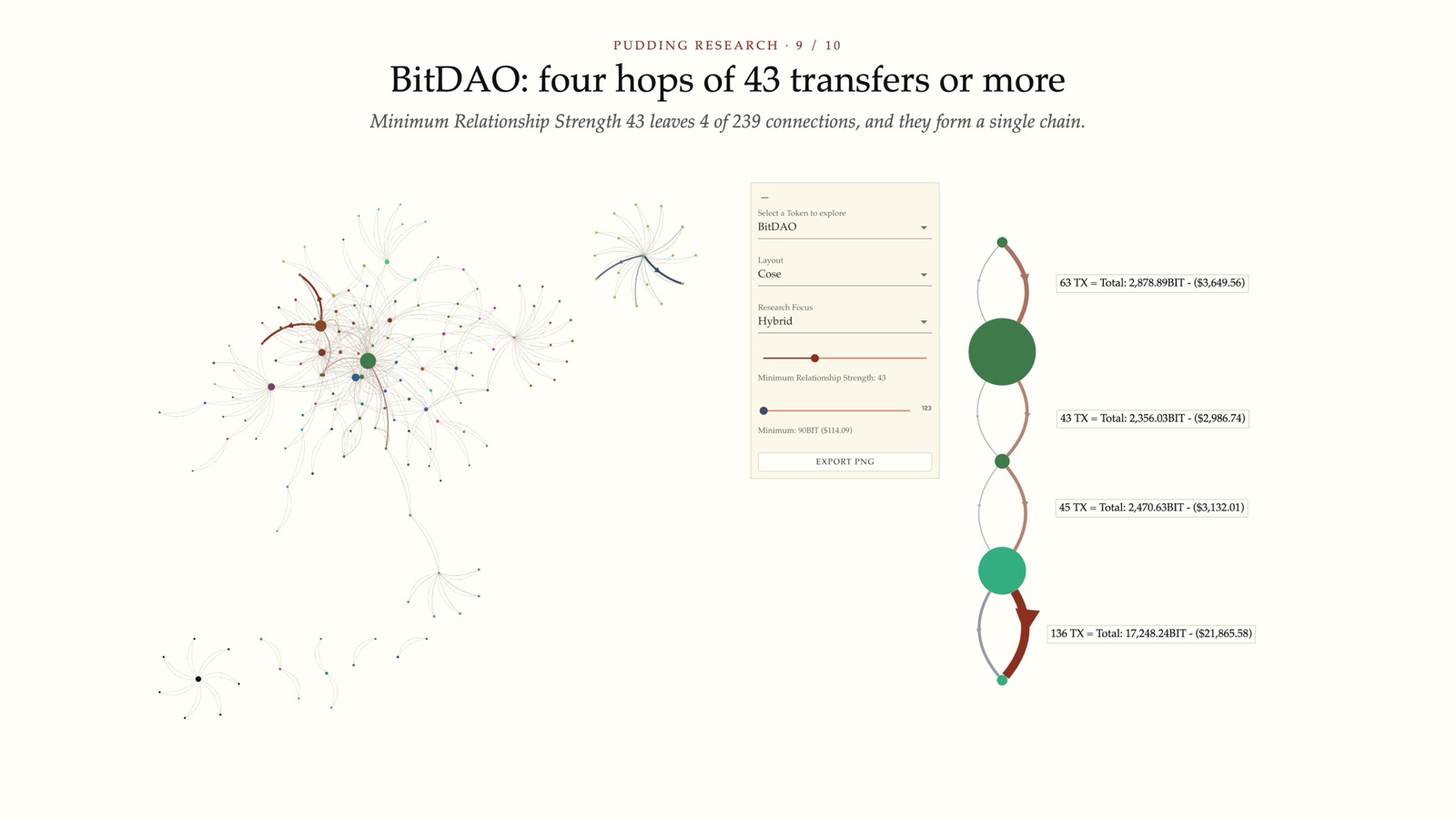
From hairball to money trail: I ran all 63 tokens through Pudding’s two filters and kept the clearest trails. 20.9 WETH received and passed on unchanged. Seven wallets passing BNB around a closed loop. 50,527.57 USDT sent out, sent straight back, then passed on. 202,015.65 freshly minted USDC moving through four wallets in identical single transfers. A trail is a better question, not an answer.

Pudding Research in thirteen slides

Pudding Research

From hairball to money trail

WETH: 20.9 WETH in, the same 20.9 WETH out

Binance Coin: seven wallets, one closed loop

Tether USD: 50,527 USDT out, straight back, then on

USD Coin: 202,015 USDC, freshly minted, passed along four wallets

SAND: the same 321,885 SAND, passed along six wallets

KuCoin Token: 206 transfers in, 206 transfers out

Lido Staked Ether: over $500,000 per hop, four hops in a row

Gemini dollar: over $1 million that comes back around

BitDAO: four hops of 43 transfers or more

Explore the Ecosystems

Try it.

Open →

Unblah

Ever leave a meeting wondering if you talked too much — or never got a word in? I built Unblah to quietly show your talk-time as it happens, so you can catch yourself in the moment and hit the balance you’re aiming for. It works across Zoom, Teams, WebEx and calls, and never records or shares a thing.

Open →

Algorand Ballet

My open-source OSINT tool for the Algorand blockchain. See who a wallet really deals with: drop in any account and watch its activity unfold as a map you can explore — follow the connections, spot the patterns, and dig into any account, asset or app with a click. I built it as a simple way to do your own homework before you trust, invest, or just satisfy your curiosity.

Open →