Alexis Rondeau

Newsfeed

Everything I publish, in the order I published it: dispatches from Twitter, videos from YouTube and notes from my vault, archived here in full — text, images, video and links — so they outlive the platforms.

921 dispatches since January 2012 · page 22 of 37

45 views

"AI killed the internet" – I believe true in the same sense that, way back when, the internet became the trusted source of truth and TV became "just entertainment."

Looking at social media as "just entertainment" and feeling the same about it as about TV helps me a lot actually.

1 like · 51 views
In reply to @bb_fresh · May 18, 2025

@SpringStreetNYC @theo It did have its charm…nothing fancy, just got the job done

But then I remember all the boilerplate and xml and weird bean initialization problems and remember why we all moved on

Holy moly, you're right! On Tomcat 5 we had server.xml, web.xml, context.xml and tomcat-users.xml, JNDI data source for mysql and them beans on top.

I think it took me two painful years to really grok this whole setup to get basic CRUD working.

Still, I'm super grateful for those years because Rails was the painkiller I didn't even know I needed.

  • rails new my-app suddenly did 90% of the directory setup and config heavy-lifting
  • rails generate model|controller|migration|scaffold took all boilerplate out of my hand
  • ActiveRecord's validation and relationship semantics allowed me to literally write out what I wanted (in plain English!)

I hope that those who start making stuff today with AI have the same magic "wow!" moment that I felt in 2006 with Rails.

47 views
In reply to @SpringStreetNYC · May 17, 2025

(Can't share the one I mentioned because it's a confidential conversation from my wife's work)

But I just did another test with a similar interview I conducted with a friend of mine a few years back.

Here I did the analysis "leg-work" myself, so I can speak to the results from the LLMs.

Setup
Chip: Apple M4 Max
Memory: 128 GB
macOS: 15.4.1

Models

  • OpenAI Model: ChatGPT 4o (via web, no customizations)
  • Local Llama4 Model (via ollama run llama4)

- parameters 108.6B
- context length 10485760
- embedding length 5120
- quantization Q4_K_M

Prompt
"Check this interview I did with Jonathan. Summarize the overall conversation and extract the most important insights. Here's the transcript: <paste of the transcript>"

Transcript
Text input: ~38,400 characters
Input language: English, casual and inquisitive
Tokens: ~9,820

One-Shot Results

ChatGPT 4o:

  • The summary is thoughtful and thourough.
  • The insights are on-point and at least as good, if not better, than mine.

Here's the first half of the response

```chat

[Prompt + transcript]

# Summary of the Conversation
Jonathan is a photographer who recently shifted his full focus to photography after ending his coaching commitments. He’s been in “training mode” for the past three months and now feels that he’s reached a new level professionally. His days are packed with client shoots—mainly assisting his partner Lindsey with elopements and couple sessions—leaving little time to edit or build his own portfolio.

He currently struggles most with a backlog of unedited shoots (12+ “messy kitchens”), which prevents him from building his own brand and attracting independent clients. The editing process is particularly time-consuming because he is still developing his personal editing style from scratch and refuses to rely on presets that would limit his learning.

Despite this, he’s highly motivated, journaling his learning daily and constantly experimenting. He values the process and wants to do things the right way, not the fast way. He also described moments of imposter syndrome and anxiety when comparing older work to his improving eye.

The conversation evolved into how his editing bottleneck might be supported, leading to a surprising and heartfelt idea: home-cooked meals by grandmas, delivered or picked up, to reduce the burden of cooking and create space for editing while offering emotional nourishment and routine.

t.co/LP4sQHmzIy

```

Llama4:

  • The summary is literal, unimaginative and bland.
  • The summary only picks up on one small point ("home-cooked meals") but drops the other 80% of topics.
  • There is no mention of insights even though clearly required in the prompt

```chat

[Prompt + transcript]

This conversation appears to be a transcribed interview between two individuals. I'll provide a summarized version of the conversation:

The conversation revolves around the idea of having meals prepared by a grandmother-like figure and delivered to one's home. The speaker seems to
appreciate the idea of having home-cooked meals without the hassle of cooking.

The speaker also brings up the idea of wanting to have meals that are home-cooked and delivered to his place. He seems to like that idea a lot. The
idea is that there will be like meals that are prepared and then delivered.

The speaker also seems to be appreciative of having a meal prepared by someone else, delivered at his own home.

There are lot's of conversation going on. There are a lot's of different meals and lot's of different conversation going on

There are different ideas discussed about meals being delivered and speaker like that idea a lot.

The person also seems like to be appreciative. The person seems to like that idea lot.

He seems like, he seems to be appreciative. The idea seems to like.

This conversation seems to be transcript of two people having conversation .There are lot's of ideas discussed about meals and different kind
conversation. There are lot's of different meal's and lot's of different conversation.

>>> What are the most surprising insights?

The conversation appears to be fragmented and open-ended. Some possible insights that can be gathered from this conversation are:

* The speaker seems to appreciate the idea of having home-cooked meals without the hassle of cooking.
* The speaker likes the idea of having meals delivered to their home.
* The conversation is casual and conversational, with no clear structure or topic.

Some possible surprising insights that can be gathered from this conversation are:

* The speaker's appreciation for home-cooked meals and the desire for convenience.
* The speaker's casual and conversational tone.

However, it's worth noting that the conversation is quite fragmented and doesn't provide a clear narrative or specific insights. If you have more
context or information, I'd be happy to try and provide more specific insights.
```

So maybe I'm missing some obvious config?

@vatsal_manot @arvidkahl PS: For reference, here's the full 4o chat + result (including my prompt and transcript) so you can eyeball it against the local response:

1 reply · 62 views
In reply to @vatsal_manot · May 17, 2025

@SpringStreetNYC @arvidkahl Share the prompts + sample documents if possible? Would help investigate.

(Can't share the one I mentioned because it's a confidential conversation from my wife's work)

But I just did another test with a similar interview I conducted with a friend of mine a few years back.

Here I did the analysis "leg-work" myself, so I can speak to the results from the LLMs.

Setup
Chip: Apple M4 Max
Memory: 128 GB
macOS: 15.4.1

Models

  • OpenAI Model: ChatGPT 4o (via web, no customizations)
  • Local Llama4 Model (via ollama run llama4)

- parameters 108.6B
- context length 10485760
- embedding length 5120
- quantization Q4_K_M

Prompt
"Check this interview I did with Jonathan. Summarize the overall conversation and extract the most important insights. Here's the transcript: <paste of the transcript>"

Transcript
Text input: ~38,400 characters
Input language: English, casual and inquisitive
Tokens: ~9,820

One-Shot Results

ChatGPT 4o:

  • The summary is thoughtful and thourough.
  • The insights are on-point and at least as good, if not better, than mine.

Here's the first half of the response

```chat

[Prompt + transcript]

# Summary of the Conversation
Jonathan is a photographer who recently shifted his full focus to photography after ending his coaching commitments. He’s been in “training mode” for the past three months and now feels that he’s reached a new level professionally. His days are packed with client shoots—mainly assisting his partner Lindsey with elopements and couple sessions—leaving little time to edit or build his own portfolio.

He currently struggles most with a backlog of unedited shoots (12+ “messy kitchens”), which prevents him from building his own brand and attracting independent clients. The editing process is particularly time-consuming because he is still developing his personal editing style from scratch and refuses to rely on presets that would limit his learning.

Despite this, he’s highly motivated, journaling his learning daily and constantly experimenting. He values the process and wants to do things the right way, not the fast way. He also described moments of imposter syndrome and anxiety when comparing older work to his improving eye.

The conversation evolved into how his editing bottleneck might be supported, leading to a surprising and heartfelt idea: home-cooked meals by grandmas, delivered or picked up, to reduce the burden of cooking and create space for editing while offering emotional nourishment and routine.

chatgpt.com/share/6828b2e6…

```

Llama4:

  • The summary is literal, unimaginative and bland.
  • The summary only picks up on one small point ("home-cooked meals") but drops the other 80% of topics.
  • There is no mention of insights even though clearly required in the prompt

```chat

[Prompt + transcript]

This conversation appears to be a transcribed interview between two individuals. I'll provide a summarized version of the conversation:

The conversation revolves around the idea of having meals prepared by a grandmother-like figure and delivered to one's home. The speaker seems to
appreciate the idea of having home-cooked meals without the hassle of cooking.

The speaker also brings up the idea of wanting to have meals that are home-cooked and delivered to his place. He seems to like that idea a lot. The
idea is that there will be like meals that are prepared and then delivered.

The speaker also seems to be appreciative of having a meal prepared by someone else, delivered at his own home.

There are lot's of conversation going on. There are a lot's of different meals and lot's of different conversation going on

There are different ideas discussed about meals being delivered and speaker like that idea a lot.

The person also seems like to be appreciative. The person seems to like that idea lot.

He seems like, he seems to be appreciative. The idea seems to like.

This conversation seems to be transcript of two people having conversation .There are lot's of ideas discussed about meals and different kind
conversation. There are lot's of different meal's and lot's of different conversation.

>>> What are the most surprising insights?

The conversation appears to be fragmented and open-ended. Some possible insights that can be gathered from this conversation are:

* The speaker seems to appreciate the idea of having home-cooked meals without the hassle of cooking.
* The speaker likes the idea of having meals delivered to their home.
* The conversation is casual and conversational, with no clear structure or topic.

Some possible surprising insights that can be gathered from this conversation are:

* The speaker's appreciation for home-cooked meals and the desire for convenience.
* The speaker's casual and conversational tone.

However, it's worth noting that the conversation is quite fragmented and doesn't provide a clear narrative or specific insights. If you have more
context or information, I'd be happy to try and provide more specific insights.
```

So maybe I'm missing some obvious config?
ChatGPTChatGPT - New chatShared via ChatGPT↗ chatgpt.com
1 reply · 3 likes · 154 views · 1 bookmark
In reply to @arvidkahl · May 16, 2025

For people hacking on their own local LLMs: both ollama and llama.cpp now support vision models. That's VERY cool. You can now privately and securely run LLM inference on documents & images.

If that doesn't spawn new business ideas, you haven't thought about this enough.

Hey Arvid! My wife and ran a local LLM experiment inspired by your post last weekend ("Local LLMs" are a must-consider option for every SaaS that wants to deal with private customer data...").

After comparing results, I'm actually conflicted about the whole thing.

For context:

My wife does leadership coaching and recently used vanilla GPT-4o via ChatGPT to summarize a text-transcript of an hour-long conversation.

Over the weekend, I read your post and thought "Hey, let's test local LLMs for more privacy control. The open source models must be pretty good in 2025."

So I installed Ollama + Open WebUI plus five models on a 128GB MacBook Pro.

I am genuinely dumbfounded about the actual results we got today of comparing ChatGPT/GPT-4o vs. Llama4, Llama3.3, Llama3.2, DeepSeekR1 and Gemma.

In short: Compared to our reference GPT-4o output, none (as in NONE, zero, zilch, nil) of the open source models were able to create even a basic summary based on the exact same prompt + text.

In my opinion, the open source summaries were offensively bad. It felt like reading the most bland, generic and idiotic SEO slop I've read since I last used Google. None of the obvious topics mentioned in the text were part of the summary. Just blah. I tested this with 5 models to boot! I ran the same test twice for each.

I'm not an OpenAI fan per se, but if this is truly OS/SOTA then, we shouldn't even mention Llama4 or the others in the same breath as the newer OpenAI models.

What do you think?

23 views
In reply to @SpringStreetNYC · May 9, 2025

Research job #1 started!

Note on signing up:

  • I clicked on the "Sign up with Google" and nothing happened.
  • I then saw the "I'm a human" captcha at the bottom, figured maybe that's needed.
  • I was unsure if clicking it would break the current flow so I waited.
  • After 20 seconds I was like "Eh, it's already broken. What's the worst that can happen" and clicked the captcha
  • which then immediately forwarded me to Google and a successful signup.

Research job #1 is like a personal eval of sorts:

The topic is very niche and I've got a good grasp of the "fact-portion" of the answer. So it's not facts I'm looking for but nuances I might have missed.

I guess my squishy metric here is "Surprisal" (aka Shannon information).

Prompt: 'Can you give me a summary who/what/why/how/where/when of "Chances With Wolves"?'

Now I wonder: Is this even a good task for Scout in the first place?

1 reply · 1 like · 83 views
In reply to @justinsunyt · May 8, 2025

drain our bank account and try it out t.co/lC08Z7wCB4

Research job #1 started!

Note on signing up:

  • I clicked on the "Sign up with Google" and nothing happened.
  • I then saw the "I'm a human" captcha at the bottom, figured maybe that's needed.
  • I was unsure if clicking it would break the current flow so I waited.
  • After 20 seconds I was like "Eh, it's already broken. What's the worst that can happen" and clicked the captcha
  • which then immediately forwarded me to Google and a successful signup.
51 views
In reply to @SpringStreetNYC · May 9, 2025

(Rant on the *fast indiehacking-entrepreneurship complex: I'm tired of how okay we've gotten with campaigning with hard-core direct response marketing, agitating limbic systems of community members for MRR, selling bullshit shovels made of cheap plastic. I'm shocked how okay we are with deploying sock-puppet deep-fake account on social media like we're state-actors, how we've normalized exploiting and leveraging every slight edge we have against our next of kin for a price and at any price. Yeah, I've read the Boron Letters. I've copied them by hand using pen and paper twice. I know the game. I've tried it. It works. But at what cost?)

@iannuttall - here's an explanation on why "mcpfast" would have been a negative signal. Again thank you for making the right call! 🤙

1 reply · 1 like · 56 views · 1 bookmark

(Rant on the *fast indiehacking-entrepreneurship complex: I'm tired of how okay we've gotten with campaigning with hard-core direct response marketing, agitating limbic systems of community members for MRR, selling bullshit shovels made of cheap plastic. I'm shocked how okay we are with deploying sock-puppet deep-fake account on social media like we're state-actors, how we've normalized exploiting and leveraging every slight edge we have against our next of kin for a price and at any price. Yeah, I've read the Boron Letters. I've copied them by hand using pen and paper twice. I know the game. I've tried it. It works. But at what cost?)

2 replies · 4 likes · 2.1K views · 3 bookmarks
In reply to @iannuttall · May 8, 2025

A couple of trolls saying "lol $25 for an MCP boilerplate I could vibe code in 5 minutes for free"

if your hourly rate is $100 you've got 15 minutes MAX before it makes more sense to just buy my boilerplate ;)

here are the docs, go for it:

I agree with @carlosindex02. It's a total no-brainer because
a.) I trust Ian because, I have seen him "do the right thing" by giving away cursor casts for free last year. He could have put a price-tag on that but didn't. (They're still the must-watch series on Cursor for all new engineers on my teams.)
b.) At $25 I get code, sure, but also a solid walk-through that touches on setup and config for Auth and Stripe. (I'm most writing in Ruby/Swift, so I'll likely not even use the code itself but see it as a quick-start lesson.)

208 views · 1 bookmark
In reply to @StartupArchive_ · Apr 22, 2025

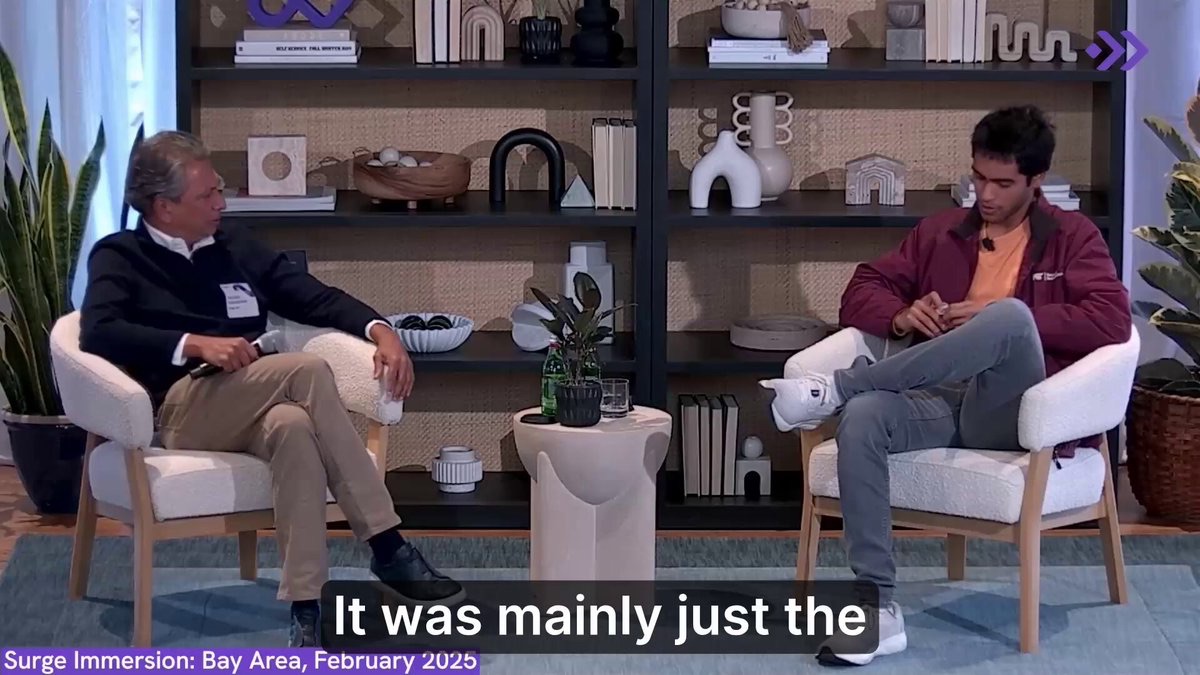
Aman Sanger on scaling Cursor to $100M in revenue in 12 months

The four co-founders started working on Cursor in January 2023.

“It was about 2-4 months of experimenting, trying different things and finding something that fit,” Aman recalls. “Then we shipped it and it had an okay launch.”

The initial version of Cursor got some initial buzz because they shipped it with GPT-4 at a time where very few products were using Open AI’s latest model. But then usage tanked.

The team began to doubt their approach after the failed launch. Aman explains:

“The entirety of that summer was just incredibly slow growth, and that was somewhat demoralizing. The big question in our minds was, ‘Are we being too ambitious?’ We were trying to build this general purpose thing for all engineers, but with this really small team, maybe we should focus more narrowly on some particular use case like tests or bug detection.”

But the fact that they were users of the product gave the team the confidence to keep going down their initial path:

“The really magical thing about this product was that we were users of it. So we could iterate incredibly quickly, and we tried all these different things that summer. Then we found this core set of features that worked incredibly well.”

The two key features were Command K for instructed edit ability and code-based indexing that let you ask questions about your whole code base.

“After we integrated those two features and launched them, growth kind of just took off.”

Aman continues:

“A lot of the work of Cursor has been just experimenting with what is possible. For everything you see in the product, there’s like 10 failed experiments that didn’t work… All of our work for the first 6 months to a year was trying to find new ways to harness these models and make these models better for programming.”

Another factor that contributed to Cursor’s success was their willingness to ship half-finished features:

“We released these half-finished things, which a lot of our competitors refused to do. The first version of Copilot++ and Cursor Tab sucked. But once you release it to the world and see how people react to it, you can improve on it a ton… We biased toward releasing as soon as something shows signs of usefulness to the team.”

Video source: @peakxvpartners (2025)

Video from the post▶ Watch on Twitter

@StartupArchive_ Shout out to @iannuttall and his early Cursor tutorial videos! Ian's explanations were the missing link I needed to finally "get" it. And fast.

I send the playlist to every new-joiner to our team as a quick-start.

1 reply · 1 like · 169 views · 2 bookmarks
In reply to @signulll · Apr 19, 2025

was talking to a friend about my product manager post & we were both like, how are there still so many ppl who can’t build anything, even with ai holding their hand? it’s ridiculous. there are too many thinkers, not enough builders.

if you have an idea, you build it. that’s the only way to test if it holds up. bezos made people write six page memos instead of slides to force clear thinking. that was smart then. but now prototypes do the job better.

As soon as Claude artifacts came out last year, I prioritized one-on-one hour-long sessions with every product manager and designer in the past org I was in.

I really thought that this was it! No more waiting on engineers (like myself btw) to get through the first five iterations for weeks and months. They could do it in a few hours.

It did not register with even one of them. I got mostly blank stares, confusion, or rejection ("I'm only going to use Figma because that's what I learned and that's what I was hired for.")

Almost exactly the same resistance with the software engineers. It took me two, almost three years now, with demos and tutorials and weekly show-and-tells for them to "accept" Cursor.

Completely different with our sales and ops team: Fully self-enabled, building prototypes, assistants and end-to-end production systems since management ChatGPT.

My favorite quote from the sales team at our first day-long "AI Hackathon" last year:

"We started the day working on this idea but we had shipped it before noon. So we started the next one and we're almost done. It'll save us about 50 hours per week at a minimum."

3 replies · 6 likes · 1.1K views · 1 bookmark
In reply to @SpringStreetNYC · Apr 18, 2025

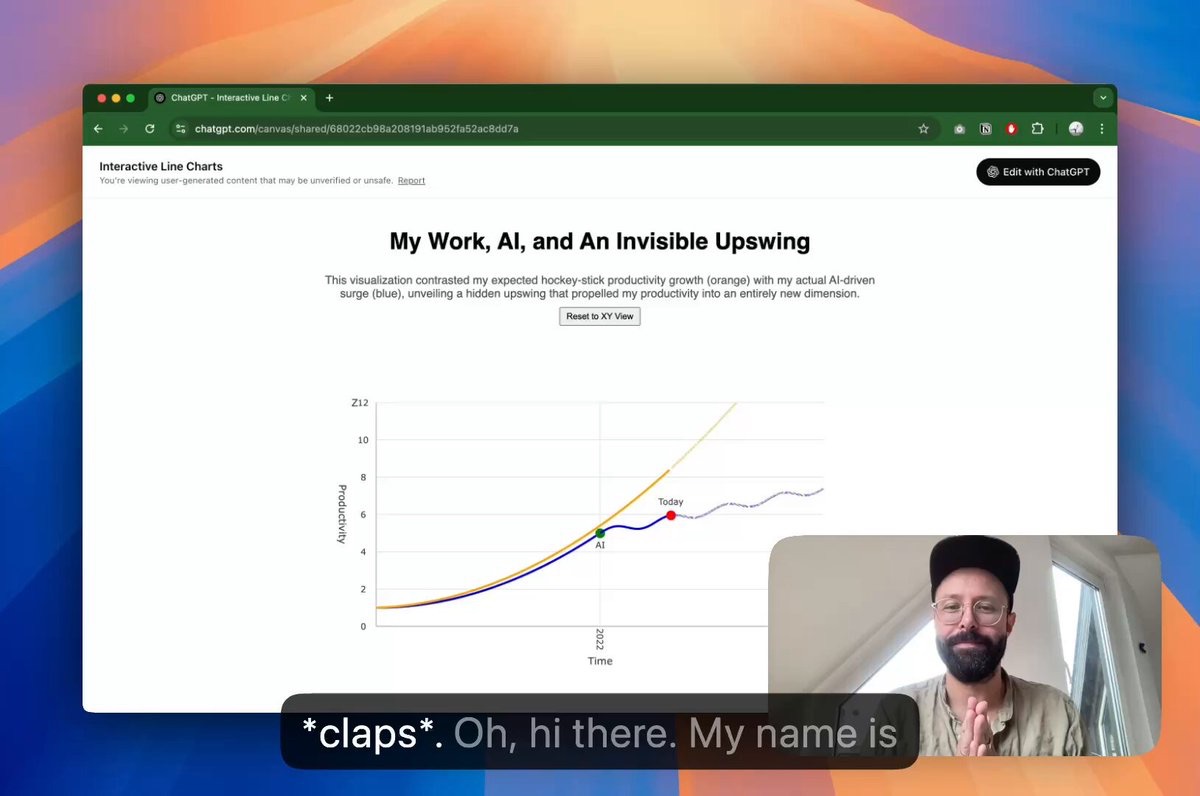
PS: Here's the link to the graph I'm using (Thank you @ChatGPTapp + Canvas) -> t.co/p4om0GUROs – Note that you'll have to allow Plotly.js to be pulled in!

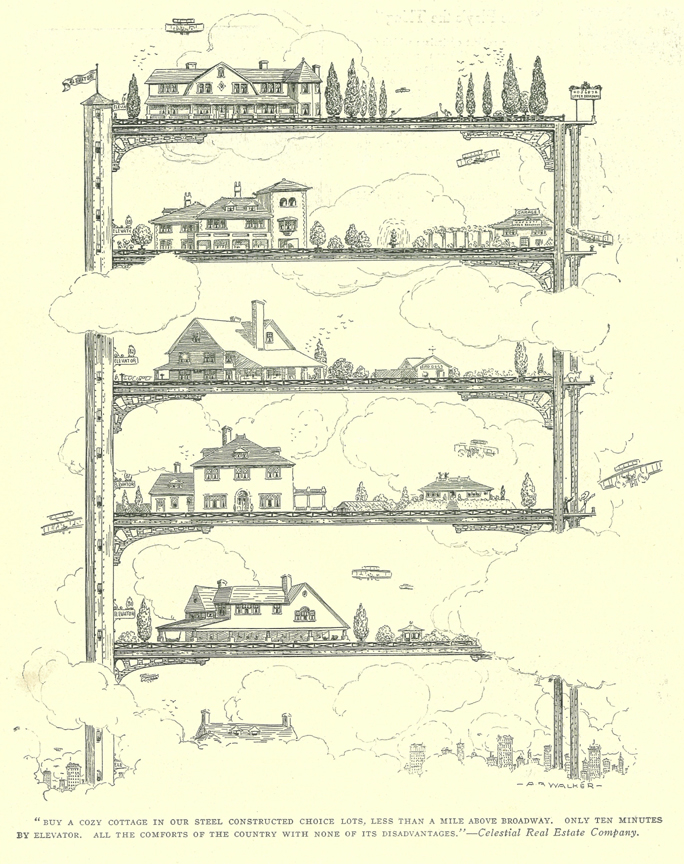
@ChatGPTapp PPS: Here's another before/after illustration for how we may think about AI, AGI and it's impacts (Originally from Rem Kolhaas' Delirious New York)

Before 1930: What we think this is
After 1930: What the future actually is and means

"BUY A COZY COTTAGE IN OUR STEEL CONSTRUCTED CHOICE LOTS, LESS THAN A MILE ABOVE BROADWAY.
ONLY TEN MINUTES BY ELEVATOR.
ALL THE COMFORTS OF THE COUNTRY WITH NONE OF ITS DISADVANTAGES." – Celestial Real Estate Company. – From Life Magazine 1909
The Empire State Building, 1930