Alexis Rondeau

Newsfeed

Everything I publish, in the order I published it: dispatches from Twitter, videos from YouTube and notes from my vault, archived here in full — text, images, video and links — so they outlive the platforms.

857 dispatches since March 2014 · page 31 of 35

Write Thursday, 29.11.2018

A few random thoughts jumbled up and put together. 

Ran the first part of the workshop with Hella this morning and I think it went really well. I enjoyed the questions and how we found our way through trying a bunch of tools until we landed on a few core decisions. 

I’m particularly proud that I held myself back on giving too much judgmental input – As in: When faced with a decision, I asked them what they think makes sense and refused to say what I’d choose – to avoid influencing them. The data should speak for itself. 

A few things: I would probably not go into the market because it’s tiny, enterprisey and hard to find the person that cares the most about it. 

But they’re set on it and they’re being paid a salary so I guess I can understand why they’d go ahead anyways. 

They chose COO as core customer segment #1 which I think isn’t the right one. I think we found that CIOs are much more likely to respond to their message. But they chose COOs so that’s fine. It’s their venture. 

I’m still at Factory, decided to spend time here before heading out. Checked in with Niels for a beer at 7pm but I don’t think he’ll respond back in time. I’ll have to ask earlier to give him a chance to plan ahead a little. 

Who would I like to see of my friends? Jonathan comes to mind. Clemens is cool. Niels of course. Volker, haven’t seen him in a while. 

That’s already a good list. 

The daily planner is going really well, I like it. I invested some money into a nice Moleskine book and so I probably also want to like it but it’s good to do the goals by hand every day. As Grant Cardone said, I’ll have hand-written my goals 700 times by end-of-year. 

So, that I really like. 

For C Space I think we got all things out of the way yesterday so we’ll probably welcome new members tonight or tomorrow. 

Was a little stressful yesterday but we made it work. 

Gonna see Franzi tomorrow. Then she’ll be gone for a while traveling. And we’ll have part 2 of the workshop tomorrow to start running the first ad. 

I think it’s a good format. Plus I already can imagine a second course at a higher price-point. 

Plus, if I do it well tomorrow, I can branch out into other teams and maybe even other accelerators. That’d be nice. 

Gotta make sure I get a good video testimonial from Jonathan, Henry, Soeren, Peer, Tomas and Patrick. That’s actually a really nice list right there. They all have something different to say and I helped them all!

And I’d do it for free, too, because it’s a lot of fun. 

So, yeah, nothing exactly to write about besides just downloading a bunch of strands of life. 

I guess I’m also a little tired from the workshop but not TOO tired to write. It may get really cold on the bike ride home. We’ll see. From tomorrow on, I’ll probably put on the ski mask to keep a warm head. My mom bought that for me. It worked well last year. 

What else? Been posting regularly but I’m really not sure what to share today. 

Because I shared so much already with Tomas and Patrick. 

We scanned. 

Market Scanning. 2nd degree Cybernetics.

This Week's Challenge: “Only positive thoughts and actions for 24h“

In Grant Cardone’s book “Sell Or Be Sold”, he challenges the reader to start a timer and aim to only think and act positively for 24 hours.

There is only one rule:

When a negative, self-limiting belief or action happens, you have to reset the timer and start over.

I’ve challenged myself for a 4 days now.

I’ve “failed” at least 10 times but it’s getting easier and more fun with practice.

Today I finally completed a full 24 hours!

What I like about it:

  • I enjoy a good challenge.
  • It’s a lot of fun.
  • It’s deeply personal.
  • It has an uplifting, empowering effect on my attitude and outlook.
  • I’ve become more aware of “head trash” that otherwise sneaks into my head unnoticed.

Plus, It’s easy to try (and no one needs to know.)

All you have to do is simply…

  • Open your phone’s clock app
  • Set a timer to 24 hours
  • Start the timer and focus on positive thoughts and actions
  • And… if you slip up, reset the timer.

Community Trend Watch: Shortlist Berlin December 2018

For Market Researchers: Social Trends is a free tool that lets you stay ahead of the curve by giving you the fastest growing Meetups in the ‘taste-maker’ cities of New York, Berlin, London and San Francisco.

Trend Watch Focus Berlin

There is a ton of activity in Berlin, Meetups are happening left and right. Over the course of the last year, I’ve seen oodles of fitness, social entrepreneurship and Blockchain-related Meetups come and go.

But today, I would like to share with you a shortlist of interesting communities that have shown consistent growth and strong “gravity” attracting high numbers of members.

Meetup.ai

Started only 8 months ago, Meetup.ai is a community built around Artificial Intelligence. With a consistent growth rate it has attracted 1,422 members to date.

From the founders:

Witness AI in Action
We believe in creating opportunities and connecting people with technology that goes beyond theoretical knowledge to real world applications. We believe in challenging the status quo and the unlimited power of technology to lift society into the next era

Professional Network
We invite everybody to an exchange of knowledge and offer an open environment for people to connect, find inspiration and imagination. We are shaping a community of exceptional personalities that has the sheer potential to push the limits beyond imaginable achievements

Conferences, Meetups, Workshops
We are hosting these kind of events, enabling people to enhance their personal understanding for the realistic applications of Artificial Intelligence, Machine Learning and other disruptive technologies that will shape the world of tomorrow. We are providing resources and bringing great speakers to Hamburg for them to share their fascinating stories and unique insights from real world projects

Naturally, Artificial Intelligence is experiencing a huge lift over the past two years. Oddly, I haven’t seen as many growing Meetups around this topic in Berlin. Meetup.ai clearly has put in the work and that’s why I think you should keep an eye on them moving forward.

Zero Waste Berlin

A beautiful social movement to reduce waste to zero is a Meetup perfectly suited to Berlin. While “only” 257 members as of today, the constant growth, regardless of seasons, shows how it is a consistent concern to people in Berlin.

If you look at the curve below, you’ll see very smooth and straight growth which makes me think it will continue to grow organically for the coming year. And with that I expect to hear more about Zero Waste in the future!

Token Engineering

The Berlin Token Engineering Meetup is another high-growth community that has attracted over 500 members in the past 6 months. Overall, a nice growth curve with an acceleration between June and September with an otherwise constant trajectory.

With more than a few hundred Blockchain Meetups in Berlin alone, this one stands out by having grown to 500 members around the very technical aspect of the field of token engineering. With this kind of growth I expect this community to continue to thrive and prosper.

From the founders:

Come join us and plant seeds for an active and intelligent community around which we can build a new engineering field - Token Engineering.

HumanCharger Unboxing: First Impressions and Use

My HumanCharger device is finally here, after a long, long, long, long wait.

I’m very excited and happy!

Here are a few things I noticed:

Unboxing and First Impressions:

  • Nice, clean packaging
  • Easy to open
  • Was able to turn it on right away
  • The device itself is made of smooth metal and feels nice
  • The earplugs seem standard, made of plastic and rubber
  • The LEDs are smaller (2mm diameter) than I expected and as bright as I can imagine they get (not blindingly bright though)
  • There are bright LEDs in the ear-plugs and not “fiber-optic cable endpoints” as Oleksii and I had theorized for heat-management.
  • Technical specifications from the booklet:

    • Typical session duration: 12 minutes
    • Average light intensity: > 10,000 lux (within 1cm of the LED)
    • Peak wavelength: 450nm

First Use

  • The earplugs fit comfortably in my ears though I’m not sure if they’re positioned correctly. No guidance found in the booklet.
  • The earplugs got warm but not uncomfortably so.
  • The battery was empty less than 10 minutes after start. I think that it was low on power to begin with, so I’m charging it now. That makes sense, I didn’t expect it to be 100% charged.

So, right now I’m waiting for a re-charge and the experiment will begin by tomorrow morning. I’ll probably write a few more posts on the progress I’m making with the HumanCharger.

Why I’m a Slow Learner But Fast Performer

Over the last year I went on a deep-dive to learn a new skill: How to market and, by extension, how to sell products that I love.

I’ve enjoyed the learning-process. But to be honest, I’m frustrated because my progress has also been slow.

Well, the good news is… I’m finally “getting there” to a point where I can finally perform.
But, maaaaannn, this took much longer than I expected.

This made me think about how I absorb new things…

First off, I’m a total “single-tasker.”

Yet, once I’ve absorbed it, I can speed up execution and perform fast. Over and over again.

I want to believe that – while my enthusiasm goes full Dunning-Kruger – my performance compounds over time.

I see others breeze through what takes me days, weeks and months. It’s hard not to feel down sometimes.

My “slow but steady” learning style has been my mode of operation since University. Instead of taking all required courses, I usually took half the amount.

While half as fast as others, I was usually top of my class in each of the courses I did take.

Well… when I’m learning something new, I can tell that my brain is completely focused and engaged. I can’t think of anything else for that period.

It’s like when you learned to ride a bike.

In the beginning it was hard and slow. You gotta keep your balance, move your feet, steer with your hands.

It required full attention and time to practice and “sink in.”

Then, with a little bit of consistent practice it got easier and required less attention. To the point where you don’t have to think about it but do.

So, long story short. I’ve learned a lot this year. It took me much longer than I expected.

It’s been very frustrating…

But I’m also noticing how it’s becoming easier and easier every day.

Check In: How I Make Consistent Progress Across My Major Life Goals With Giraffe

I wanted to give an update on my usage of Giraffe.app – My personal Goal-Setting, Plan-Making and Task-Executing workflow.

Reaching Cruising Altitude

It’s been great. Actually better than that. This week I finally started to achieve “cruising altitude” by executing relatively consistent. Look at the image below. After relaunching and losing the old track-record and a severe cold 2 weeks ago, I’m finally getting to a consistent output per day. So instead of big spikes and low valleys, I’m stoked to start seeing consistency.

Adding Sparklines For Balance

Sparklines help me balance out my efforts by seeing which venture has gotten a lot of attention while others lie dormant. I use them for quick glances on what to work on next to ensure progress on all fronts.

Add Fun With the Mascot

I like having the little Giraffe as part of the UI. Makes it more fun. Less technical and it makes me smile a few times a day. He’s so silly!

Snappy Response-Times

The UI is still snappy and fast, even after adding 100+ tasks over the last weeks. The Execute tab loads in 562ms (aka. Half a second) which means the rewrite was worth the time and effort.

Simpler and Fullscreen Mobile View

Another small change based on using the app on mobile every day. I made it so it’s fullscreen now, and I removed a lot of the noisy elements (breadcrumbs, sparklines, charts, headings) to come up with a simple, effective list.

Overall, I’m stoked and excited and am proud of using it every day while maintaining consistently productive output.

Community Trend Watch: "Starfish Mission" in San Francisco

As you may or may not know, I built a Meetup Monitoring Tool last year that allows market enthusiasts like myself to:
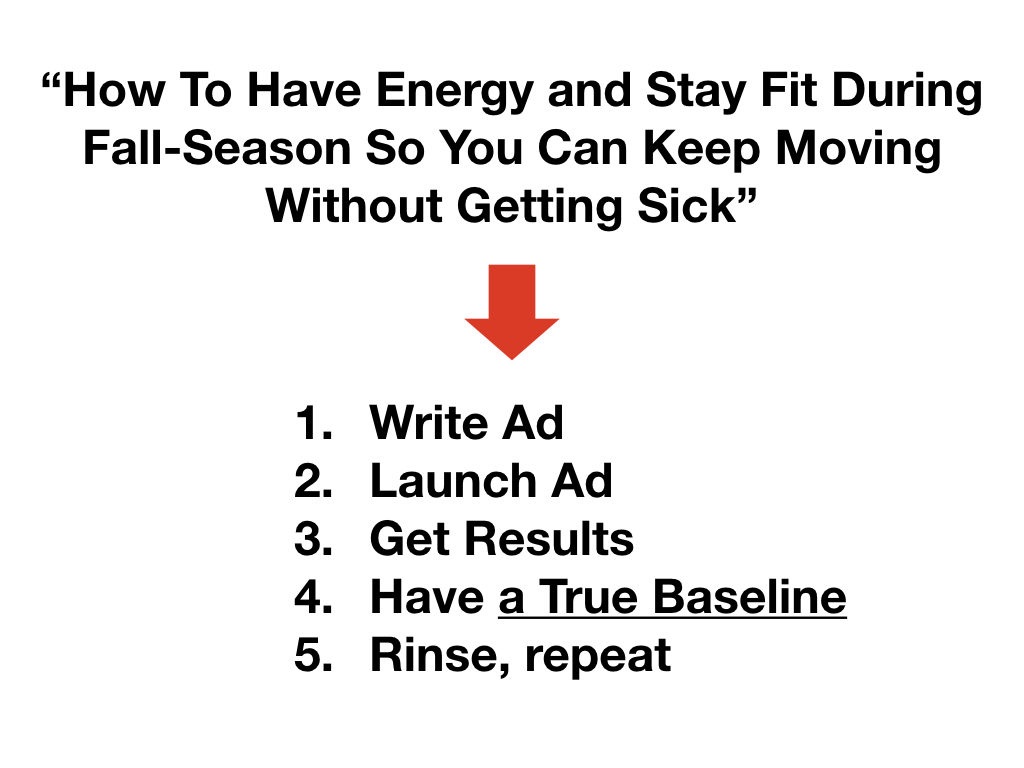
“Discover the Fastest-Growing Community Trends Today So You Can Stay 2 Steps Ahead Of the Curve … Without Wasting Hours On Fruitless Research”

I started about a year ago keeping track of the Meetup member counts in Berlin, then quickly expanded to New York, London and San Francisco. By today I have a 365 day data-set of growth for each Meetup in those cities. It’s really cool I think!

Each day you can get the Top 10 Fastest Growing Meetups per city and it looks like this:

You’ll see the list sorted by Growth – Which means that Meetups are on top that rapidly grew. Note that sometimes, the Meetups are still very small. In the example above, “SF Dating, Relationships and Sexuality” is on top while it has “only” 150 members.

Let’s look at it more closely to confirm. It went from 1 member to 150 which means it grew fast. Secondly, and in a way more important, the progress is nice and steady. It’s got a healthy, continuous growth curve.

However, the ranking is just machine-based, simple math. It takes a little bit of human research to spot really interesting topics beyond the growth rate (I’m working on an AI solution to make even this part automated, but for now, bear with me)

Based on the data of the past 90 days I’m beginning to call out the Meetups that you should know about before everyone else jumps on the bandwagon. So, without further ado, here’s the first one:

🔥This Month’s Hottest Meetup in San Francisco 🔥

Starfish Mission

As far as I can see, the hottest Meetup in San Francisco this month is “Starfish Mission.”

Why? Because it has an outstanding growth rate and insanely steady, geometric growth over the last 7 months! Consistent growth, steep slope and more than 1,500 members at this point. I think you should keep an eye on this one. Note that it doesn’t have to be in the No.1spot to be the most interesting!

You many wonder: “What is Starfish Mission?”

As per the organizers:

"Starfish Mission is a blockchain centric co-working ecosystem inspired by the passion of the local bay area blockchain community. The organization’s mission is to inspire collaboration, promote education, and unity amongst the many in the community who seek to change the world using blockchain and decentralized ledger technology."

This Meetup started 7 months ago.

Here is a close-up to give you a more detailed view.

Over the coming days I am planning to publish more further Meetups that I think you should be aware of.

If you want to stay ahead of everyone else on these emerging trends, shoot me an email at Alexis dot Rondeau At Gmail dot Com and I’ll put you on my private email list. You’ll then get the fastest-growing Meetups before everyone else.

How To Discover What You Really Need the Most With the "Needs Card Deck"

I totally forgot to mention this, but I made a card deck last year that has helped me explore and discover needs as part of my personal development.

I’ve used the deck to rapidly and easily identify and understand those parts of my life that were either helping me move forward or that were holding me back emotionally.

It’s also a radically insightful tool for…

  • Relationship Development
  • Customer Needs Research
  • Design Research

In short, the cards are like “Google Maps for Your Needs and Feelings”

The list comprises of about 50-60 core needs published at Center of Non-Violent Communication’s website which has the following (incomplete) list of needs and desires:

CONNECTION
acceptance
affection
appreciation
belonging
cooperation
communication
closeness
community
companionship
compassion
consideration
consistency
empathy
inclusion
intimacy
love
mutuality
nurturing
respect/self-respect
safety
security
stability
support
to know and be known
to see and be seen
to understand and be understood
trust
PHYSICAL WELLBEING
warmth
air
food
movement/exercise
rest/sleep
sexual expression
safety
shelter
touch
water
HONESTY 
authenticity
integrity
presence
PLAY 
joy
humor
PEACE 
beauty
communion
ease
equality
harmony
inspiration
order
AUTONOMY 
choice
freedom
independence
space
spontaneity
MEANING
awareness
celebration of life
challenge
clarity
competence
consciousness
contribution
creativity
discovery
efficacy
effectiveness
growth
hope
learning
mourning
participation
purpose
selfexpression
stimulation
to matter
understanding

(© 2005 by Center for Nonviolent Communication Website: www.cnvc.org Email: cnvc@cnvc.org Phone: +1.505-244-4041)

Why Use Needs As a Starting Point For Personal Development?

A major reason to use these “Needs” as my starting point for personal investigations was that, according to one school of thought, emotions (positive and negative ones) are always the result of an important need that’s either met (positive feelings) or unmet (negative feelings.)

Universal Needs, Individual Responses

Furthermore, while needs are relatively universal, the individual response to them are highly individual. I find this deeply fascinating.

For example, if I’m currently in need of community and that need is met, I may feel positively calm.

Someone else may feel positively excited for the same reason.

If my need for community isn’t met, I may feel negatively frustrated while someone else may feel negatively bored:

So, to better understand my emotions (and my actions that come from them) I use the inventory of needs to navigate an otherwise complex ball of golden twine also know as my psyche.

There are a bunch of ways to use the cards, but I’ve found two that work the best for me.

Strategy 1: Drive By Intuition

The first one is simply to spread out the cards unsorted and start to pick out those cards that I intuitively respond to. Once I’ve found a handful or so needs that I’m interested in, I start to discuss them with a partner or coach or simply with myself.

The main questions then are:

  • Is this a met or unmet need?
  • How does it make me feel?
  • If it’s an unmet need, what can I do to change that?

The last question can quickly drive out an action I can take today to make my life better.

Strategy #2: Dump and Sort

The second strategy is even simpler and just as effective to get to a selection of met, unmet and irrelevant needs:

For each card, I ask myself:

  • Is this an important, met need?
  • Is this an important, unmet need?
  • Is this an irrelevant need at the moment?

Going through each card, I wind up with three stacks: MET, UNMET and IRRELEVANT.

I then focus on the UNMET needs again because they contribute to my feeling the most unease and devise action items to solve them.

Needs are Values

I never really connected with when people, and more often, companies, talked what their values. It just seemed so abstract. Co-incidentally, discovering important needs also becomes the list of my personal values. Things that I value above all else.

Still got a few packs

**Sorry, all sold out at the moment! **

Last but not least, I still have a few packs that I produced last year. If you’re ready to turn on your own “Google Maps to Your Psyche” and discover and understand yourself more deeply, let me know. I’m selling them for $47 per pack.

Just shoot me an email at Alexis dot Rondeau at Gmail dot com and, if I still have a set, I’ll mail it to you.

Cheers!

Wednesday – 14.11.2018

Wednesday afternoon, at home, not crazy about being here but I think I’m dragging out the cold I got over a week ago, so I took a nap just now and feel better. Didn’t feel up to bar at all this morning and still went on a nice bike-ride with my dad. We visited Factory which I decided isn’t a place that I want to go to anymore. 

I also realized, based on my father’s observation, that the vibe of people sitting alongside long tables in silence at their computers totally feels like a factory. That they look like factory workers, quietly typing along and not talking to each other. 

I guess that’s one of the reasons I’ve felt so alienated there for so long. I just couldn’t put my finger on it. 

So, I think it’ll be best to cancel my subscription this week and avoid paying another $130 per month for a place that I don’t enjoy. I’ll be able to put that money towards things that give me joy and move me forward. It’s kinda sad because the Factory building is really nice. But I also realized that the endless amount of heavy doors you have to open and close to get from A to B really disrupts my flow of thinking and working. 

I also think I will cancel my Drip.com subscription and the Javelin.com subscription, too. In both cases I can use other, cheaper services. I will keep my Clickfunnels subscription because that’s been really working well. It’s a good tool and I’m learning a lot with it. For Drip I can use Mailchimp for which I still have an account. For Javelin I’m already using Evernote instead. 

What else? 

What would I like to share today? Brainstorm…

  • Birthday dinner
  • Taking care of yourself when you’ve got a cold
  • Getting better after a cold took much longer than I expected. I’m on day 10 and still don’t feel 100%.
  • I had felt a cold coming up first on Wednesday, two weeks ago. I felt weak and I noticed how I couldn’t concentrate. Then, that Thursday I felt okay again. Weaker than usual but I didn’t mind. Thursday night I had a sore throat though and that led me to believe that I was about to crash. Friday morning was okay again, I still worked through a bunch of action items, but then at night I finally crashed into bed. Saturday woke up sick, with a running nose, coughing. Saturday I didn’t leave bed for most of the day and I cancelled plans. Sunday, felt a little better, just well enough to briefly see Franzi. Monday, back in bed, Tuesday getting restless again. Wednesday thinking I’m fine again when I wasn’t.  Thursday, lots of work but not feeling great. Friday, Saturday and Sunday feeling relatively normal but still coughing and sneezing. Monday, Tuesday and today still feeling weak. Which brings us today where I’m back home and though I wish I was more productive, I’m also glad to be here and probably going to take another nap before going for dinner with my dad. I thought I had rested enough about a week ago and was on the mend but I’m still not feeling 100%. So that’s a big learning for me. It takes much more time to feel and be back to normal than I expected. I could have used a 10X massive care-taking action instead of just doing the absolute minimum and hope I’m better soon. Good insight.
  • Living modestly
  • Taking Massive, 10X Action – The chapter I read today
  • Not having internet at home – Results Month 1
  • Still waiting on the HumanCharger delivery – Frustrated
  • How I still very much enjoy working from the library
  • Having made the decision to stay in Berlin
  • Currently listening to
  • Giraffe progress and usage

What else…?


Recovering from a cold took me much longer than I expected.

In fact, I’m on day 10, yet still don’t feel 100%. It started two weeks ago. 

I had felt a cold coming up first on Wednesday. 

I felt weak and I noticed how I couldn’t concentrate. 

The next day I felt okay again and forgot about it. (I was still weaker than usual but I didn’t mind.) 

Thursday night I had a sore throat though and I realized I was about to crash. 

Then, Friday morning I felt okay again. I still worked through a bunch of action items, but then at night I finally crashed into bed. 

On Saturday, I woke up sick, with a running nose, coughing. I didn’t leave bed for most of the day and I cancelled plans. 

On Sunday, felt a little better, well enough to see my friend. 

Monday I was back in bed, frustrated, Tuesday I got restless again. 

Wednesday I thought I was fine again but I wasn’t.  

Thursday, I got a lot of work don but didn’t feeling great. 

Friday, Saturday and Sunday felt normal but I still coughed and sneezed. 

Monday, Tuesday still felt weak. 

Which brings us today where I’m back home. 

I wish I was more productive, but I’m also glad to be here. 

I’ll likely take another nap before going for dinner with my dad. 

I thought I had rested enough about a week ago and was on the mend. But it’s taking much longer to get back to normal. 

I should have taken care of myself earlier and much longer.

Do I have to decide between "anything goes" and a "specific topic" for my blog?

So, I’ve been pretty good at publishing at least one post each week for the past two months. I’m proud of having published a bunch of posts that I hope someone in the future will find useful. 

But here’s the rub: Right now, I’m just writing “anything goes” style, meaning that whatever happens to be interesting to ME that day, I write about it. 

Now, that’s a lot of fun, but I’m questioning if I’m making the best use of my time this way. Right now, I don’t have a specific audience with this blog. Maybe my friends and family who, once in a while check it out to get a sense of what’s on my mind. I guess that is an audience, but I also speak with them on the phone. 

I’m really wondering if I should write and publish…

…more deliberately – on a specific topic for a specific audience– or just for myself as I have. I’ve been racking my brain for a week now and have not come to a decision. 

Well, actually…

What I have come to as a decision is that what matters to me right now even more is to increase the regularity first. That was an initial goal (to publish something of value every day) and that has suffered because I haven’t formed a solid routine yet. 

Some days I might be in the position to post something. Some days I might not. (For days where I don’t have wifi, that’s okay, I can still write it in Evernote)

Anyways, so I just realized that, while I don’t know yet “where” my blogging is going – I can’t seem to make up my mind –, I do know that it needs to be more regular, daily. 

For me, developing a daily creative practice is more important than knowing exactly what to write about. 

In fact, I have a feeling that with more practice the direction will start to emerge.

Thanks for reading!

Alexis

PS: Here’s is a quick retrospective I’ve done today to help me think through my next step…

How I’ve Rebuilt the Giraffe App with TDD and Speed In Mind

Background: As you may have seen, I built myself a goal-setting, planning and execution app that helps me to consistently, every day, work towards my dreams. After reading several motivational books, they usually would boil down to the advice to “Set a goal, make a plan and make progress every single day.” I think that’s solid advice.

With that in mind, I tried to follow this advice but I couldn’t find a tool that would allow me to do it all in one place. I tried every task manager and todo list out there, but none allowed me to (inclusively)

  • Set high-level goals
  • Plan, break down and prioritize those goals into tiny, bite-sized tasks and
  • Execute on a simple todo list that’s auto-generated based on my planning, break down and prioritization

For years, I had tried to represent this flow with apps like Evernote and Google Docs (for writing down my goals), Omni Outliner (for breaking down and prioritizing the tasks needed) and Trello (for keeping an active backlog that I could work off of.) But nothing was integrated.

So, two months ago, I knew exactly what I wanted and built a simple Rails web app that gave me that flow. The app itself worked but it wasn’t particularly well-built. My biggest question, the reason I built it, was “Will this actually help me be more motivated and productive?”

I started to use my app for 6 weeks. It did precisely what I wanted it to and I concluded two weeks ago, that this wasn’t just a nice idea but a valuable tool.

Now, as I had added new goals and broken them down into easy, 5-minute tasks, my database had grown to 300+ nested tasks.

That’s when the app got slow. To the point where I couldn’t use it anymore without feeling frustrated again. (Because to me, Flow is everything.)

I figured this is the right time to throw away the prototype and start building a “real” piece of production software that has:

  • Complete feature-parity and look-and-feel to the prototype
  • Full automated test-coverage for all features
  • A significant speed-up even with hundreds or thousands of sub-tasks

The list of features from the prototype became my backlog so it would be the “same app” overall. Since the prototype had gone through several iterations already, I knew exactly what I wanted.

I decided to write feature-level automated tests because I think they’re the highest level of quality assurance that makes sense at this stage (I still might throw the app out if it doesn’t work for me down the line.)

To give you a sense, here is the ‘Completing a task’ feature-test story in prose and then in code:

  • Given I am on the execute tab
  • And I have an un-started task
  • When I click start
  • Then I see the button complete

…becomes..

I experimented with different performance improvements and landed on storing the “task tree” (the slowest piece in the prototype) directly in the database, as a binary object using Ruby’s Marshal.load and Marshal.dump. Here is an example of what I’m talking about.

Overall the development experience has been great. I use strict outside-in TDD/BDD, where I

  • Write the test based on the “Given, When, Then” prose from the backlog.
  • Run the test and see it fail
  • Fix exactly the reason the test failed
  • Rinse and repeat until the feature is done and the test passes

Anyways, after a few evenings, the app has now MVP/prototype feature-parity and I’m using it every day. It’s fast. It’s a bit nicer now and maintainable because of the tests.

Happier Through Bright Light! My Winter S.A.D Well-Being Research – 1 Year of Light Therapy Prototypes

Hey there, Alexis here!

When I moved to Berlin, the winter hit me like a a gray, dark, snow-free, depressing blizzard.

So, 6 years ago my personal quest for a light therapy device that works for me started.

Here’s what I found:

TLDR; Get a Luminette 3

I’ve tried a lot of options.

I’ve spent more than 1.000€ on different lamps.

I can finally say: I’ve found my ideal solution: The Luminette 3.

  • I’ve used it practically every day this winter.
  • It works as good, if not better than all other options I’ve tried.
  • One session only takes 20 minutes. (Check out six years of light-therapy experiments below)
  • I wear it in bed while waking up, while I’m brushing my teeth, making coffee, breakfast.
  • It’s so light and well-designed that I forget I’m wearing it within minutes.
  • I can wear it easily in combination with my prescription glasses.

But. Before you read on, please note: I’m NOT affiliated with LUCIMED SA, the company that produces the Luminette. There are NO affiliate links on this page and I have NO personal benefit in recommending the Luminette. Zero. Zilch.

luminette.jpg

Here’s how you wear it (It’s from their website. Yeah, it’s a bit cheesy but it shows you that it’s not ‘glasses’ but a visor. Even while wearing prescription glasses, I’ve never had a problem with line-of-sight with it.)

luminette-reality.png

My hot take: At 230€ it’s underpriced

Even though, yes, “it’s just a piece of plastic with some LEDs”, it’s the best-designed user experience.

That matters because all other options failed me to get the amount of light exposure you need to get the benefit.

Based on all other trials below, I now can say that at 230€, this device is actually underpriced.

The short of it is:

  1. It works as good, maybe even better, as other light therapy devices
  2. It gives me the experience that I’ve been searching for for 6 years

Everyone who moves to Berlin should be given one of these for free.

The LONG story starts in 2016, when I moved to Berlin. If

2016 – Moving to Berlin

About a year ago I was inspired by my friend Tobi to look deeper into the connection of my personal well-being and the type of light I’m exposed to throughout the day.

I’ve suffered from SAD and depression in the past, especially in winter.

So I got interested in getting more artificial “sunlight” because the winters in Berlin are rather dark and gloomy. I wanted to find a device that would

  • Fit in nicely with my existing morning routine
  • Have a noticeable positive effect on my mood

What follows is a short overview of all the experiments I built to ensure more “natural” sunlight-type light throughout my day.

Trial 1: “Natural Sunlight Lamp”

The first thing I bought was one of these “natural sunlight” desk lamps on Amazon. It seemed like a good first option and I liked the idea of having a “passive” device that just sits there while I do my work.

In short, after using it every day for a month or so, I don’t think it had any effect on my well-being. It’s still a nice lamp and the light is okay, but I don’t think it’s a therapy device.

Attachments/244ff907cfbb1b2853dca7aea5984391.png

Trial 2: “Indoor Farming Ambient Light”

Next up, I figured, “Maybe I can use indoor growth-lights as a sort of ambient light source in my apartment. Again, this would be a “passive” approach. My apartment would be brighter overall and I would get the desired effect through being there.

For this experiment I bought professional SanFlex 20 LED arrays and setup (as part of another experiment) my indoor micro greens farm. While the plants grew happily, I don’t think it had any noticeable effect on my well-being. The lights are very bright and I definitely was exposed more to this light, but honestly, I didn’t notice anything different.

Attachments/f5ecb5e7250032ad111cd824f0529a67.png

Attachments/601e8d3ab079c995b5c91214338eef18.jpg

Trial 3: “A ‘Real’ Light-Therapy Light-Box”

“Okay” I said, “No more passive, make-shift solutions.” I was ready to try out a “real” light-therapy device like the one I bought below. These are actual S.A.D. lamps that are designed to be used “actively” every day by looking into the light and thereby regulating my circadian rhythm and mood.

I used the light-box every day for 2 months in the depth of winter, for about 10 minutes in the morning within 30 minutes of waking up.

This time around I felt like I actually gained the desired benefits. I felt lighter, happier and less depressed compared to the winters before.

I think it really worked well, however, I really didn’t like the usability of the light-box.

You have to sit in front of it, for 15 minutes looking at the bright light. It’s a big “flow-breaker” in the morning, especially since I already have a quiet meditation practice. You can’t really do anything. You have to sit, hunched over, and not really move for a long time.

Not good enough.

Attachments/fc304250a0452849aabc6ae32863f25b.jpeg

Trial 4: “Hacking My Light-Box For Convenience”

So, next up, to make the sitting session easier and more comfortable, I screwed the light up to a tripod. Combined with a chair, this worked much better than having the light-box on the table.

This worked well, but, what kept bothering me was the whole “sit still for 15 minutes in the morning” issue. Even with a nicer setup. Also, this thing is VERY BRIGHT which, on some days, just feels too much.

Attachments/baba7798be69e3535f62b29000a041d2.jpg

Trial 5: “DIY Passive 480nm Wavelength LED Array”

So, I went back to Amazon and looked for alternatives. One of them was the Philips GoLite that, based on research, works passively (You can have it close by while working, for example) and uses blue light at 100 LUX instead of 10,000 LUX white light.

Only problem was the price tag of more than $200 which at this point I didn’t want to spend.

So, I looked around and found the documentation and found the wavelength of the blue LEDs in those lamps (480nm) and figured, “what if I build my own?”

philips-goblu.png

So, together with my dad, that’s what we did.

I wanted to have a blue-light lamp that I could use “passively” while working that wasn’t too bright and could produce results.

We went through several versions, but they all had in common this snap-mechanism to put it on top of my laptop without being too bright.

Attachments/18381aa965a174dfdfebc65100ee92ea.jpg

Attachments/f65214e2e77cee7604f13b5c03bba16d.jpg

The first version was clunky but usable:

Attachments/62cae13037e54f150b1a894c19b904c2.jpg

The final version was actually pretty slick and thin and snapped nicely on the laptop.  At that point it was also USB powered, so it was fully self-contained. The lights were 750nm wavelength LEDS.

Overall the experience was excellent. I felt more alert over weeks and felt happy with the usability of it. I could just go about my business and I’d get the right amount of light into my face and eyes directly without having to pause or wait.

Also, it still worked even though the light wasn’t very bright. For a while I was very happy.

Attachments/2f1ff1d5156092ce5d786bf24a7d7806.jpg

Attachments/a7badfed8f714ea10712e0868958b473.jpg

Now, (un)fortunately, around that time I found studies about how unhealthy this particular blue light is to the eyes in the long run. One of the articles was (in German) https://www.spektrum.de/news/warum-blaues-licht-den-augen-schadet/1584090

Bummer.

So, I didn’t want to risk long-term issues from using very blue light regularly.

Plus the summer came and I didn’t need any devices for the time being.

Now, as winter is coming closer, what’s next?

Trial 6: Trying “Trans-Cranial Bright-Light Therapy”

While reading Tim Ferriss’s “Tribe of Mentors” someone mentions a device called “The HumanCharger” which piqued my interest.

As it turns out, it’s also a light-therapy device. BUT, instead of using the eyes to “administer” bright light, it’s using the brain directly.

Super freaking exciting.

It’s earphones that emit bright light straight to the brain.

Attachments/b0f841dc1853bd005fe17aa5db9f78a0.png

Attachments/abe1788f557c52fe07cc350243422fe1.png

Now, the first thing I noticed in their research was the claim that “The human brain, per se, is sensitive to light.” So, before spending $200 on the device I figured I could build something myself… A braid of sorts with LEDs shining into my cranium!

Attachments/da463c9f7a77860d9bf52be65692bbbb.jpg

Well, suffice to say, that this was not very comfortable and I didn’t try to use it for long.

But my interest was there. Transcranial light-therapy!

So, today, I ordered my pair of HumanCharger and can’t wait to start testing it out. It’s going to arrive in 2 weeks. CAN’T WAIT.

It definitely has a lot going on for it in terms of usability and ease – from what I can tell. I’m super excited and have high hopes for this winter. If it works, it’s an absolute no-brainer.

Attachments/ecbe49096fe87f988ae943008b00915a.png

Where I can get the benefits of a bright light-box without having to sit down and sit still for 15 minutes.

That’s all I ask for.

Follow-Up on Humancharger

In short: It had NO noticeable effect even after weeks of use in accordance with the instruction manual.

Compared to the big Beurer light box which had an direct effect, the Humancharger is not an option. Period.

I wrote a few notes on my experience here, and here but because it didn’t work at all, and having lost 200€, I felt no motivation to do a write-up after.

Trial 7: Giving a more compact LED-based Lightbox a spin

beurer.jpg

I wrote a longer review on this one here My Light-Therapy Lamp Solution with Kindle because I had such high hopes but got so frustrated with the abysmal UX of the device.

Since using the lamp with my Kindle didn’t neatly fit into my daily schedule, I placed this lamp on my bedstand and used it while I was still waking up in the morning, in bed.

Unfortunately, there is nothing agreeable or soft about turning on a 10.000 LUX lamp in your bedroom at 6:30am, especially since I have a partner who would like to start their days somewhat slower.

To their credit though, just like the bigger light box I used in the earlier trial, this works.

However, it only works (and that’s the whole RUB of this series of trials) if you can make yourself SIT for an extended period of time in the first hour of waking up without moving much.

Finally: I found my ideal solution!

This journey started 6 years ago and I’ve tried a lot of options.

Today, I can finally say: I’ve found my ideal solution. It’s called The Luminette 3.

And even though, yes, one could say “it’s just a piece of plastic with some LEDs”, it’s the best-designed UX for the occasion.

Based on all other trials above, I now can say that at 230€, this device is actually underpriced.

luminette.jpg

What do I mean with underpriced?

In fact, in my calculation, the whole package should cost 280€-300€. This will be eventually have to be a longer post with a detailed breakdown, but in short:

  1. It works just as good as other light therapy device (Base-cost of an average SAD lamp ~50€)
  2. It gives me a supreme UX that I’ve been searching for for 6 years (Worth to me: 230€)

Notes on Luminette 3

As I shared on HN in response to “Ask HN: How do you navigate Seasonal Affective Disorder?” yesterday:

After moving from New York to Berlin, the impact of SAD hit me hard.

So, my short answer is: I am absolutely in love with my Luminette 3. I use it every day in the morning.

<mark>In my opinion, even though it's "just a piece of plastic with a few LEDs" (it is), I believe it's actually underpriced at 230€ because of its supreme UX compared to all other effective options.</mark>

And to clarify again: I’m not affiliated with LUCIMED SA, the company that produces it.

Risky Blind Spots – Getting Facebook Ads Delivered

  • The Sales-Funnel Has Already Started

So that happened. 

I ran an exciting marketing experiment over the past 7 days that resulted in me being stunted for reasons I didn’t expect. 

I had a blind-spot and - by nature - didn’t know that my experiment could fail for a reason unknown prior. 

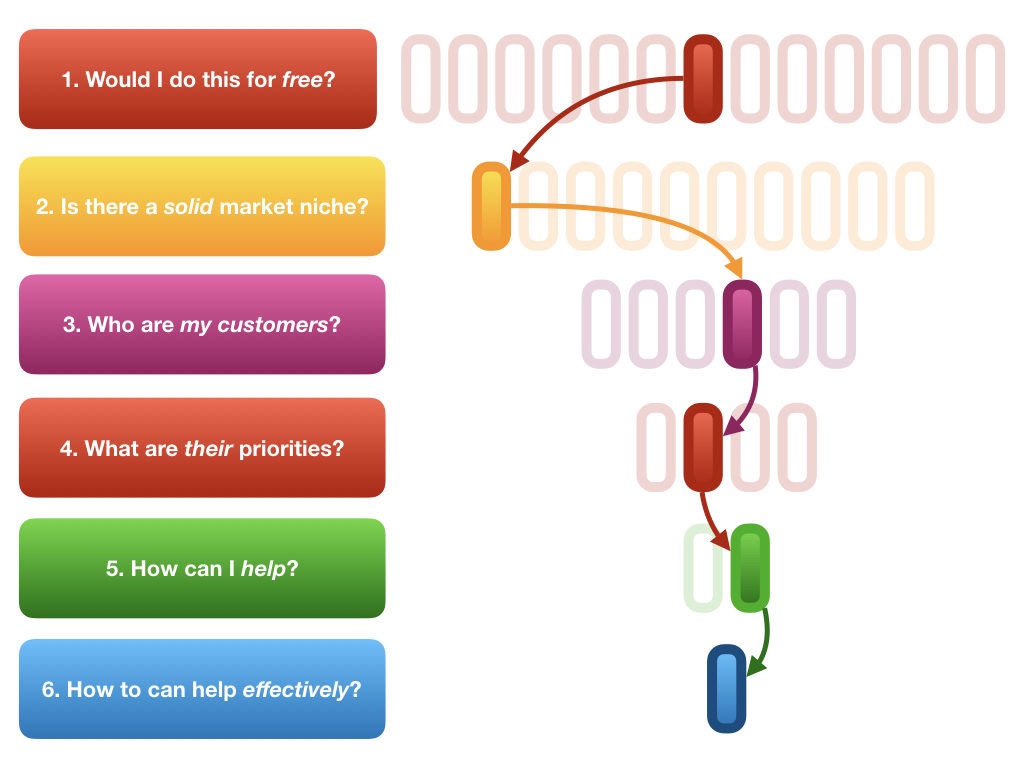
In concrete terms, I ran an ad on Facebook that linked to a sales letter that, in turn linked to a check-out page and further sales pages. You can see it in the graphic below. 

Going from left to right, you can see here the steps that the user takes through the funnel. Nothing crazy or exciting. My ad itself is pretty vanilla. It’s about running better meetings and offering my “better meetings” book for a good price on the sales page.

In fact, this experiment was going to be yet another one and my focus was going to be the transition between “sales letter” and “checkout email.” 

I totally assumed that the ad would be delivered to users and that at least some would click. Just as it had worked before. I didn’t even question that once before I launched the campaign.

Well, once I launched the ad last Monday, I was excited. I was going to measure the conversions and learn and improve that part of the funnel. 

Little did I know that Facebook – for reasons unknown – would heavily throttle my ad delivery. (I’m currently investigating what happened.)

The ad was barely put before users.

Up until this experiment it was easy for me to launch and ad, with say, a budget of $20 and have that spent every day until I had enough data. 

With this totally vanilla “Hey, here’s how you can make meetings better” ad, I couldn’t even spend $10 over the course of a week! 

I tried a bunch of things to get the ad delivered more often but in the end, I couldn’t.

It turns out that there was an assumption I made which turned out to be false: 

“I assume that my ad will run on the network”

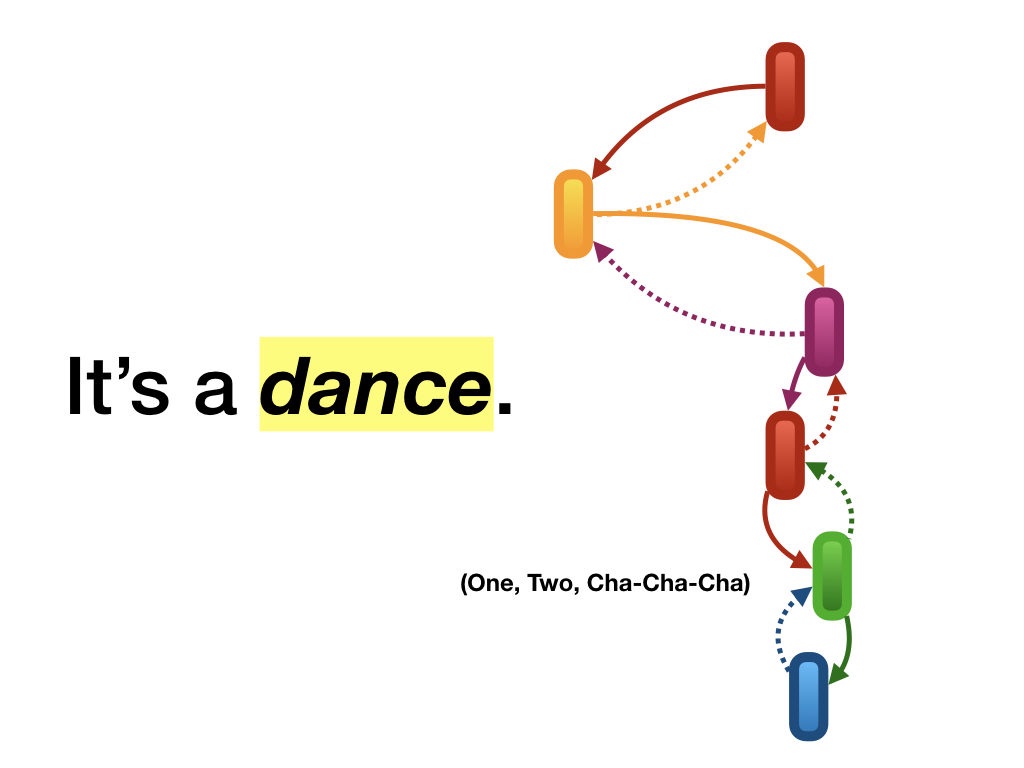
I had a blind-spot for the rules and risks of the ad network (Facebook) – As you can see below, as a result, my field of vision just expanded to the left. 

I find this note-worthy because it reminds me how easy it is to get caught up and prepare for all the things we can “see.”

In more abstract terms, I had a list of “risks” (in red) that could affect my experiment for which I prepared. See below:

What I find so fascinating about blind-spot risks is that it’s things that are obviously there if I had focused on them.

It is my belief that those blind-spot risks are the biggest and most dangerous ones. Because they catch us off-guard.

So just as the Ad Network wasn’t on my inner “radar” as a risk – I just assumed it would work–. When it didn’t, it blind-sided me. Here is a visualization of those (yellow) hidden risks that sort of “live between” the obvious red ones: 

So, what can we do to avoid falling into blind-spot traps? I’m not sure yet. I think one part is to open the mind on the more fundamental things that could go wrong. 

I believe that if I had spent a few more minutes thinking about my experiment beforehand, I would have identified the question “Will Facebook deliver this ad as it has with all the others?” – With that question I could have devised a much simpler experiment than spending time building a deep funnel. 

I still am happy to have had the learning and I will from now be more careful about my assumptions on ad delivery. 

In fact, my next experiment is only about finding the source of this problem so that it won’t ever happen again.

A Few More Books I Recommend

I’m not exactly sure why, but I read a lot of books this week.

It probably coincides with my experiment of not having internet at home at all.

In the evenings, I wind up wanting to absorb information and so… there were these 5 books.

Don Thompson’s The $12 Million Stuffed Shark

One of my favorite books. If you’ve ever wondered how prices in the art market come to be, this book gives you a great introduction.

Laurie Anderson’s Empty Places

A neat collection of the poems/songs she performed for her show “Empty Places.” With poetry, it’s not really “reading” as much as cruising through. Facilitated by Anderson’s lightning-speed wit and care.

Jay Jones’s Jim Henson Biography

Well, what can I say? It just felt exactly right to reconnect with the life story of one of my biggest heroes.

Grant Cardone’s The 10X Rule

I’m still digesting the sheer force with which this book shakes and wakes you up. A must-read.

Steve Wide’s Bowie From A To Z

Just a fantastic way to end the week on a Sunday night.

David Foster Wallace’s “This Is Water”

A quick, thought-provoking read. As always, highly entertaining, too.

David Foster Wallace’s “A Supposedly Fun Thing I’ll Never Do Again”

Hahaha. Hahahahaha. OMG.

Back to Factory

Today is my first day back at Factory Görlitzer Park, after I had “hidden out” at the local library close to my home for the past 2 months. I finished writing, editing and recording my new book there. I just needed a quiet, convenient and less busy environment than Factory to get that done. At the public library there were no distractions, a good mixture of people that reminded me of New York somehow and it was close to my home.

However, after 2 months in “happy (public) solitude” I’ve grown tired of it and I think I’ve outgrown it now. When you’re writing a book, not talking to anyone for days can be helpful. But now that I’m done and switching into “marketing mode” I need to be around motivated, entrepreneurial people again. Hence Factory.

Today’s experience has been good already. The 25-minute commute by bike (one-way) will result in about an hour of exercise on the bike for today. I ran into and quickly chatted with my friends Jonathan and Henry which is always fun.

I brought and ate my own lunch (mashed sweet potatoes, rice, cucumbers and chicken) which turned out better than expected. Especially the mashed sweet potatoes with, well, lots of butter. Delicious!

Then, I also got a lot of work done. Currently working on the ad that I’m going to use to promote the book. I wrote 15 headlines, 15 sub-headlines, collected my target audience’s main concerns, wrote 11 benefit/feature bullet points, captured and answered 5 main objections and am basically ready to write my first draft. I also shared my book in the #whiteboardhacking Slack channel.

Right now, I’m taking a break. Writing copy is intense and the change in perspective takes energy. But I think I’m on track for a solid first draft. 

Got some coffee, listening to The Orb. Plus…

Here’s a view of the room at Factory that I prefer staying in. It’s also called “the Library.” Go figure.

How I Have Grown My Morning Routine

I’m starting to appreciate how much grounding a solid morning routine can give me. It’s been a labor of love for the past year where I’ve started to “design” a series of tiny habits that I do within the first hour after waking up. I’ve closely followed BJ Fogg’s template to create new, tiny habits by…

  • Relying on an existing trigger (Waking up, getting out of the shower, etc.)
  • Starting with a small routine (1 push-up in the beginning) and increasing very gradually, over weeks and months
  • Making sure I celebrate each time (“Awesome!”)

With that process, my morning routine now looks as follows:

  1. After I get out of bed, I make my bed right away (Inspired by “Change the world by making your bed”)
  2. After I’ve made my bed, I stretch and exercise for about 15-20 minutes
  3. After I’ve exercised, I take a quick shower and groom
  4. After I’ve showered, I do 5 minutes of breathing exercises, 10 minutes of meditation and 5 minutes of relaxation
  5. After I’ve relaxed, I read or listen to 15 minutes of positive affirmations
  6. After I’ve read or listened, I go through my list of goals and confirm my day’s plan

Each routine is followed by a short moment of celebration and self-empowerment (“Nice!”)

As you can see, one routine is the hook for the next one.

  • Creating the exercise routine has been the longest project this year. I started out with 1 push-up and have grown the routine to stretching, jumping rope, 30+ pushups, 30+ leg-lifts and 30+ curls. But it truly started as small as it gets about 12 months ago.
  • I learned my breathing, meditation and relaxation routine during my Kundalini Yoga Teacher Training in 2011. That’s been since my most consistent practice in the morning.
  • The positive affirmations are a new addition but I have to admit, they’re working really, really well. They help me start the day on a high note and create the right emotional setting to review and plan my goals in the next step.
  • For my goal-setting, planning and execution, I built my own application that I’ve blogged a few times already. That has been working out well, because I have everything I need in one place.

If you want to start your routine, I recommend watching the two videos I linked above. They’re fantastic foundations for how I’ve gotten my morning routine to be a “no-brainer.”

So far, not once did I have to force myself to do any of the practices because I started super-small.

It’s been great, I wouldn’t want to change it anymore.

First, Give Them What They Want. Then, Give Them What They Need

Ouch.

Imagine you didn’t sleep well and you woke up with a sore left shoulder. You can’t turn to your left. It hurts. You call into work to take a sick day and then you call the Dr. Jackson’s office to schedule an appointment.

Then, with some effort, you make your way to the doctor’s office.

You’re feeling stressed and, it still hurts! You wait a little while, sitting isn’t too bad anyways. You get up and walk into the room. You wait another 5 minutes but you feel a little better because you’re here and the doc will take care of you.

You greet the doctor who is wearing his white overcoat. He asks about why you are here. You explain how you slept normal and, somehow, woke up with a completely stiff shoulder that hurts. Dr. Jackson listens intently and…

Cut

Now imagine, you could stop time here in this moment.

And imagine you had a remote control with which you could choose one of two responses from the doctor:

Dr. Jackson #1: Have him prescribe you a pain-killer. It will take away the immediate pain you’re feeling.

or…

Dr. Jackson #2: Have him prescribe you a week-long food and workout routine. If you follow it, your shoulder will never hurt again.

Which one would you choose?

I for one, know that right now, I want this stupid pain to be gone. It’s hurt all day already, I hauled myself here. First, I want relief so that I can go back home and heal. Yes I know. Healthy food and exercise routine help me long-term. But given the choice, I’ll take the pain-killer.

So, let’s continue the story with option “Dr. Jackson #1.”

Cut

… the doctor gives you a simple pain-killer pill. You take it with a cup of water while still at his office. He also prescribes you an ointment that you have to put on your shoulder for the coming 3 days. He also recommends a simple shoulder-rotating exercise.

You thank him, get the recipe and head out.

The pain-killer kicks in and for the first time today you can move to your left.

You feel better. So much better.

“Thank you Dr. Jackson.”

You swing by the pharmacy, get the ointment. You treat yourself for the next 3 days and actually practice the exercise every day twice.

Your pain is gone and your shoulder feels much better. In fact, the longer you exercise, the better it feels.

And you think to yourself: “If anything ever comes up, you’ll go straight back to Dr. Jackson.”

Entrepreneurs Are Like Dr. Jackson

As entrepreneur I’ve heard the adage of creating a pain-killer many times. Yet, I’ve found that I am susceptible to being Dr. Jackson #2. The one that prescribes the food regimen and weeklong exercises. Instead of the pain-killer.

As a “doctor” I know what you need. I am an expert, so I know that “food” and “exercise” will help you in the long run. While completely ignoring your agony.

This has a lot to do with having an “idea” and the ego-trip that comes with it. The food and exercise regimen is something I want you to want. Because I know you need it.

But you don’t care. At least not right now. Because when you’re in pain, that’s the first thing that I have to solve for you to trust me with any other treatment.

I recognize that it’s important to understand what my customers WANT. And solve for that problem first. Long before moving on to more involved, costly and time-consuming “treatments.”

Giraffe App: Sorting Highest-Priority Tasks By Granularity

App Overview

I even started a little landing page (that’s got to be secret for a moment longer) Attachments/58a0164956c8de45221e4a8ea97401d5.png

Start with top goals and dreams

Here’s where you set your goals and dreams:

Attachments/eca4ef8caed4c9dba54cefb7ad59c2e5.png

Break-down for each goal

Each goal includes a list of tasks and sub-tasks that can be arbitrarily broken down into smaller and smaller pieces

Attachments/10b7479b7c5bdc26ed0b5200593313e9.png

Execute the most important ONE next task per goal

And the “Execute” tab gives me the list of one top-priority task per goal.

Attachments/a8bb51cf097ad9dff2f17827ebc90134.png

Experience

Working with “Giraffe” in week 3, it’s been great. I’m definitely more productive since I started using it. At least more productive than my old Evernote/Outliner/Trello workflow and less overwhelmed.

Giraffe has allowed me to focus on tackling small, well-planned and high-value tasks all day.

Continuous Improvement

You know the saying “Jump Off the Cliff and Build Your Wings on the Way Down” – Well, Giraffe is truly being built on-the-fly as I’m working towards my goals.

And I’m improving it in small steps, polishing what doesn’t work on a day-to-day basis. I’m my own user and if something bothers me, well, I can change it.

The best improvement has been the awesome color coding that I discussed last week. I made another small tweak which now sorts the pending tasks by their granularity.

Basically, the best-planned, most broken-down, tiniest tasks are on top of the list. It can be worked on right away.

In the middle are the medium-sized tasks that could use some break-down TLC.

At the bottom is the least-planned, coarsest tasks that still need break-down.

I can’t stress how helpful it is to have the system tell me “Hey, this task is not yet broken down enough yet. You’ll have a bad time trying to tackle this as-is. Break it down into smaller pieces and it’ll be easier.”

Here’s the list that’s generated for me with annotations, explaining the colors:

Attachments/8a515c92907bda972e3d62ef67cdf94b.png

6 Major Goals

And just as a reminder: The list of 6 tasks always reflects one task for each of the 6 major goals I’ve set for myself. In my case they are, in that order,…

  1. Personal Growth
  2. Ventures
  3. Work
  4. Contribution
  5. Adventure
  6. Shared Reality

From current experience, on a day-to-day basis I can reliably push forward the first 4. “Adventure” and “Shared Reality” are a little longer-term and I don’t have to work on the every day.

See Check In How I Make Consistent Progress Across My Major Life Goals With Giraffe and How Ive Rebuilt The Giraffe App With Tdd And Speed In Mind for more details.

Using Color To Signal Task Complexity and the Need to Break It Down Further

This didn’t fit anywhere else but I think it may be interesting to others watching how my app’s UI is evolving.

I reworked my “Top Tasks” view with a few changes:

a. The task that’s “in-flight” get a blue background & finish button. The idea here is to that I stay focused on one thing at a time and don’t start another one in the meantime.

and…

b. Tasks in this list are assigned a color based on how how “doable” they are.

Here are the rules:

  • If a task is too high-level, it’ll get a red button to signal that it desperately needs breaking down
  • If a task is somewhat broken-down but not granular yet, it gets a yellow/orange button to signal it could be smaller
  • If a task is very low-level and small, it gets a green button to signal that this is good to

Let me show you what I mean:

What I’ve found so far, is that this color-coding took a moment to get used to, BUT, it actually prompted me to break down the one with the red button further and I probably wouldn’t have otherwise. It’s still at “yellow” level but much better than before.

I’ll continue using this change for a few days to see if I can increase equal progress across all 5 major goals.

We’ll see!

"Outliers" by Malcom Gladwell

Earlier this week I read Gladwell’s “David & Goliath” which I enjoyed tremendously. So, I wondered: 

“What else should I read by Gladwell?” 

“What’s next?”

Not only did Amazon put “Outliers” on top of the list recommendations. It’s been “around” and mentioned in my circle of friends for years. I may be the last person to have read it. So I did. 

What I enjoyed about “Outliers”

Gladwell is a king of using stories to drive a more abstract point home. His chapters are tight, on point, highly entertaining and easy to read. They almost always contain an element of surprise that is revealed at the end. His ideas are very, very “sticky.” I can’t even imagine how long it takes him to write a single chapter.

What I didn’t like so much

Gladwell uses cliffhangers early on in his chapters. He starts out with a high-drama setting in one story and, just before explaining or resolving the situation, he switches to a completely different story. He eventually reconnects the two and yes, it makes for good reading. However, after reading the second book of his in one week, this cliffhanger mechanic had become tiresome and somewhat predictable. 

Would I recommend it? 

Probably. It’s a staple in modern knowledge worker culture and clearly, it’s a really, really good book. I didn’t leave me with as much of a positive note the way “David & Goliath” did. I thought a lot about his findings on what makes people successful. This in turn, naturally, made me question my chances of succeeding and, to be honest, based on his findings, I’m not in an ideal place to succeed. Yet.