Alexis Rondeau

#autoresearch

5 dispatches tagged autoresearch

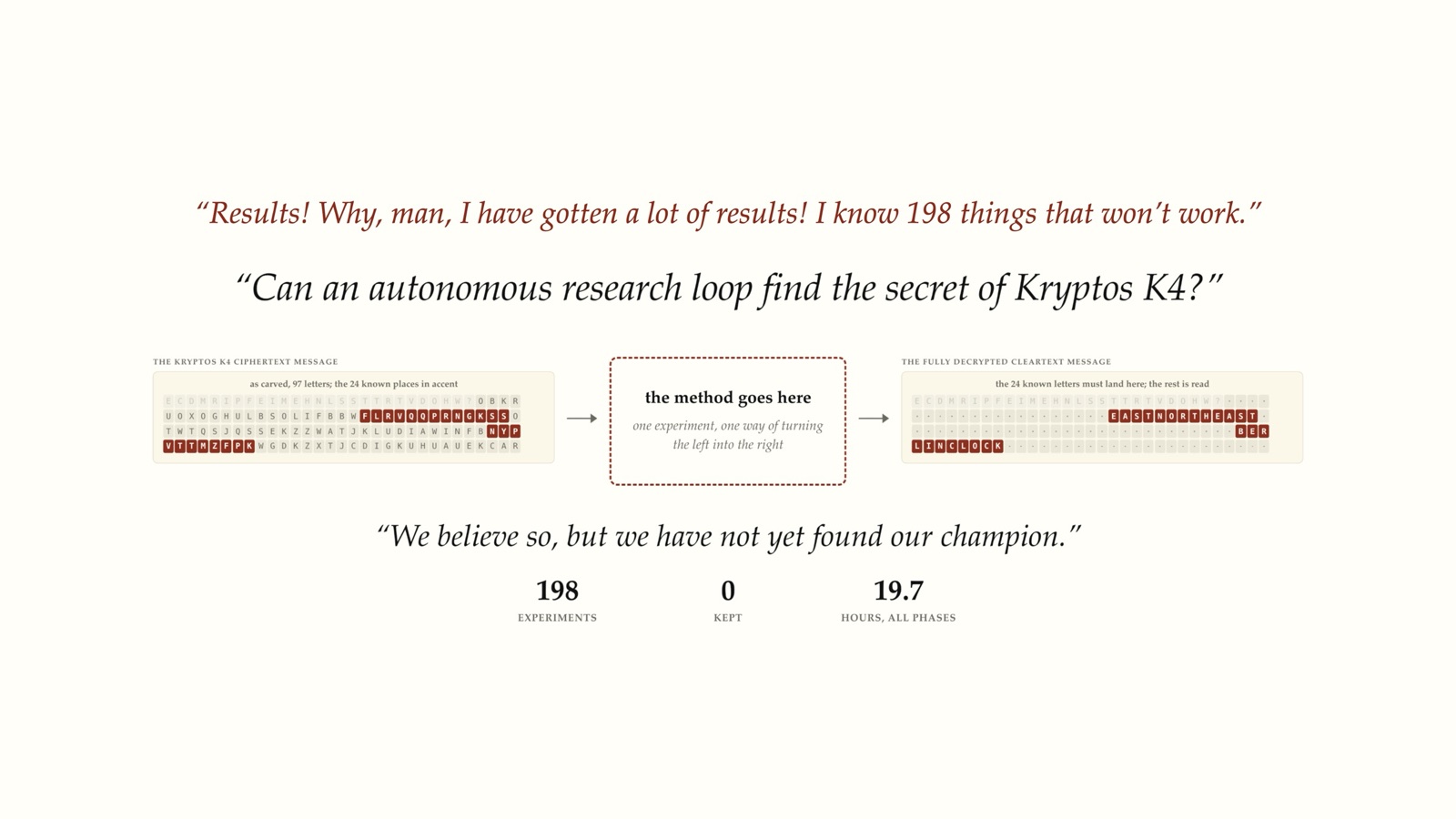
Autonomous Research with AI: "Results! Why, man, I have gotten a lot of results! I know 198 things that won't work." — can an autonomous research loop find the secret of Kryptos K4?

Not solved yet: in 19.7 hours, an AI agent running an autoresearch loop on K4 — the last unread message on Jim Sanborn’s Kryptos sculpture at the CIA, 97 carved letters with only 24 of them known — has tried 198 ways of turning them into the plaintext. None has worked yet, and each one is on the record.

The research in eight slides
Autonomous Research with AI: “Results! Why, man, I have gotten a lot of results! I know 198 things that won’t work.” — can an autonomous research loop find the secret of Kryptos K4?

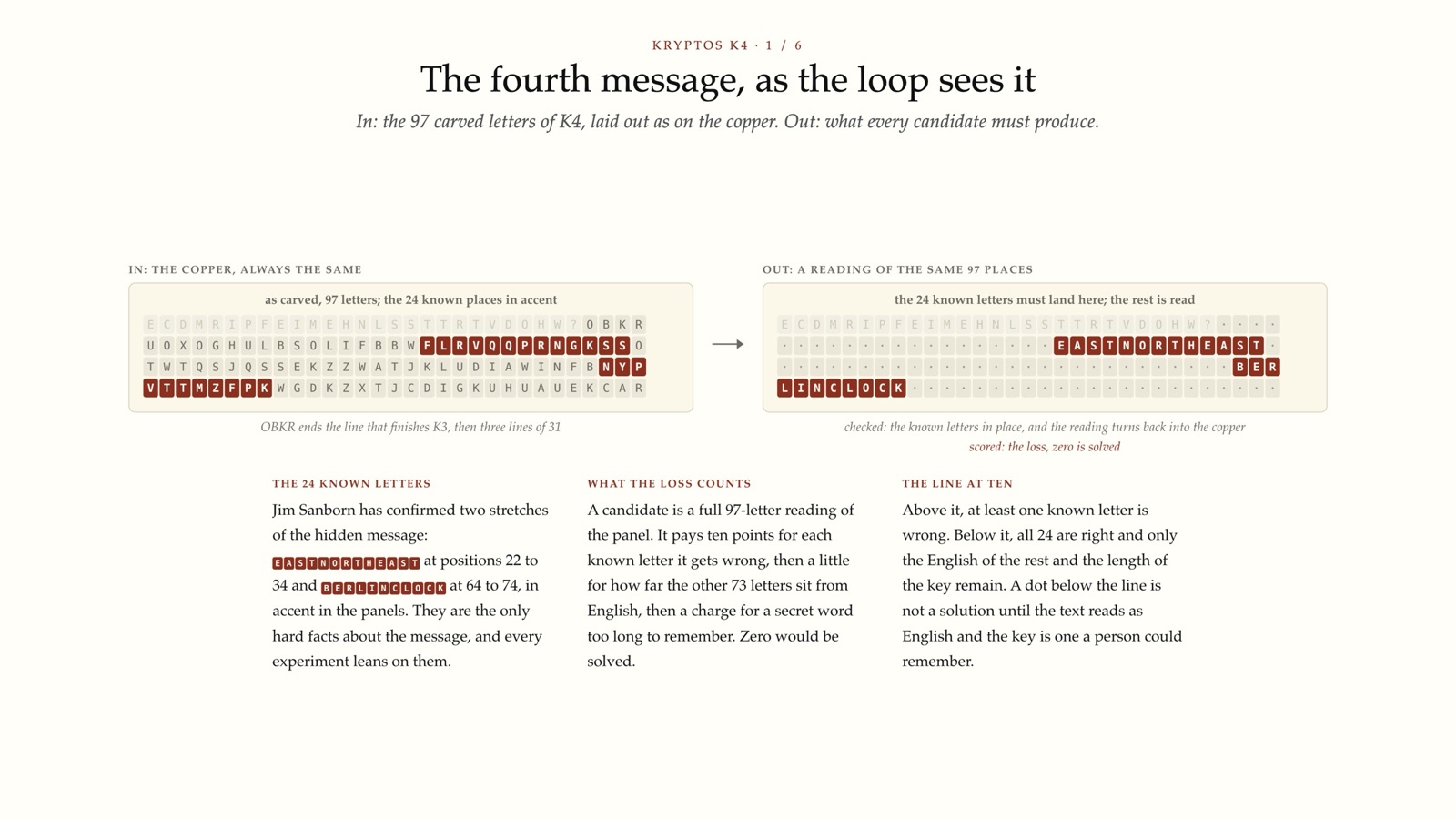
The fourth message, as the loop sees it

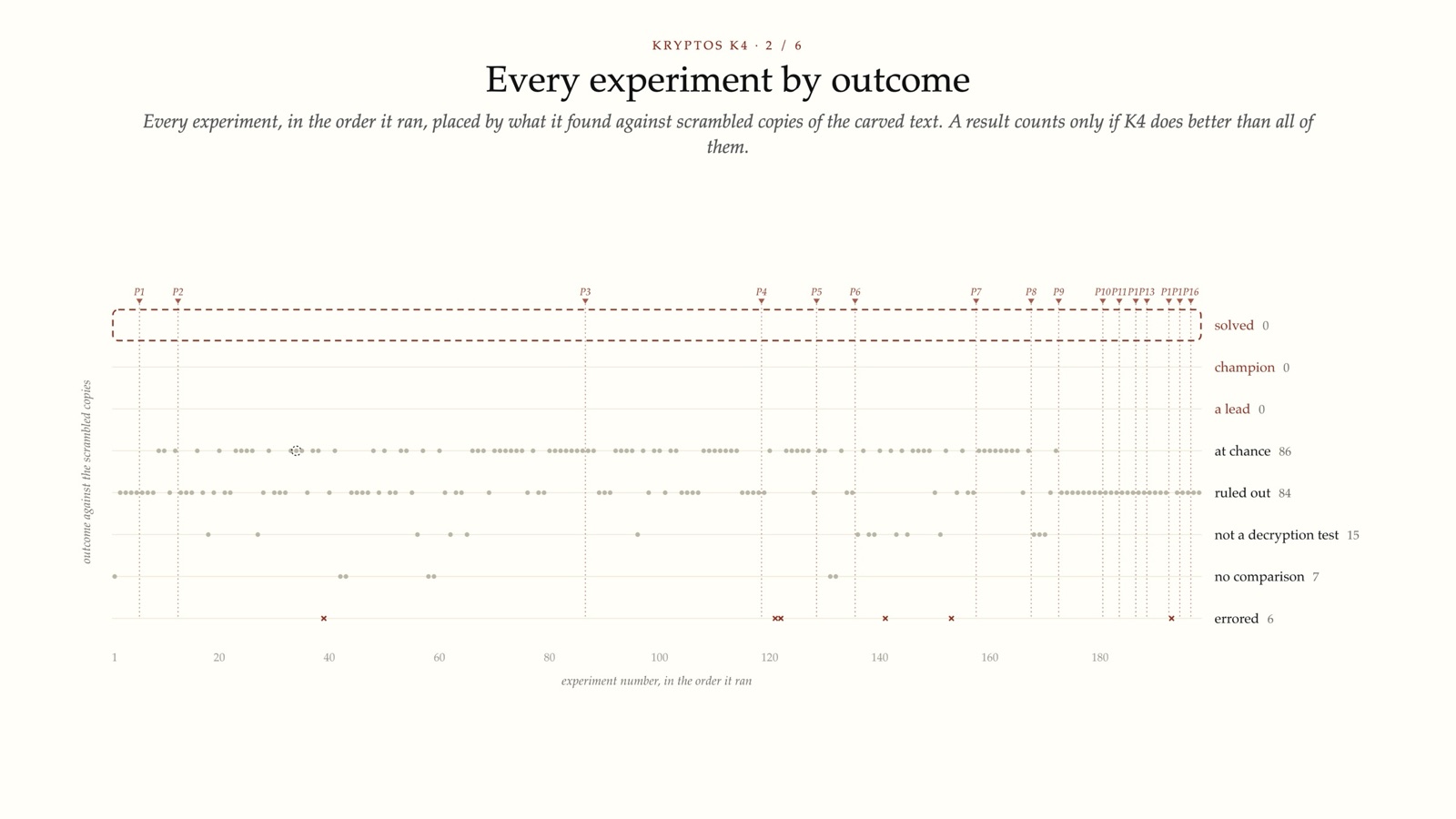
Every experiment by outcome

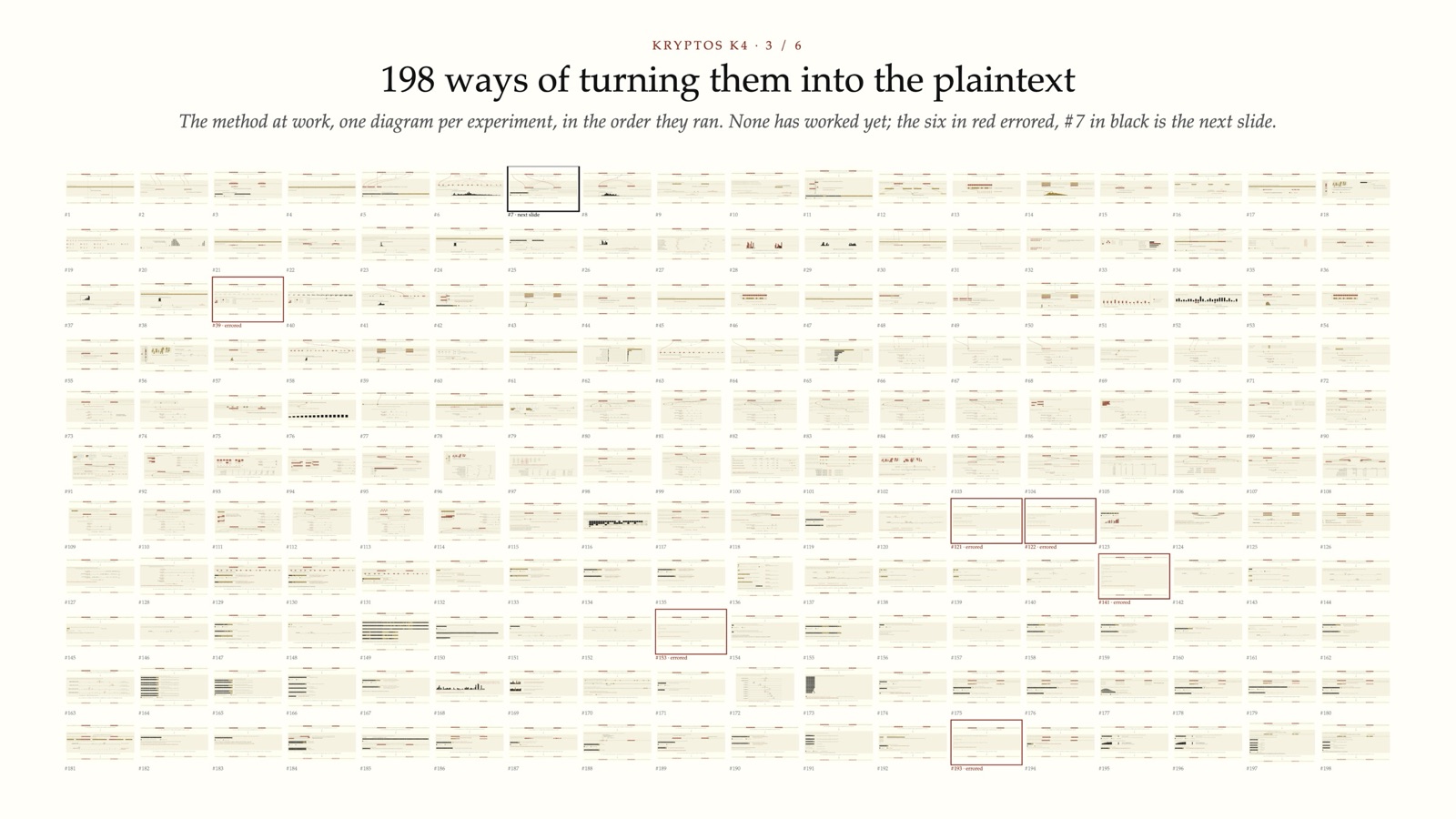
198 ways of turning them into the plaintext

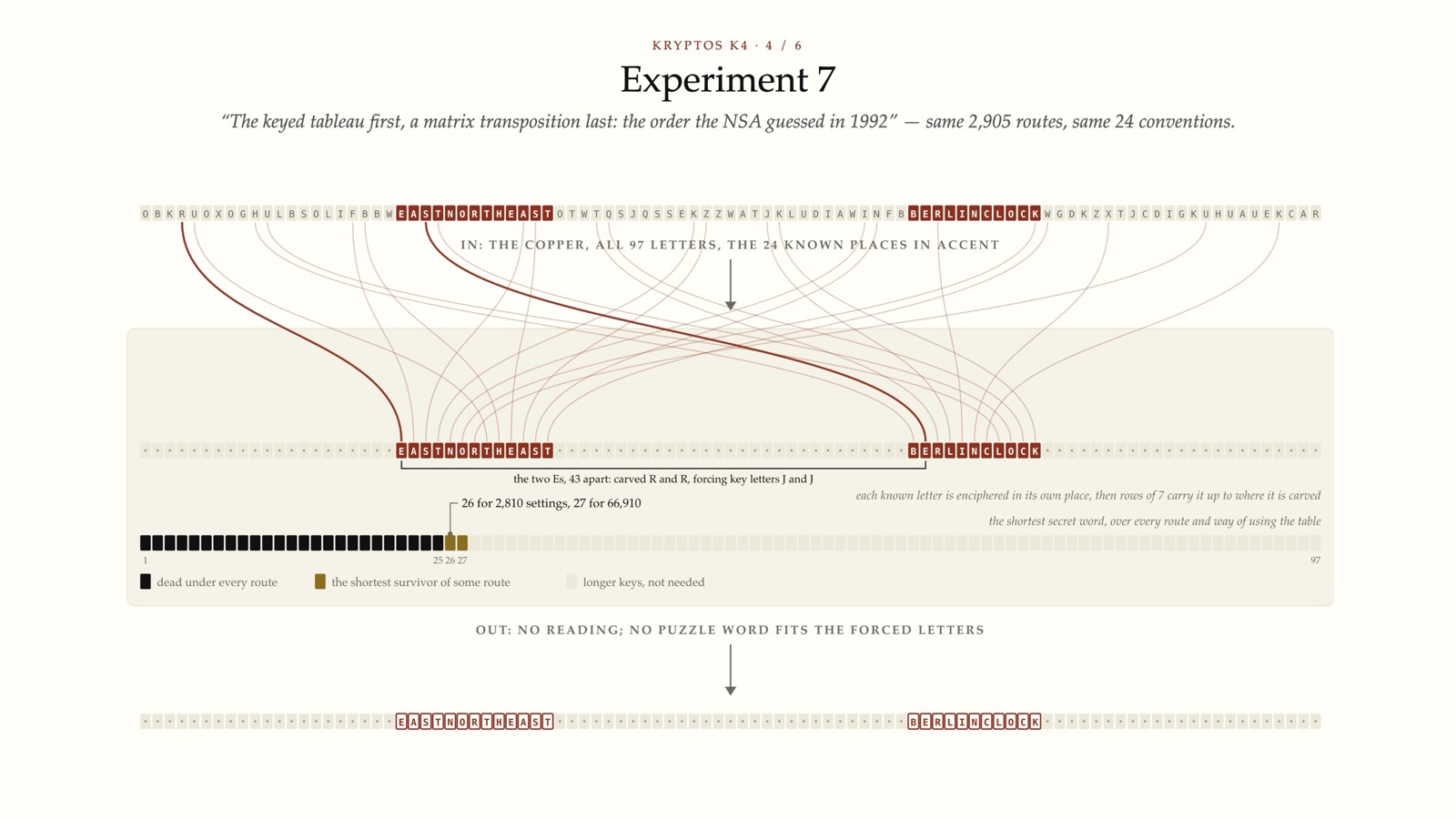
Experiment 7

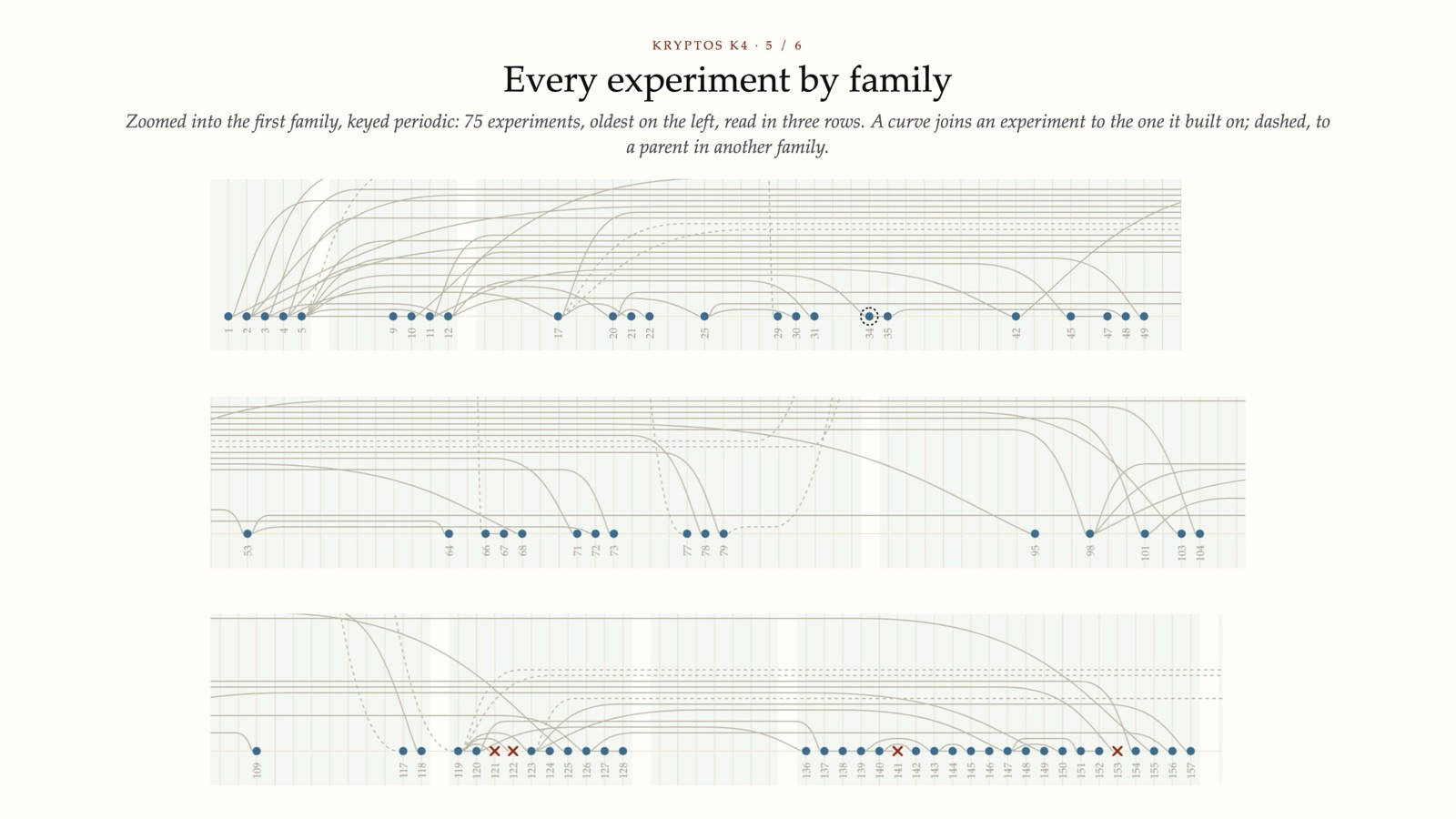
Every experiment by family

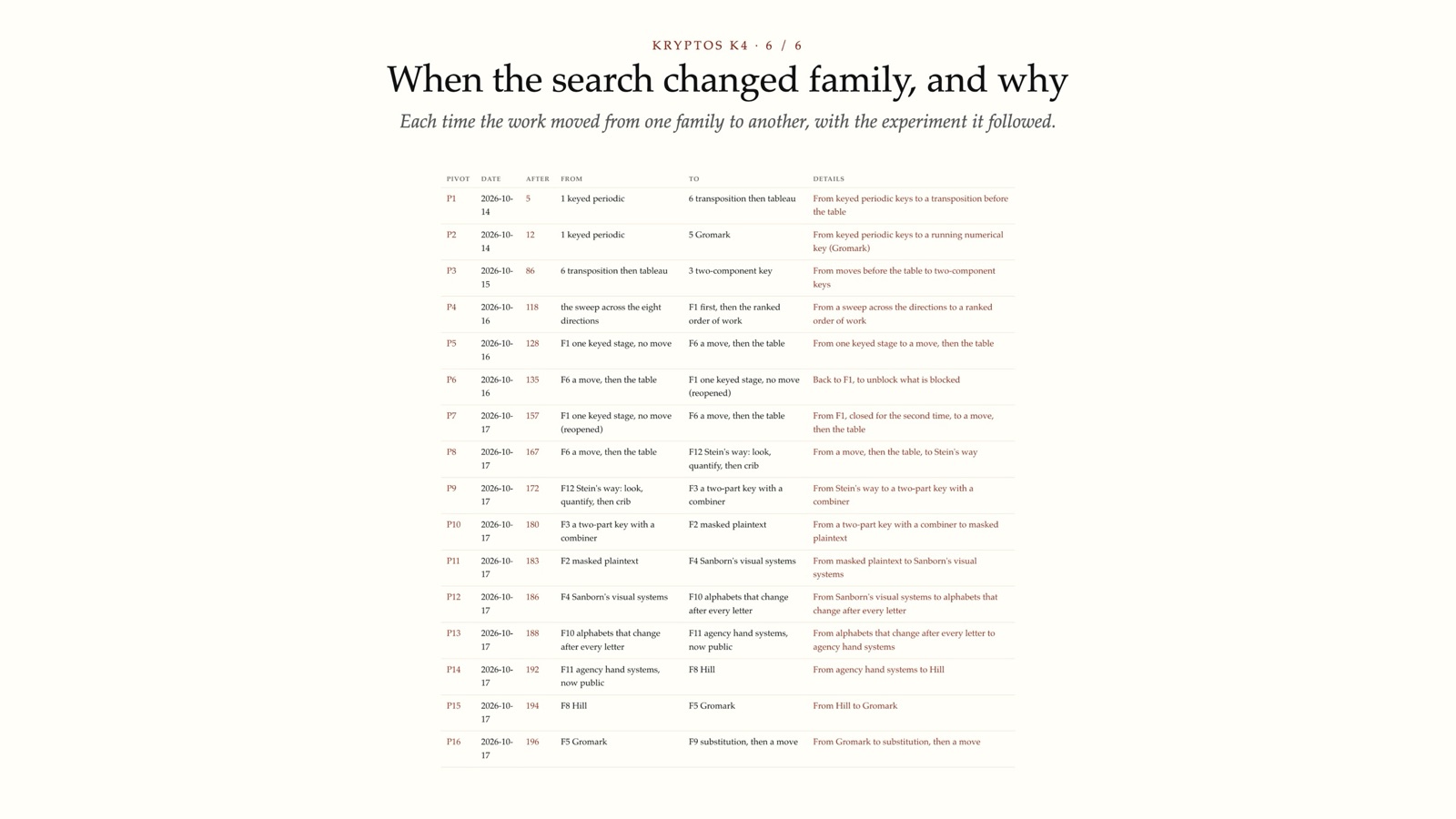
When the search changed family, and why

The whole research, open

Open →

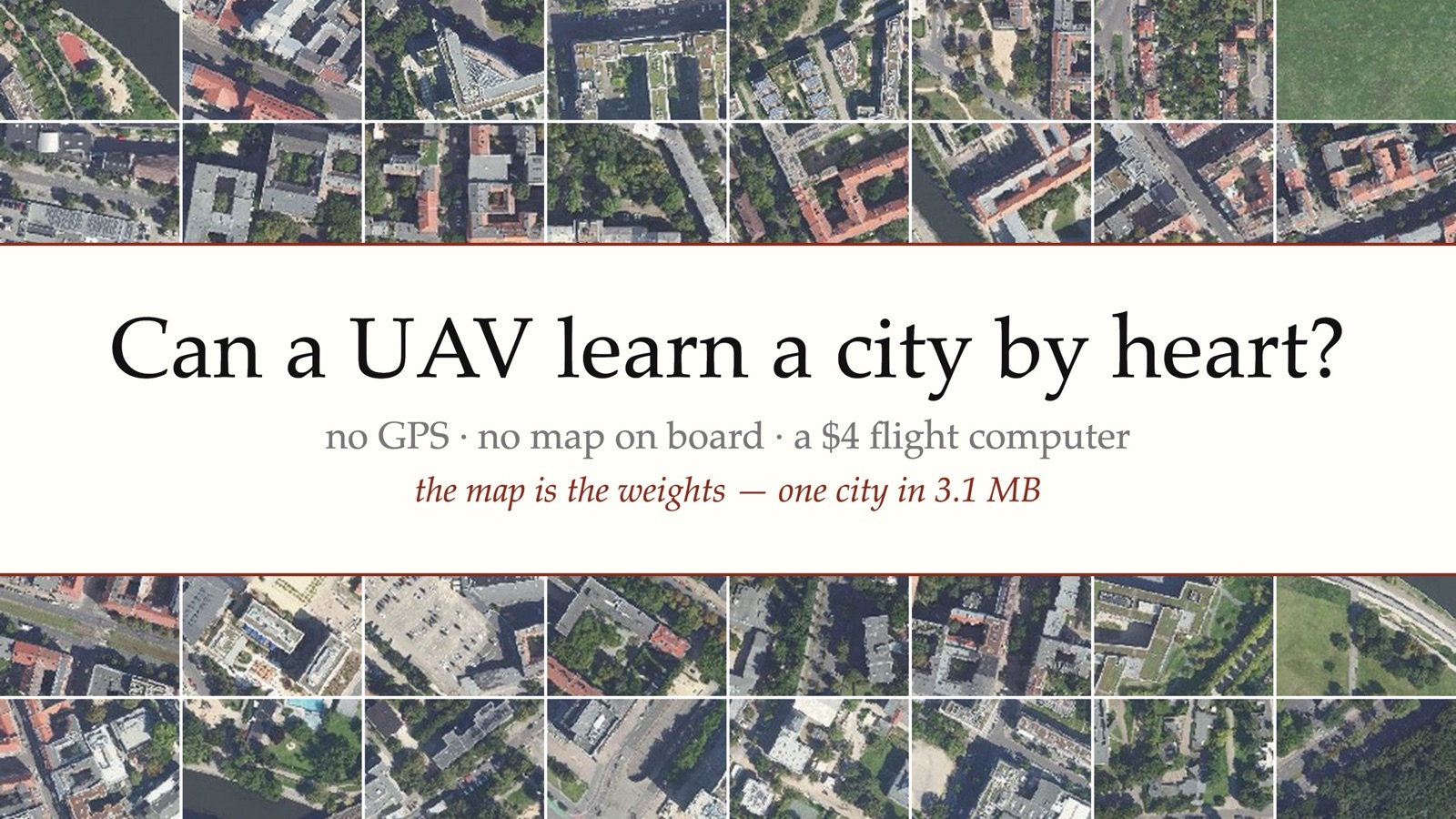
Autonomous Research with AI: "Not all who wander are lost" — can a UAV learn a city by heart, with no GPS, no map on board, just a $4 flight computer?

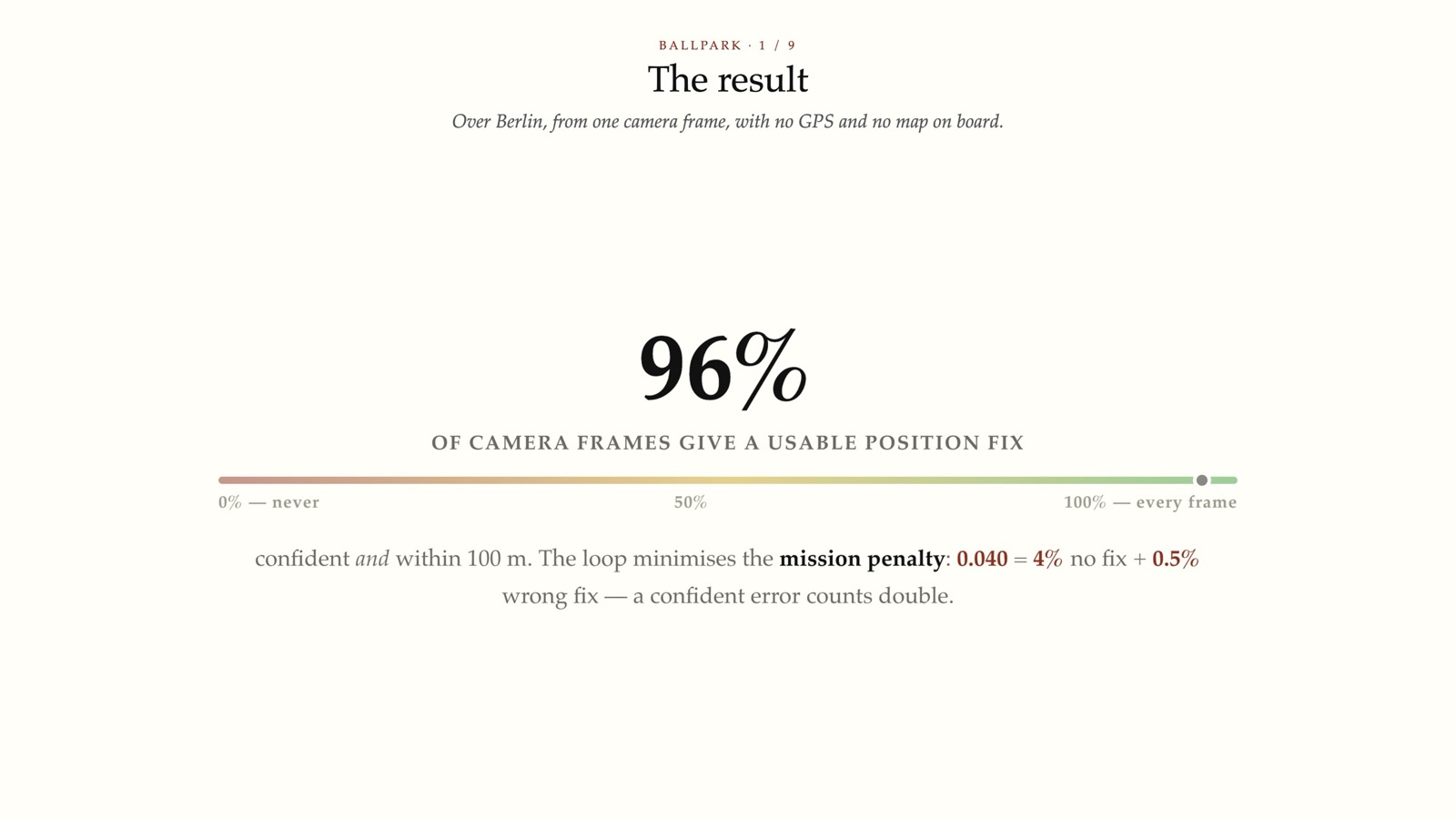
Yes! An AI agent running an autoresearch loop of 81 experiments ($364) found a special-purpose neural memory architecture that ‘remembers’ an exact geo-location from an in-flight daytime picture of Berlin — typical miss 27 m, no GPS, no internet, no map on board, just a 3.1 MB file of weights that works on 96.5% of camera frames.

The research in eleven slides
Autonomous Research with AI: “Not all who wander are lost” — can a UAV learn a city by heart, with no GPS, no map on board, just a $4 flight computer?

The result: 96% of camera frames give a usable position fix

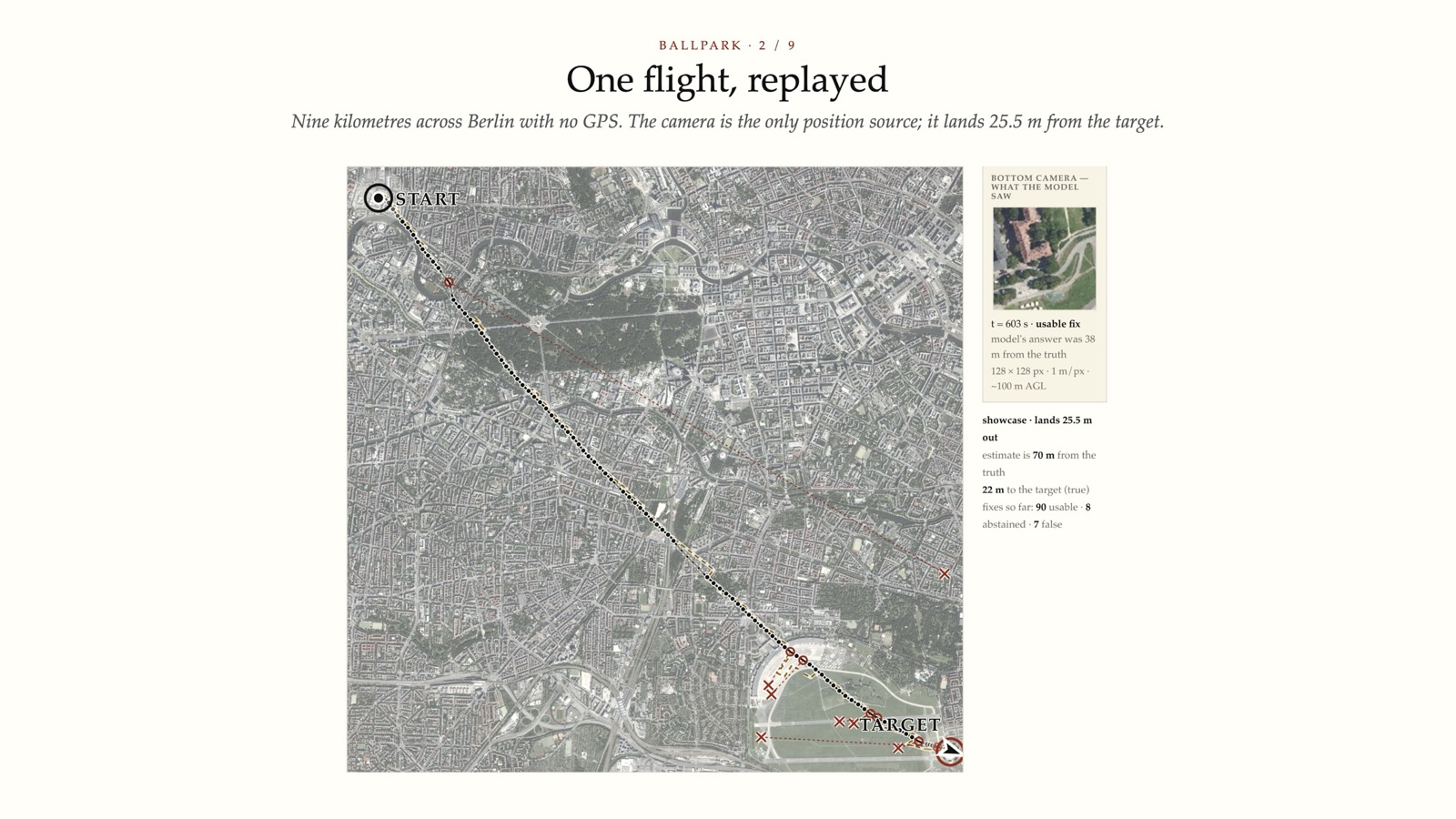
One flight, replayed

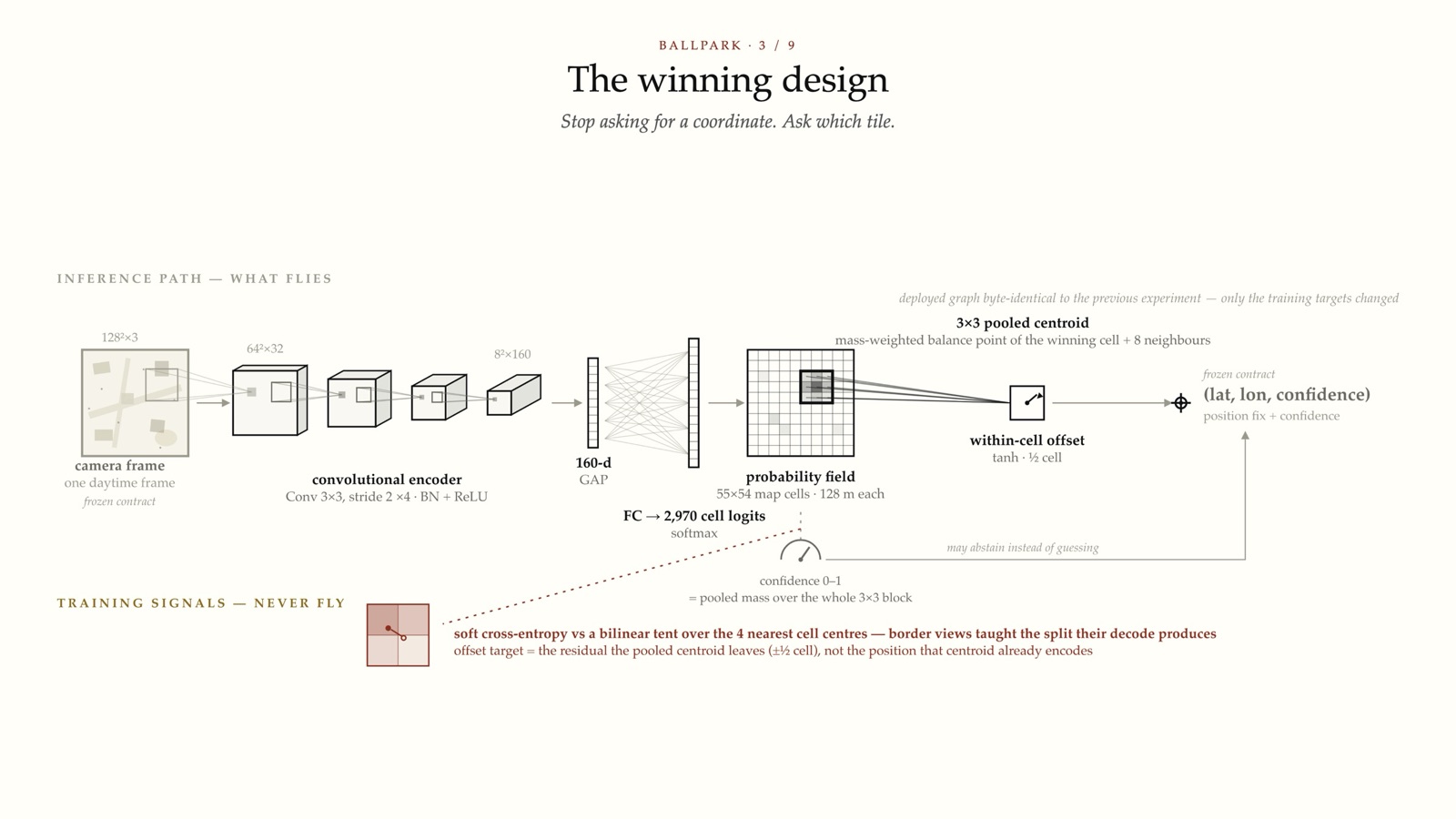
The winning design

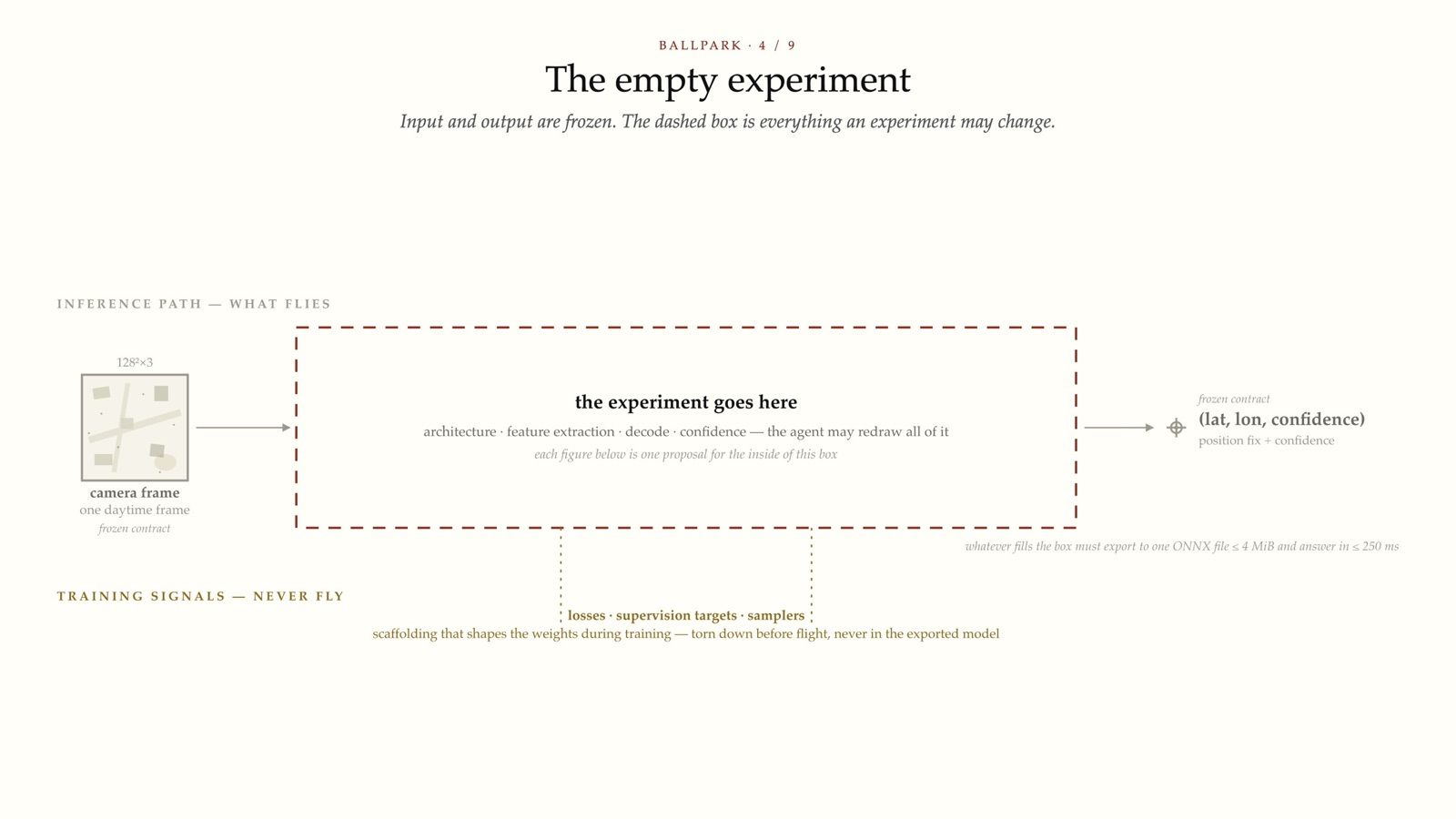
The empty experiment

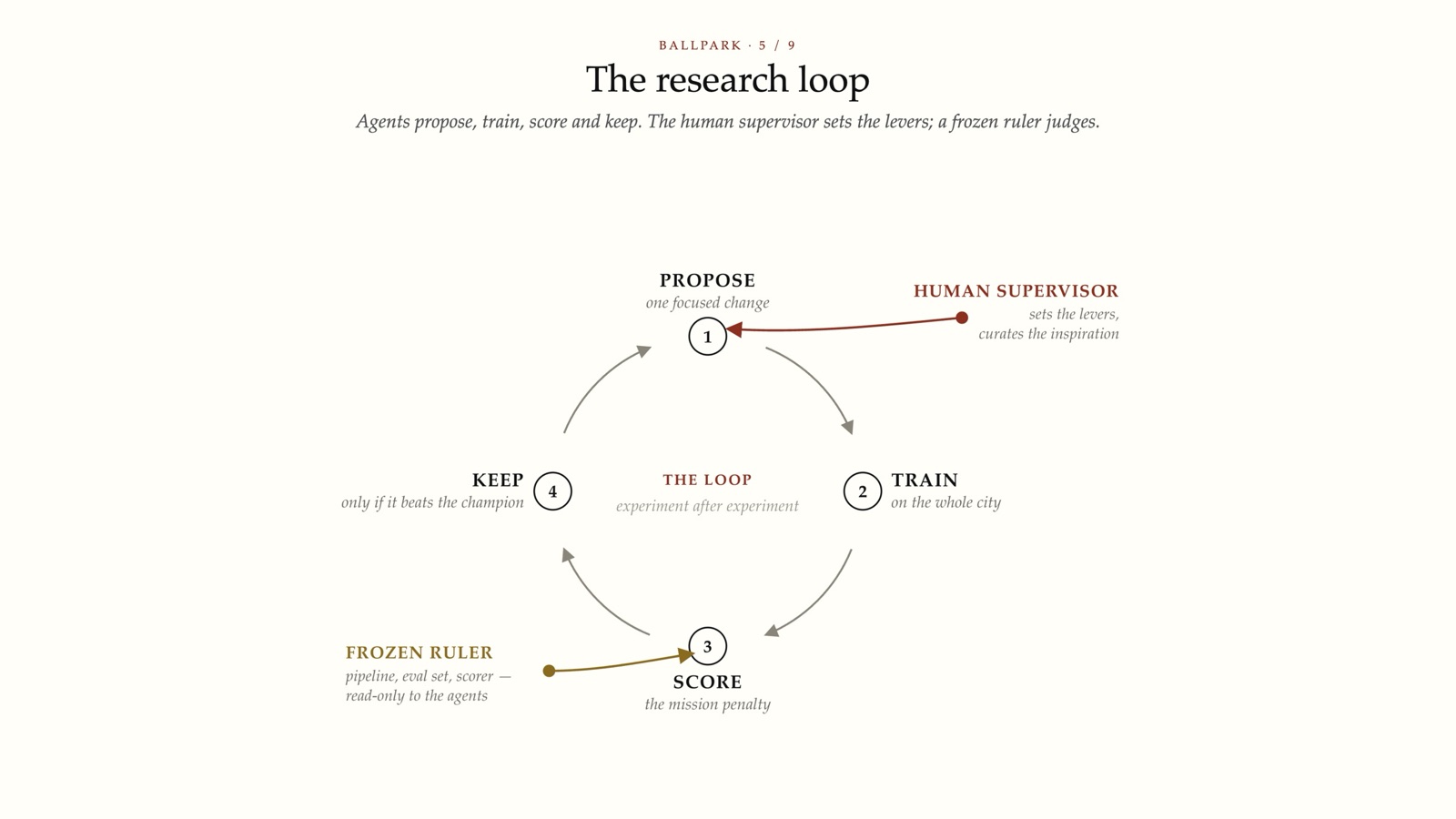
The research loop

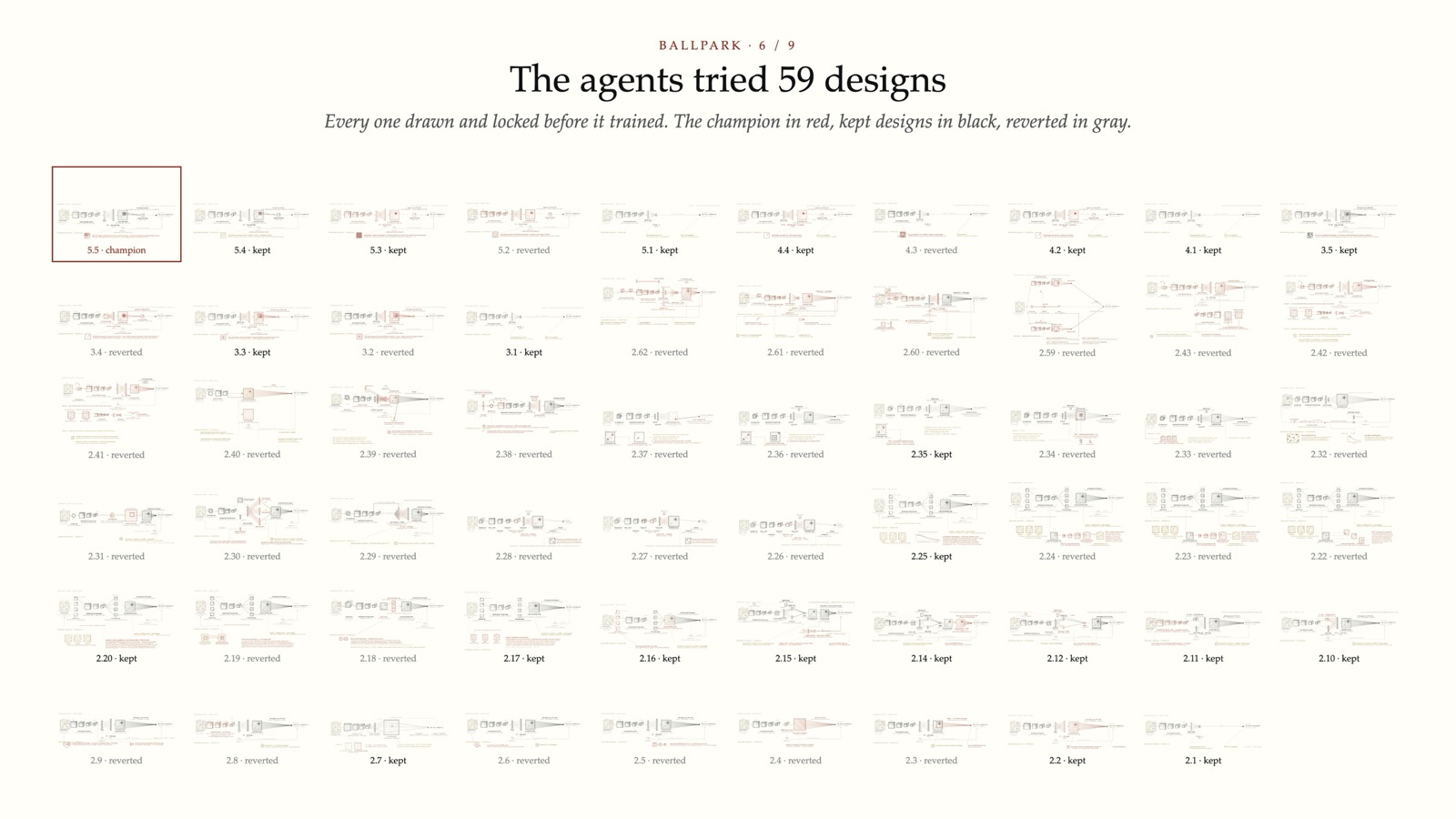
The agents tried 59 designs

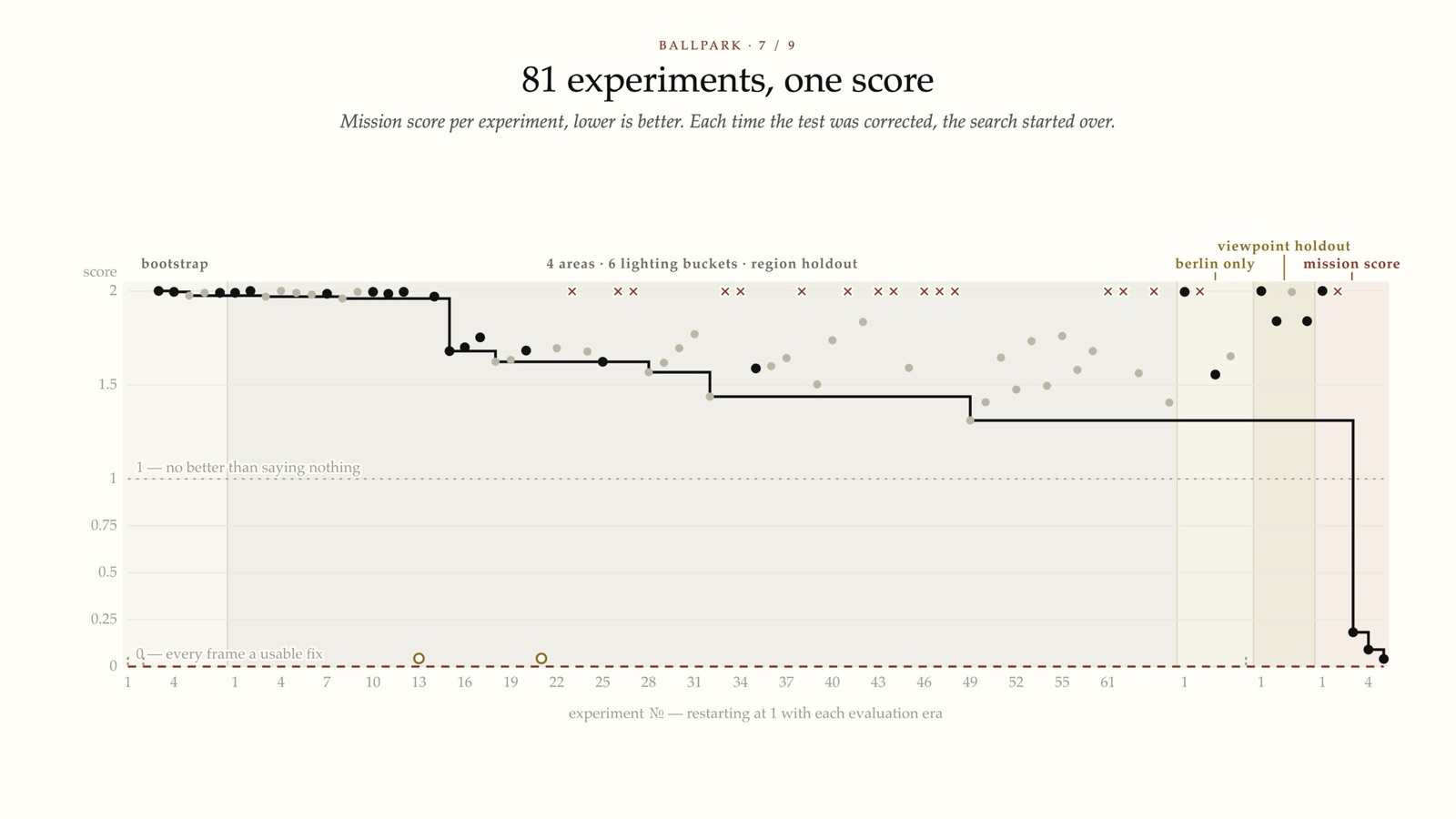
81 experiments, one score

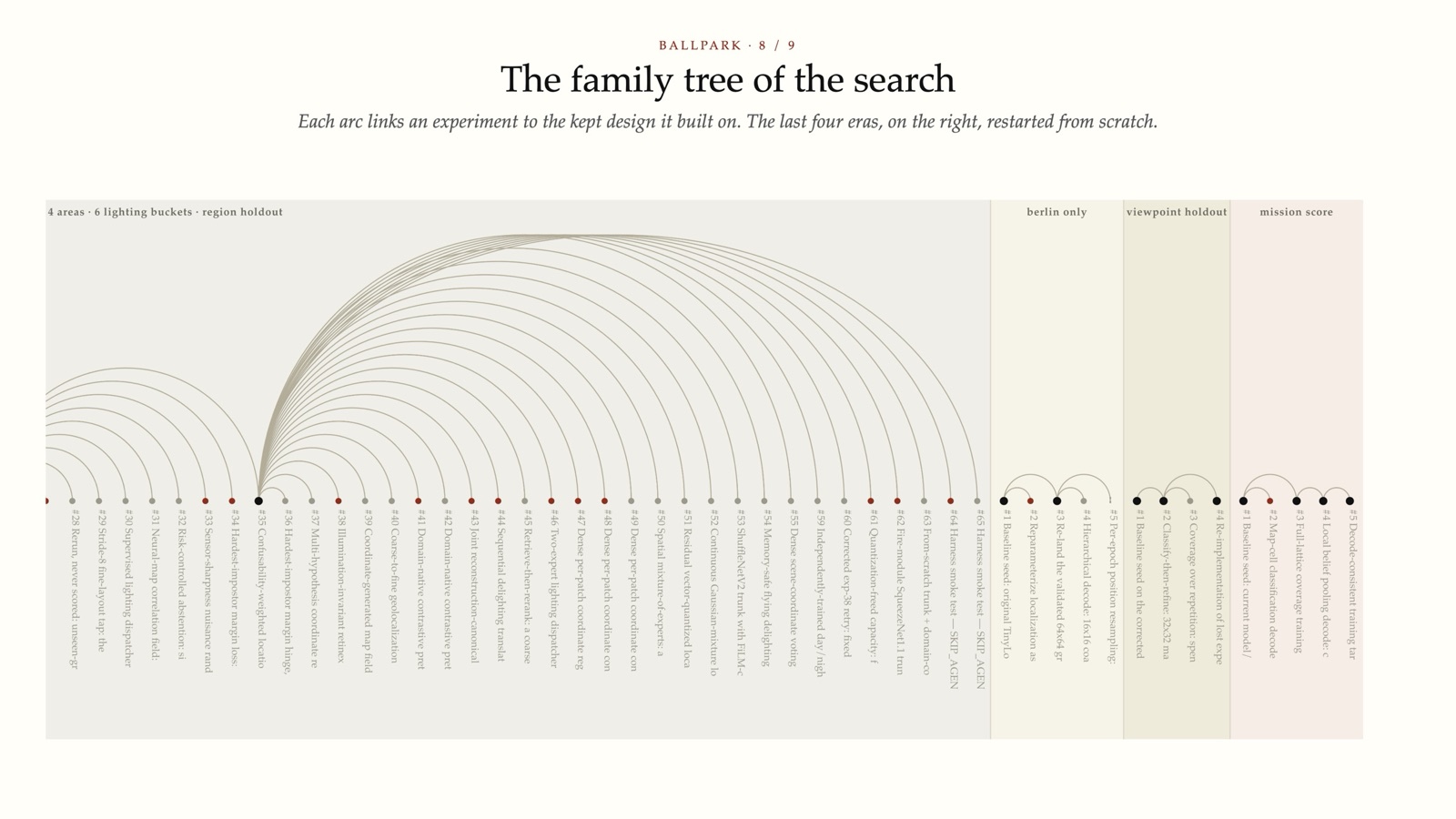
The family tree of the search

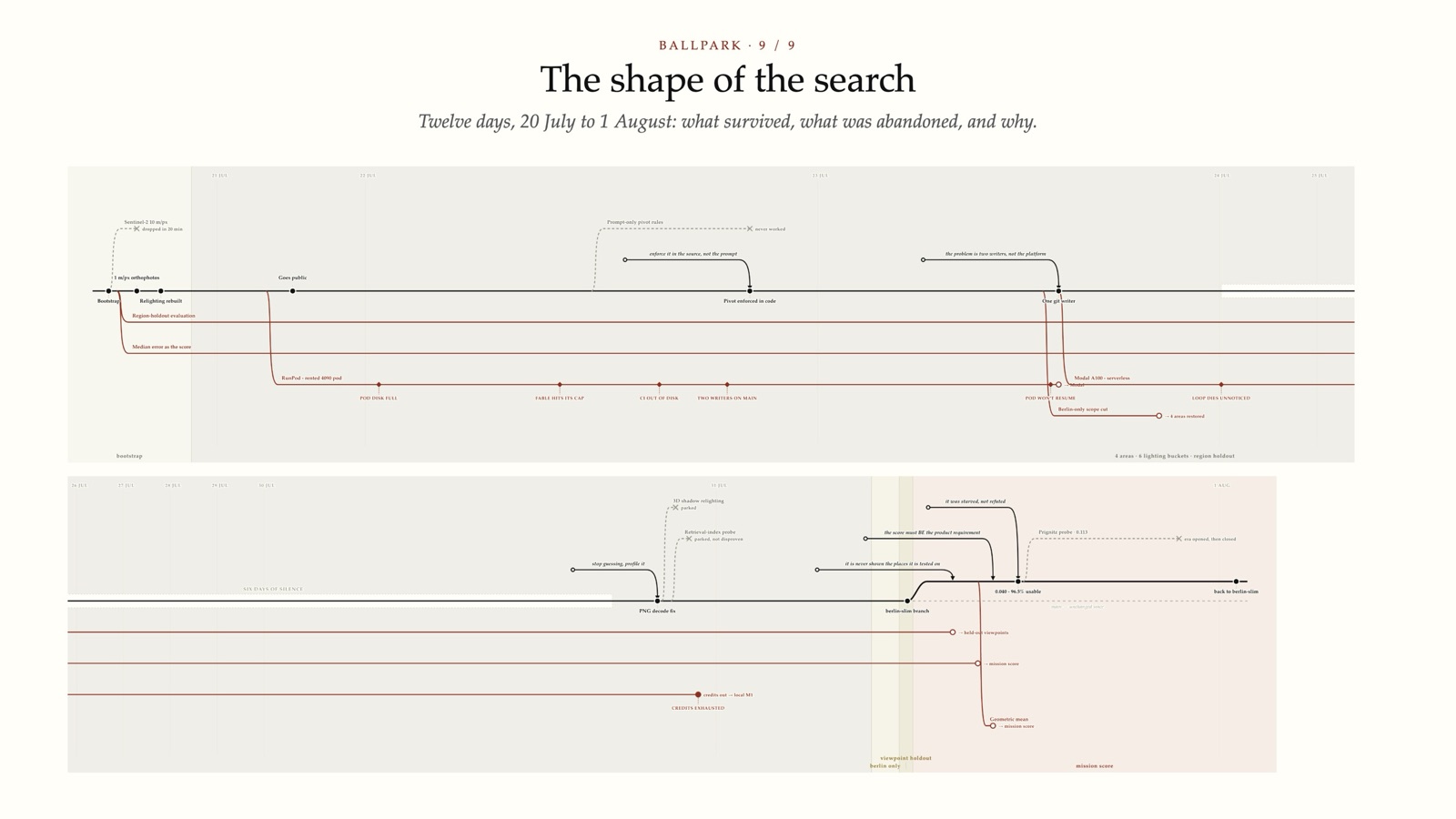
The shape of the search

The whole research, open

Open →

Autonomous Research with AI: "The snuggle is real" — evolving quadcopter frame geometry for Wh/km, with Claude as an occasional co-designer

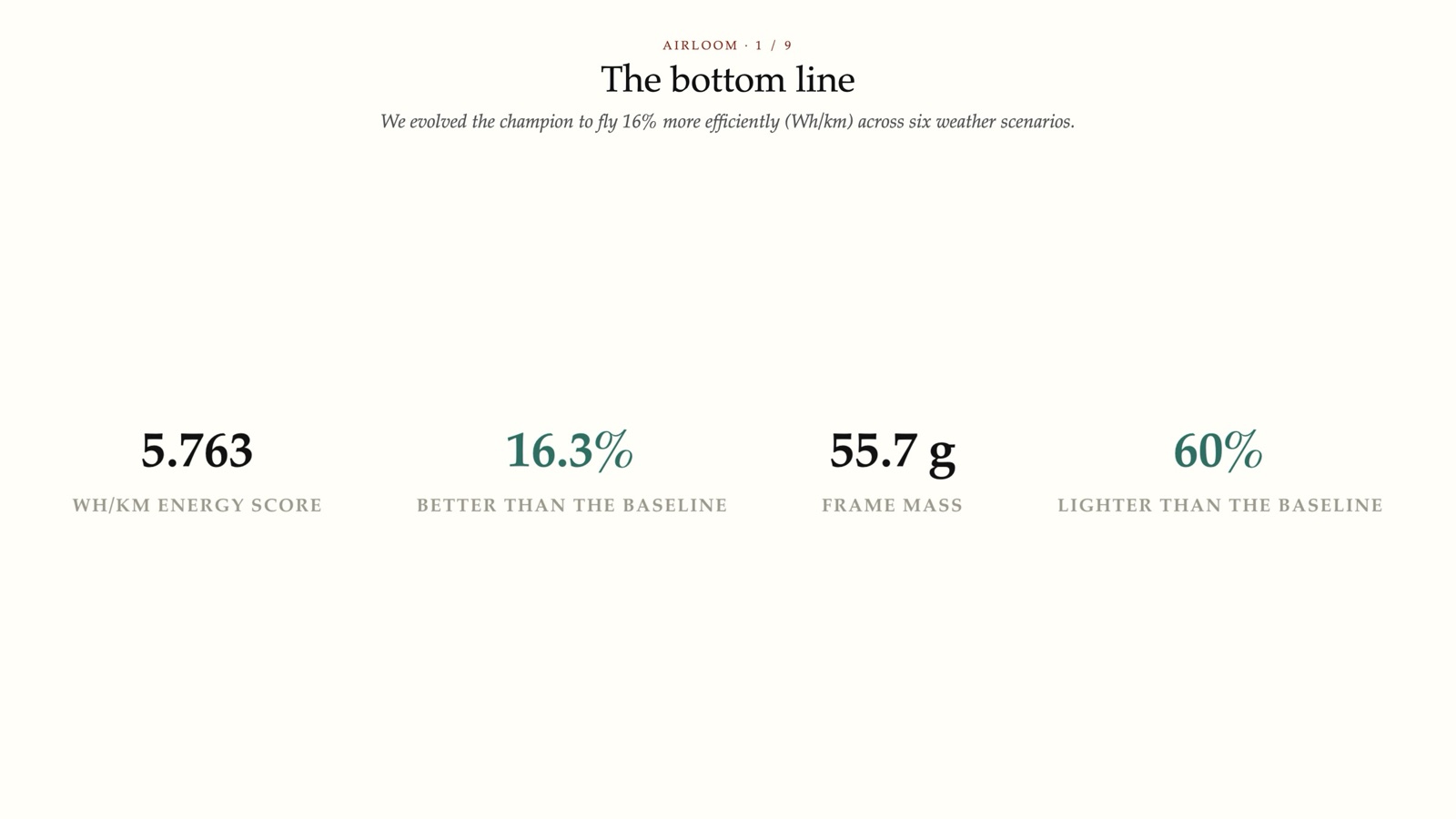
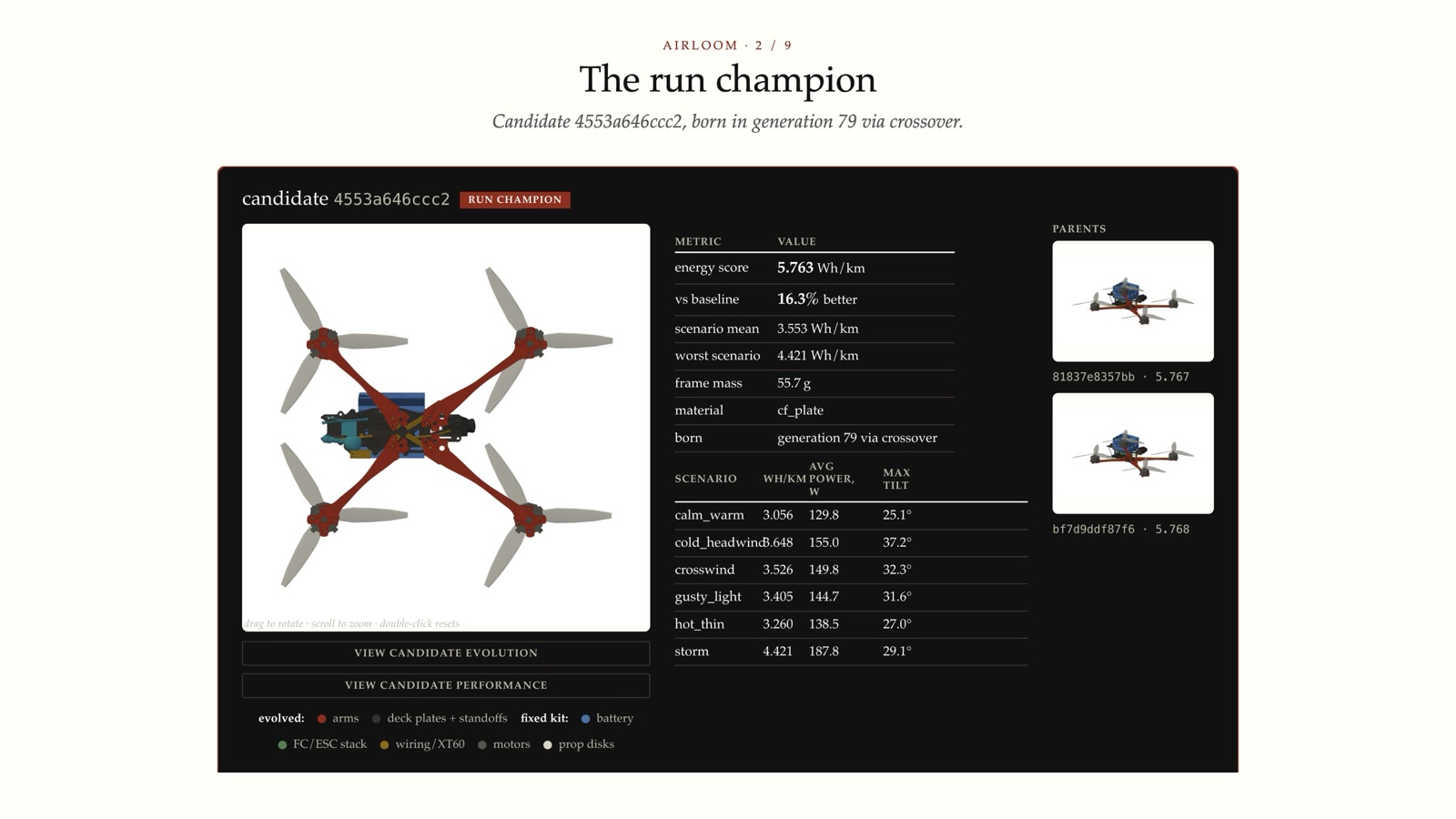
An autoresearch loop — a genetic algorithm over fourteen genes of the real, open-source Source One V6 plate drawings, flown through six simulated weather scenarios, with Claude sitting in every few generations as an AI agent that proposes designs from the run’s own telemetry — evolved a 7-inch frame that flies 16% more efficiently (Wh/km) than the stock champion.

The research in eleven slides
Autonomous Research with AI: “The snuggle is real” — evolving quadcopter frame geometry for Wh/km, with Claude as an occasional co-designer

The bottom line

The run champion

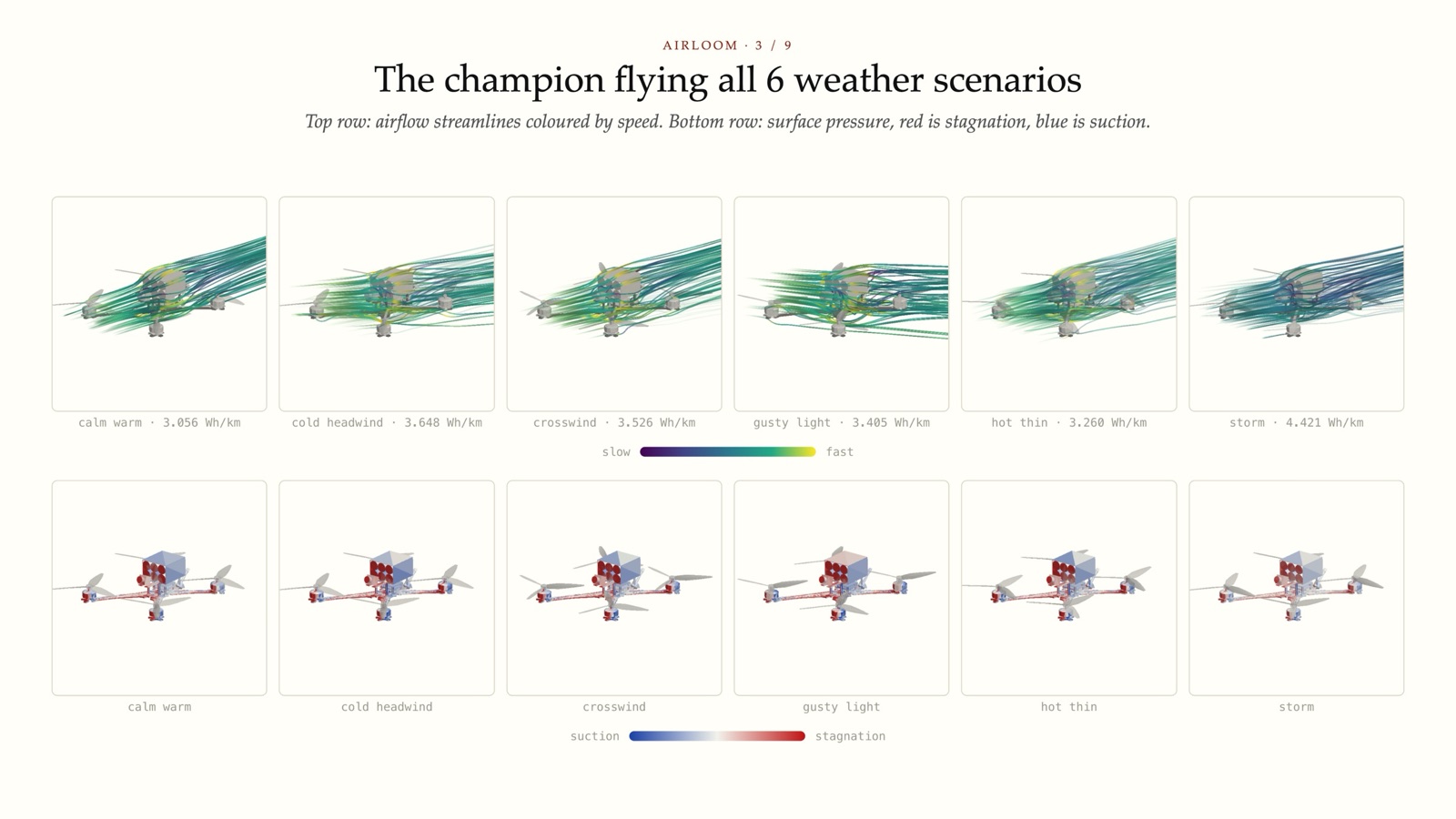
The champion flying all 6 weather scenarios

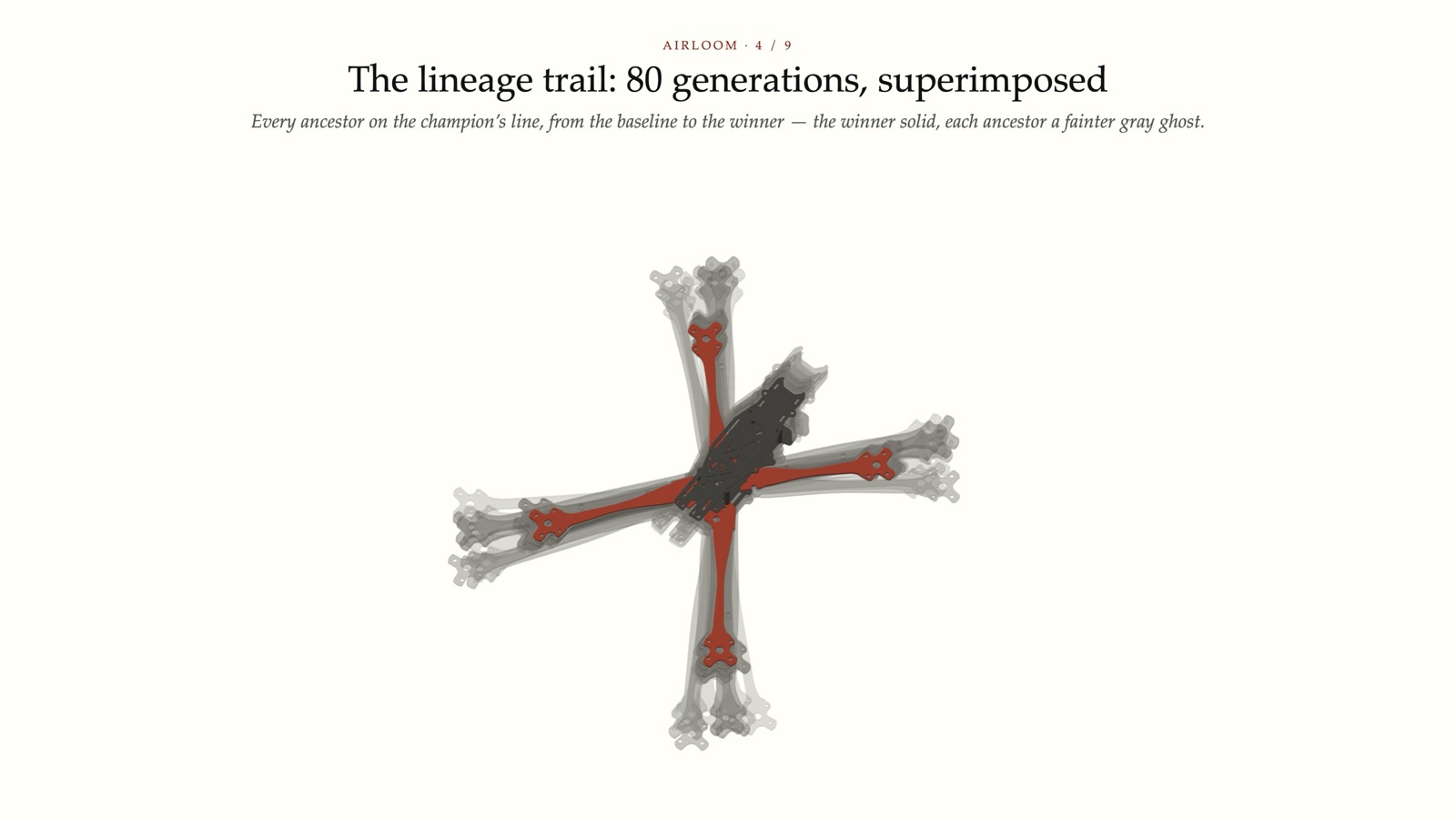
The lineage trail: 80 generations, superimposed

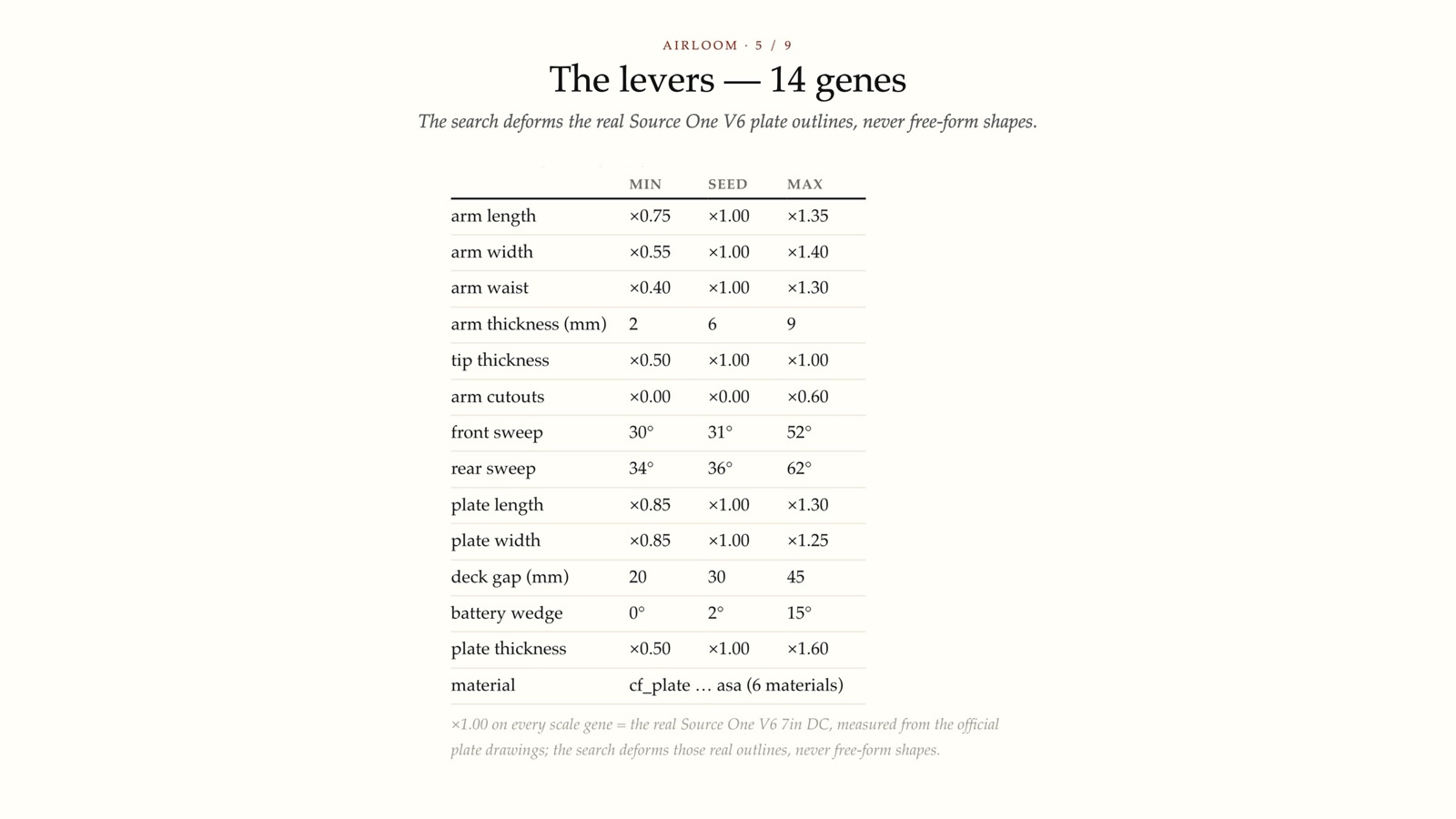
The levers — 14 genes

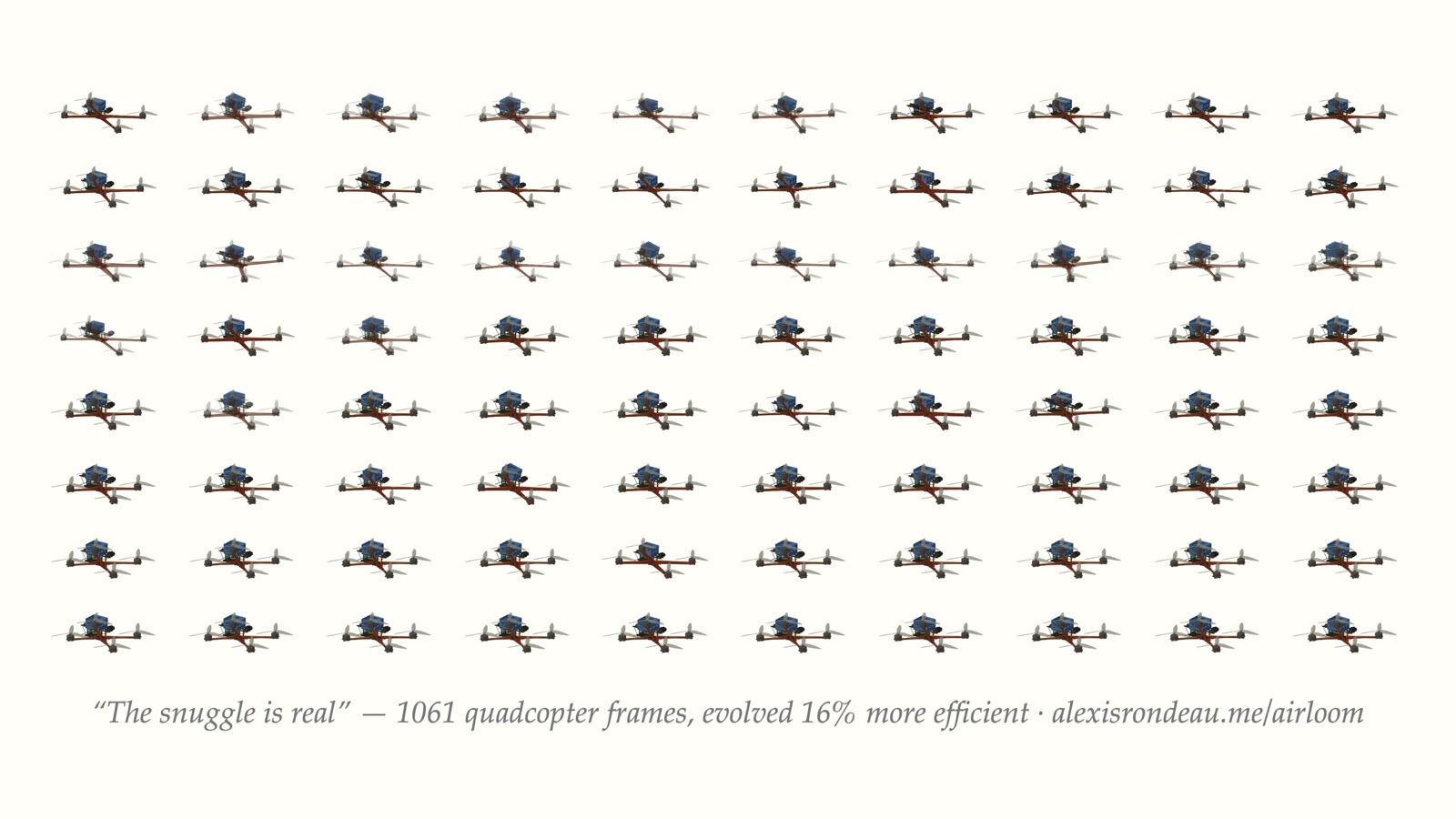
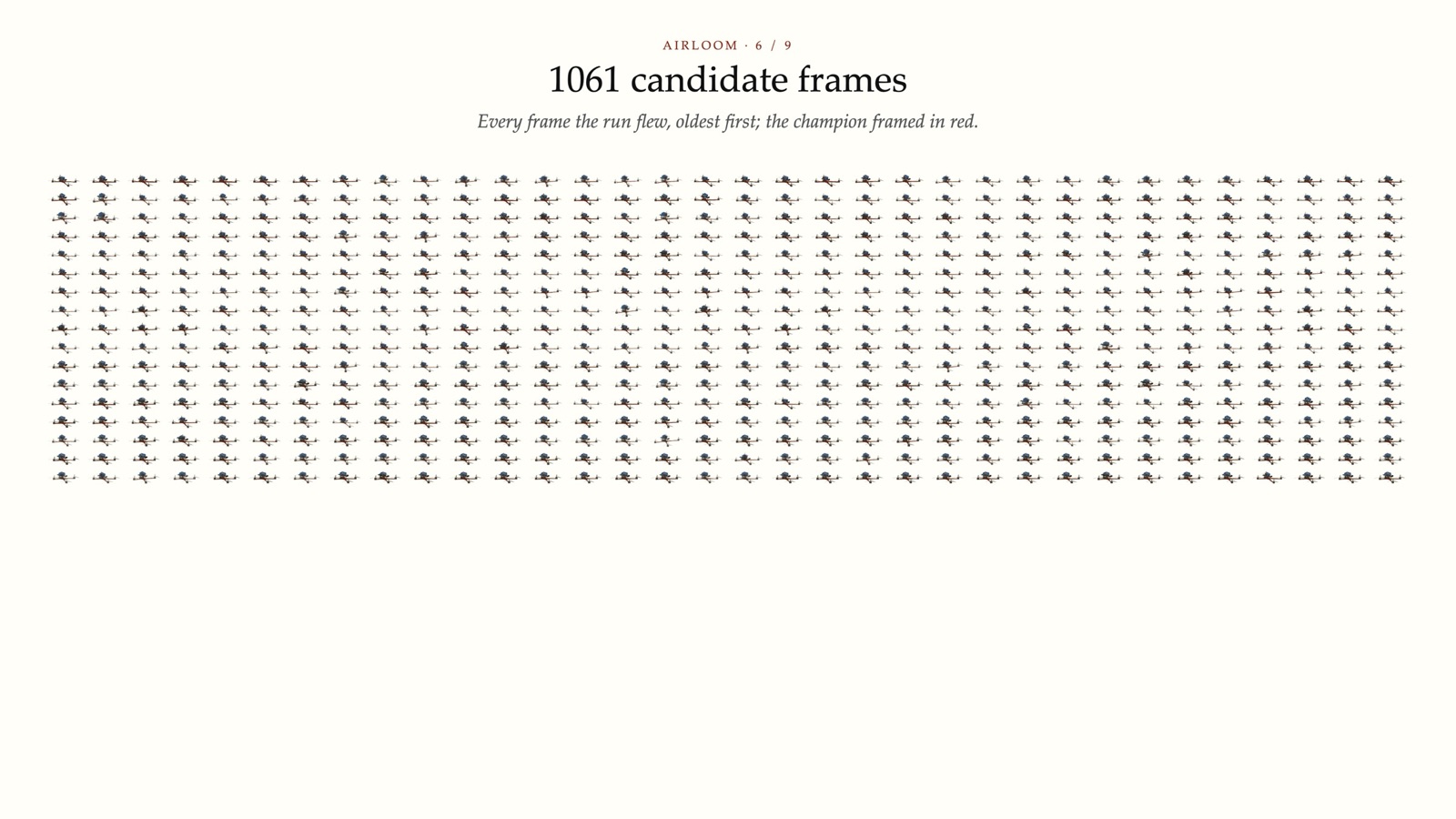
1061 candidate frames

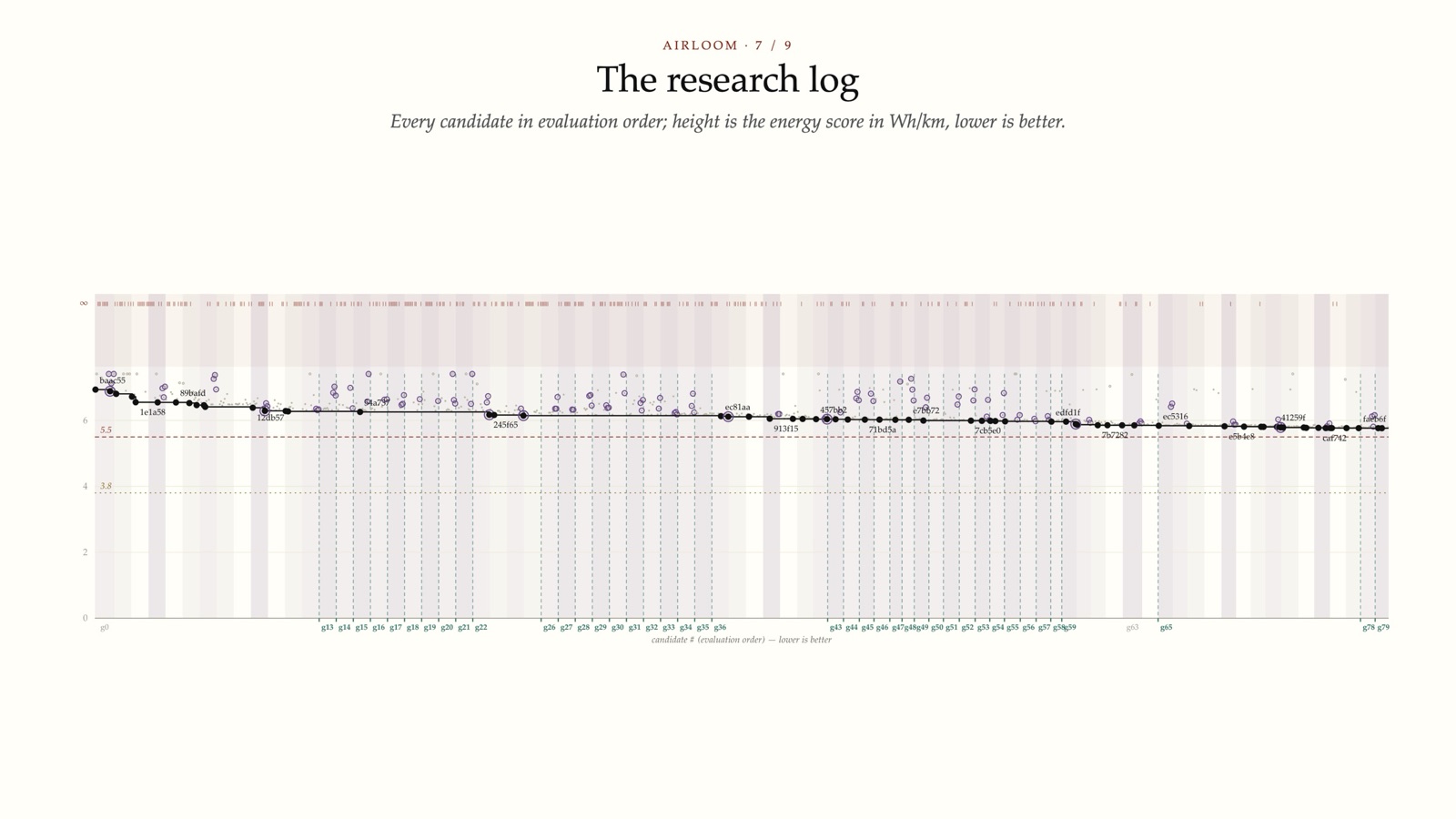
The research log

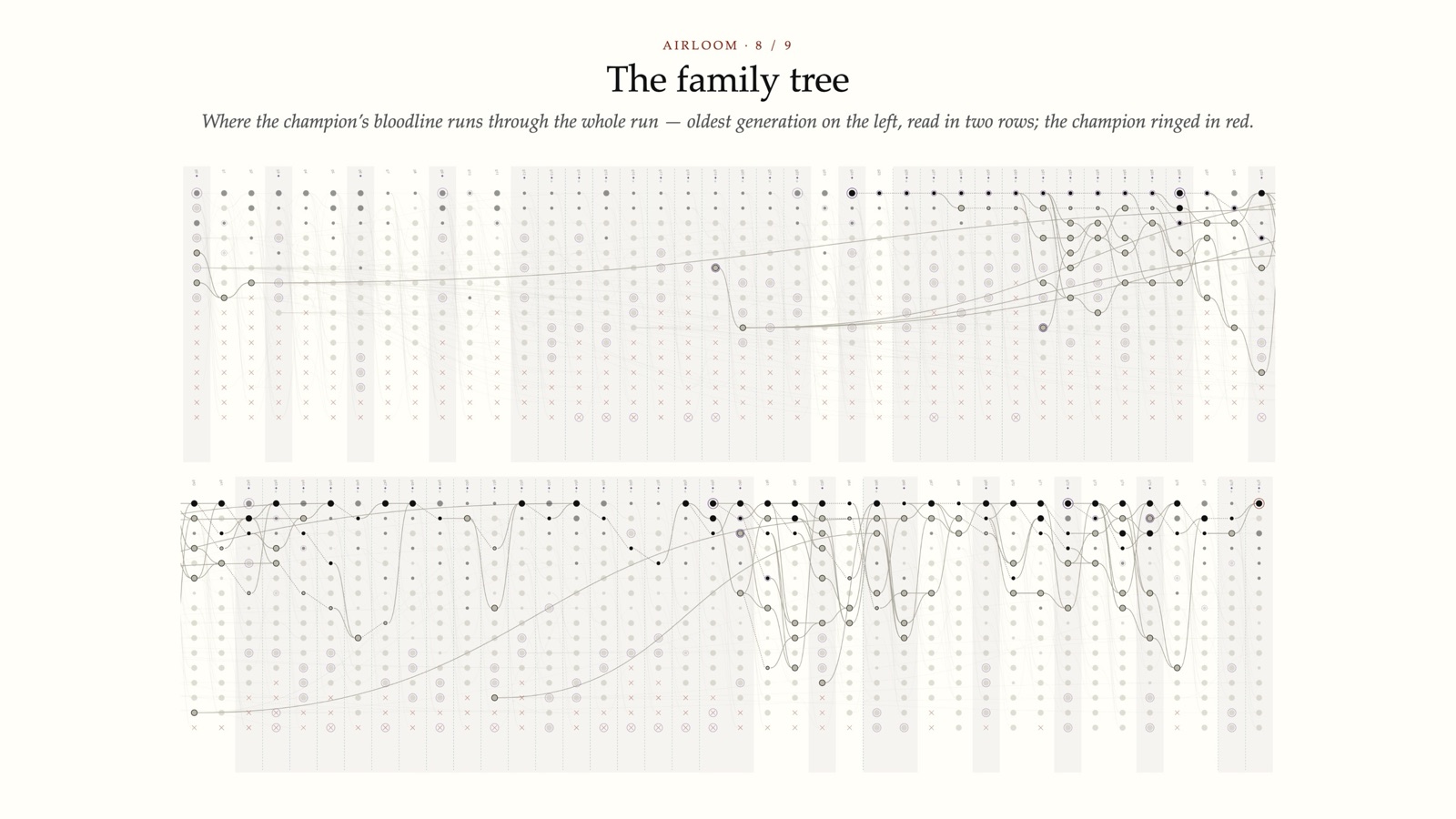
The family tree

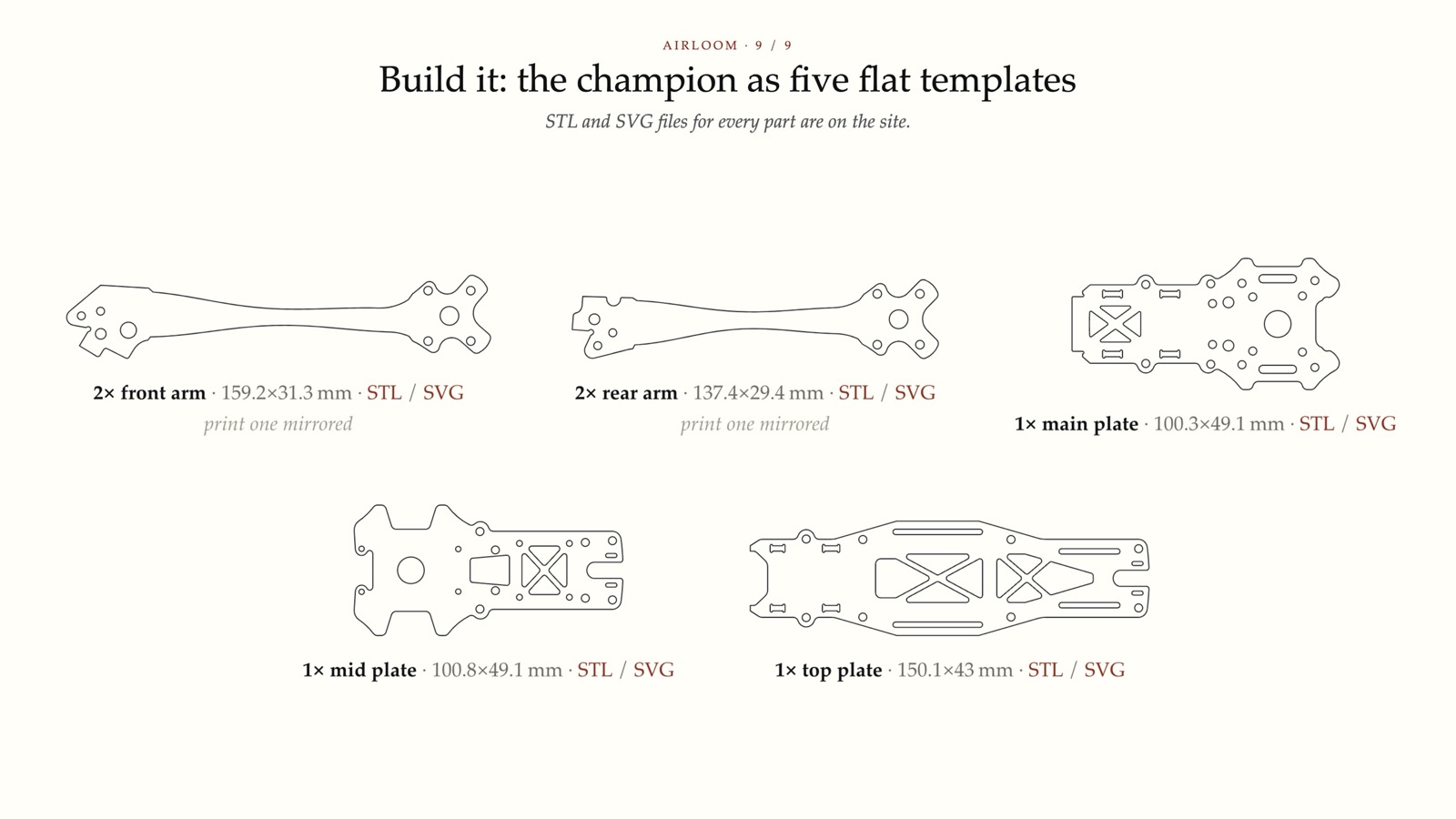
Build it: the champion as five flat templates

The whole research, open

Open →

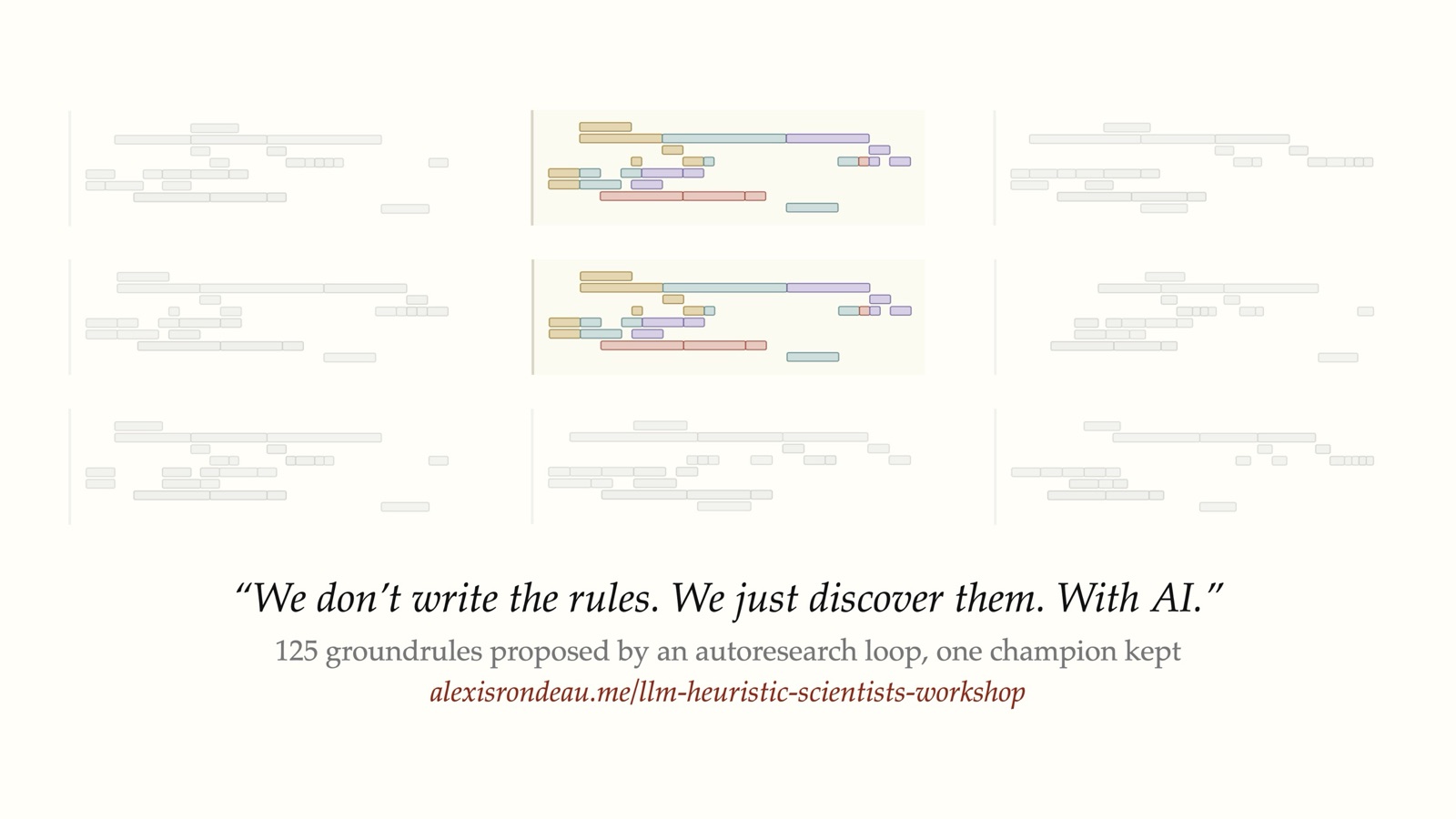
Autonomous Research with AI: "We don't write the rules. We just discover them." — how an agent searches for the groundrule, and what makes the loop different

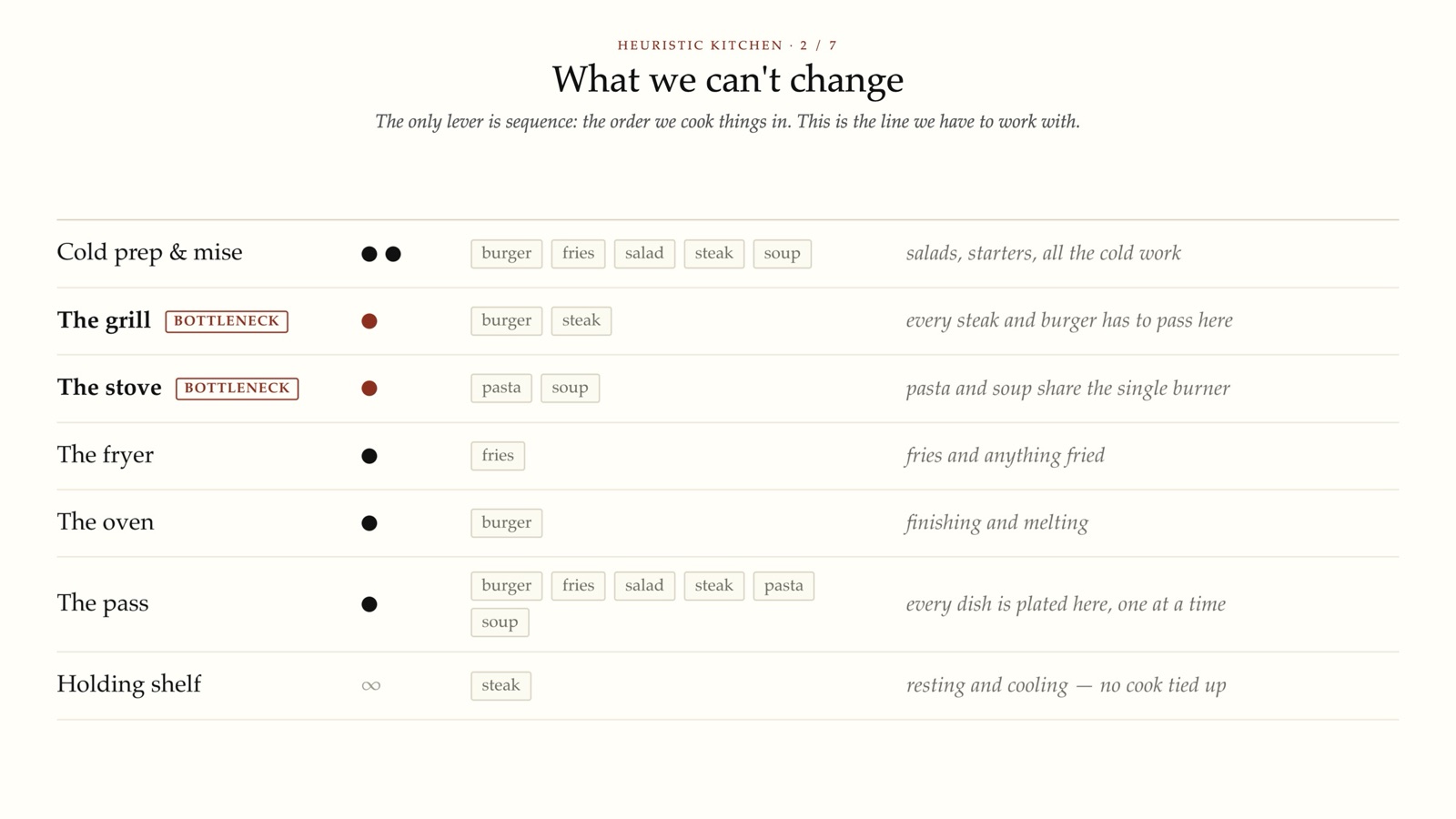
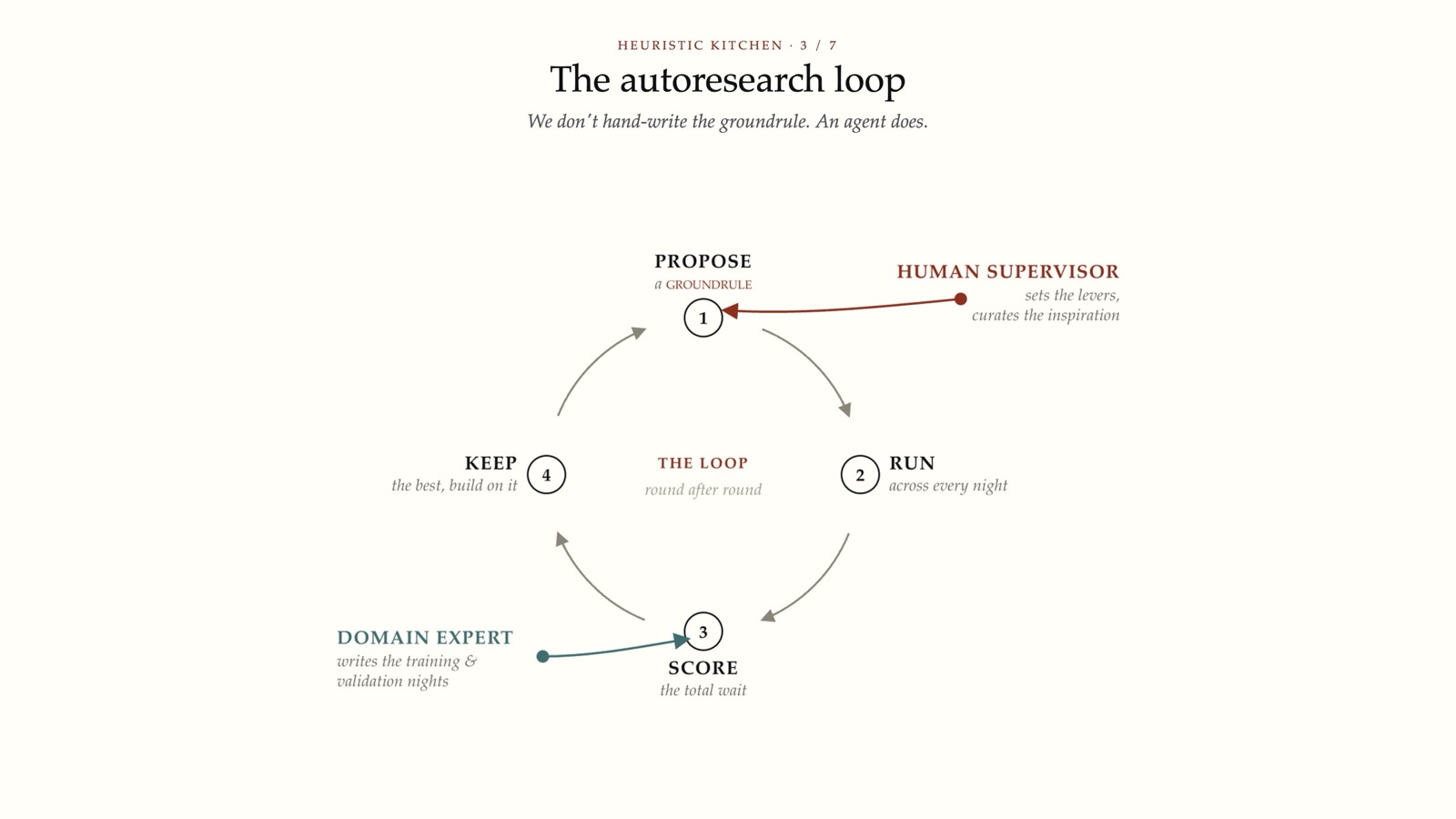
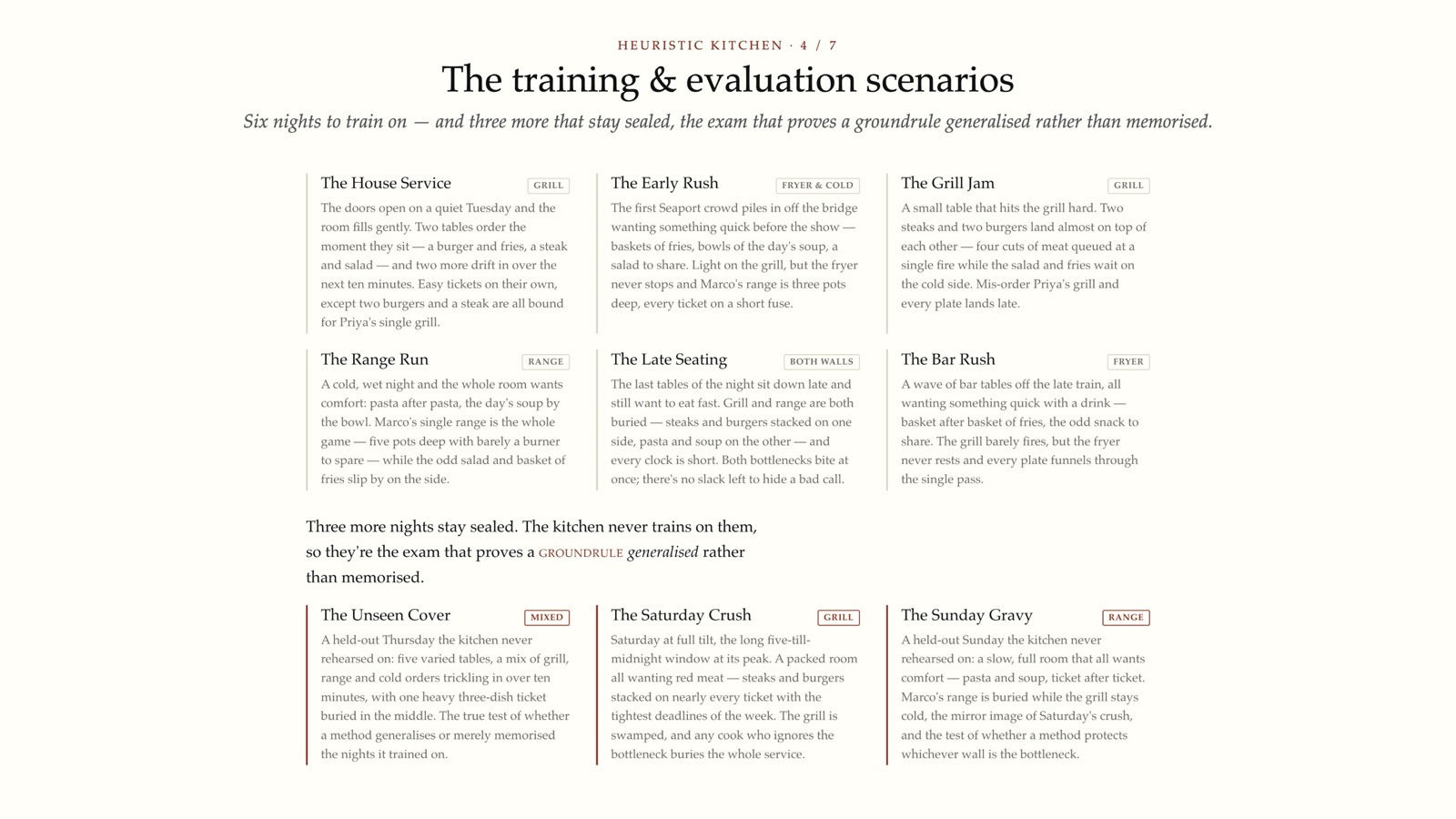
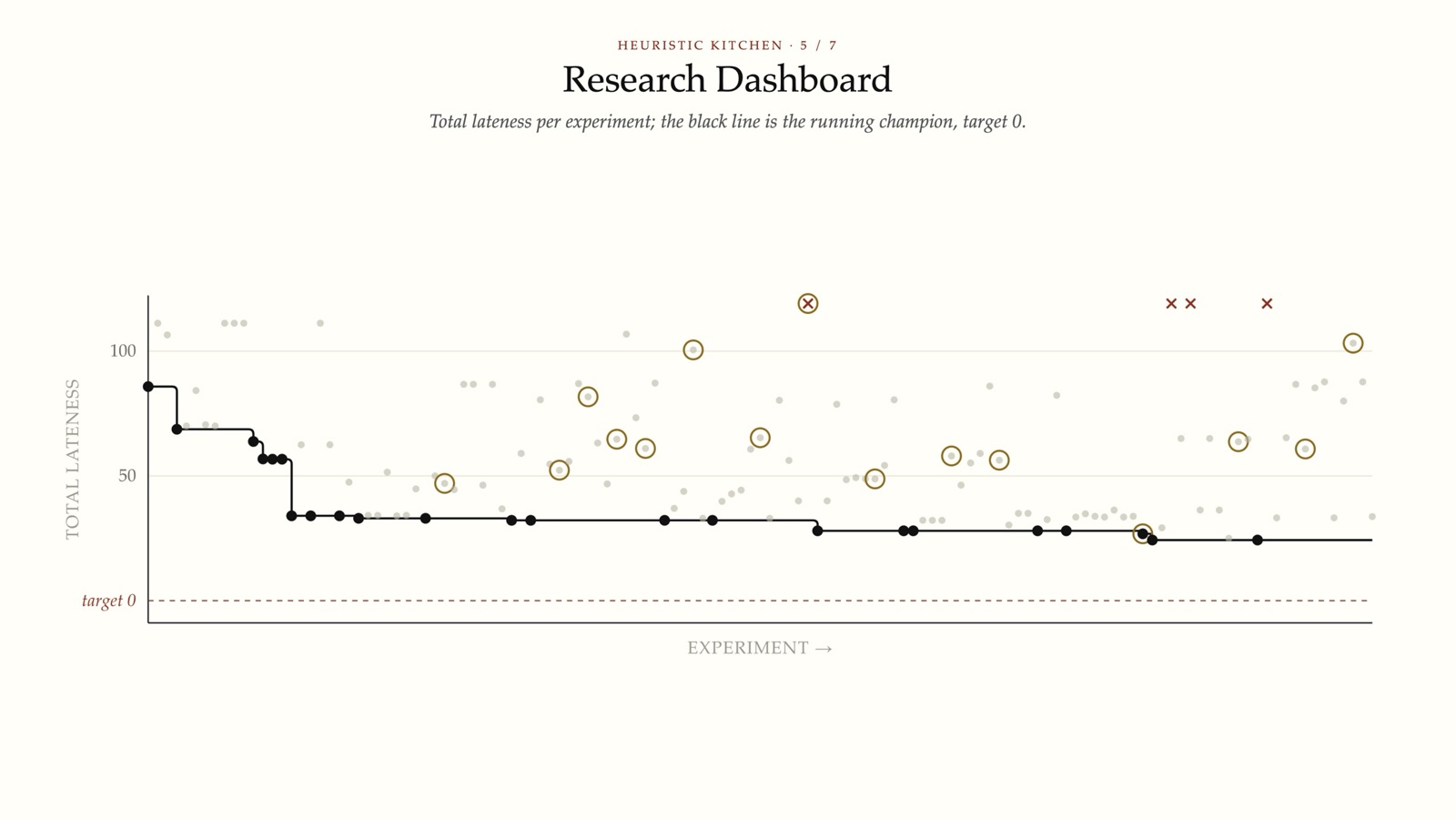
Autoresearch on a job-shop scheduling problem dressed up as a lunch rush: one grill, one shared range, sequencing as the only lever, and an AI agent that proposes candidate rules, runs them across simulated services, and keeps whatever beats the champion — trained on six scenarios, then held out against three more to check it found a principle, not a memory. Built on Nima H. Siboni’s “The Heuristic Scientist: Open-Ended Algorithm Discovery with LLMs” workshop.

The research in nine slides
Autonomous Research with AI: “We don’t write the rules. We just discover them.” — how an agent searches for the groundrule, and what makes the loop different

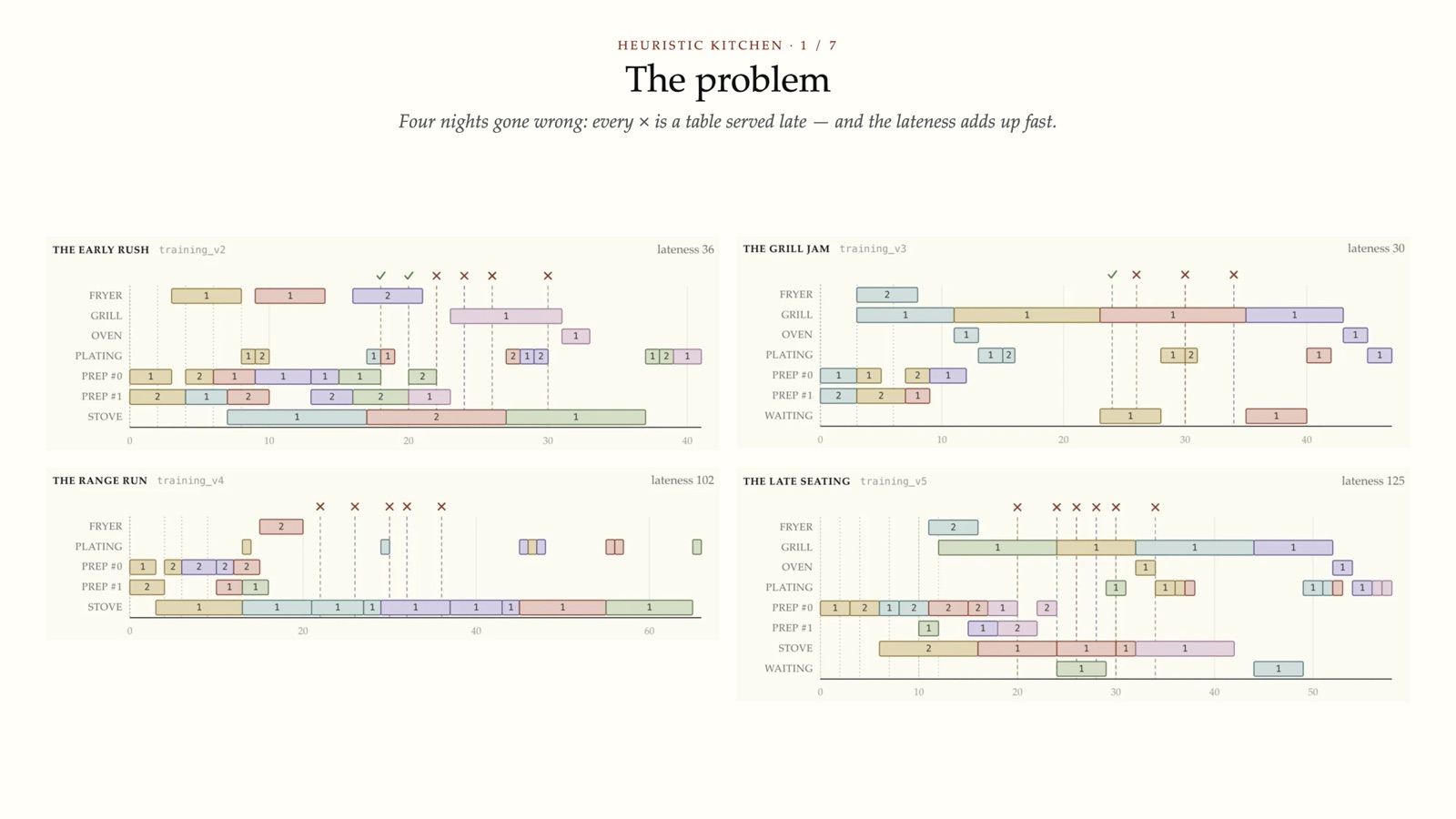
The problem

What we can’t change

The autoresearch loop

The training & evaluation scenarios

Research Dashboard

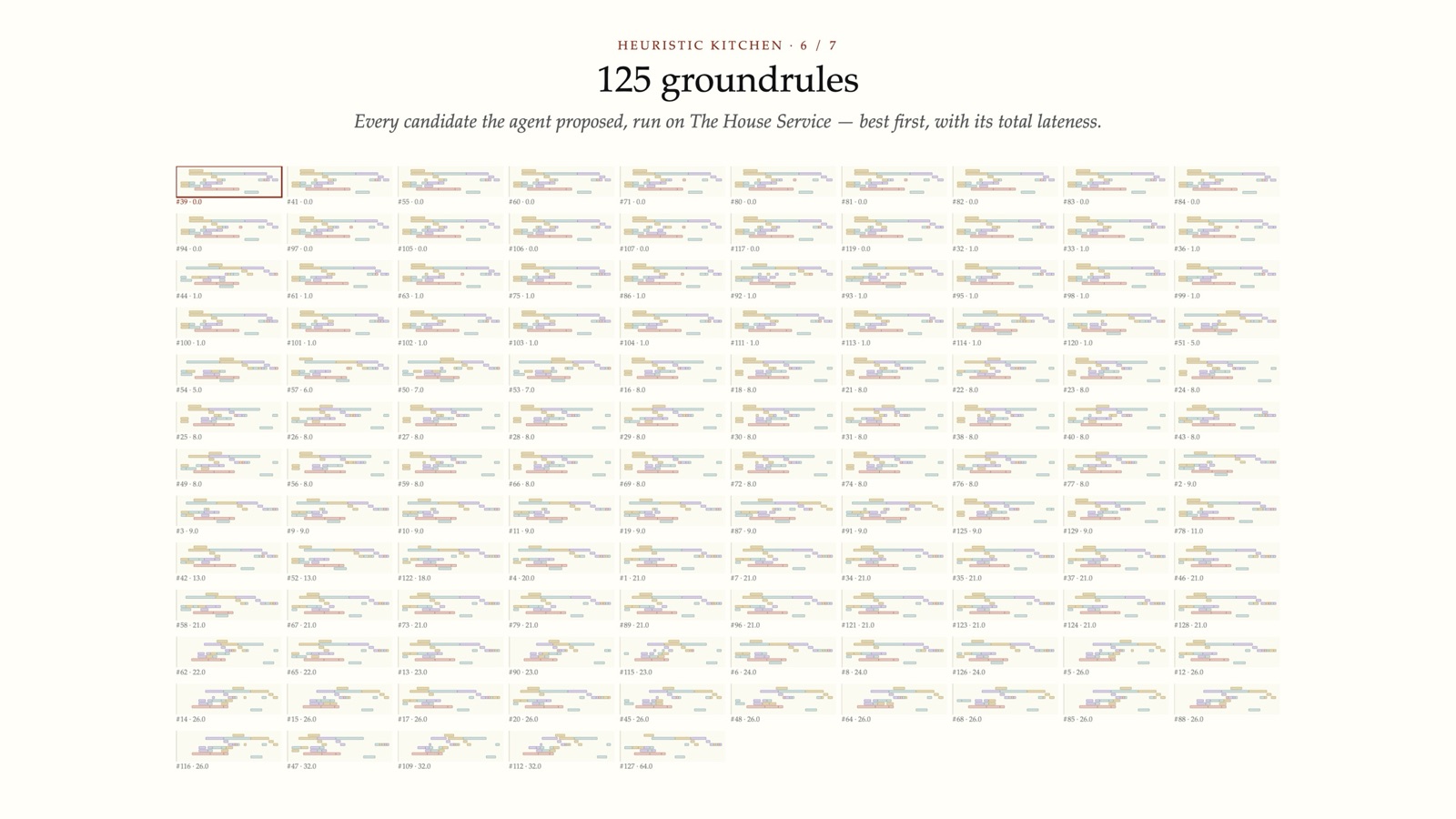
125 groundrules

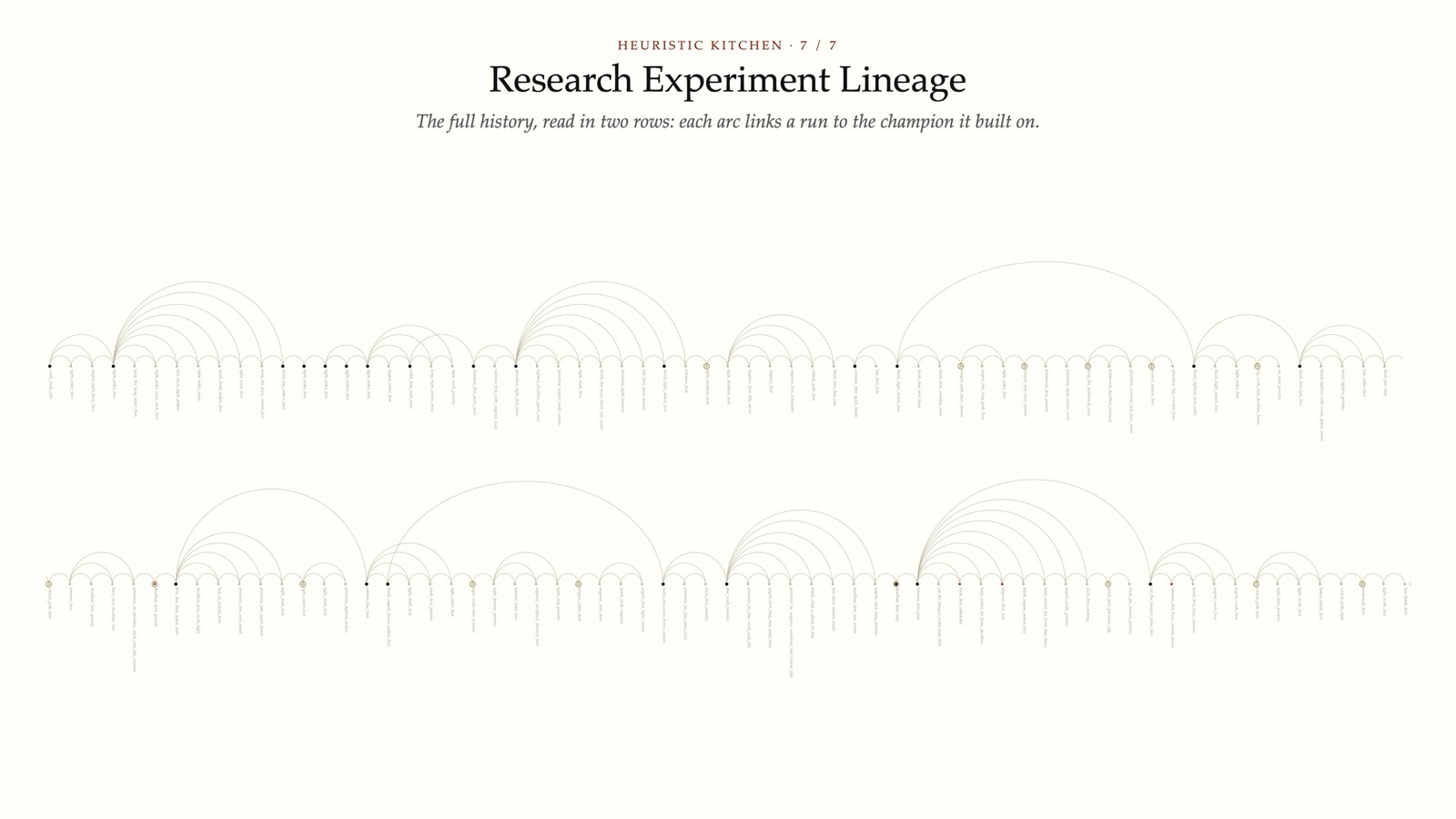
Research Experiment Lineage

The whole research, open

Open →

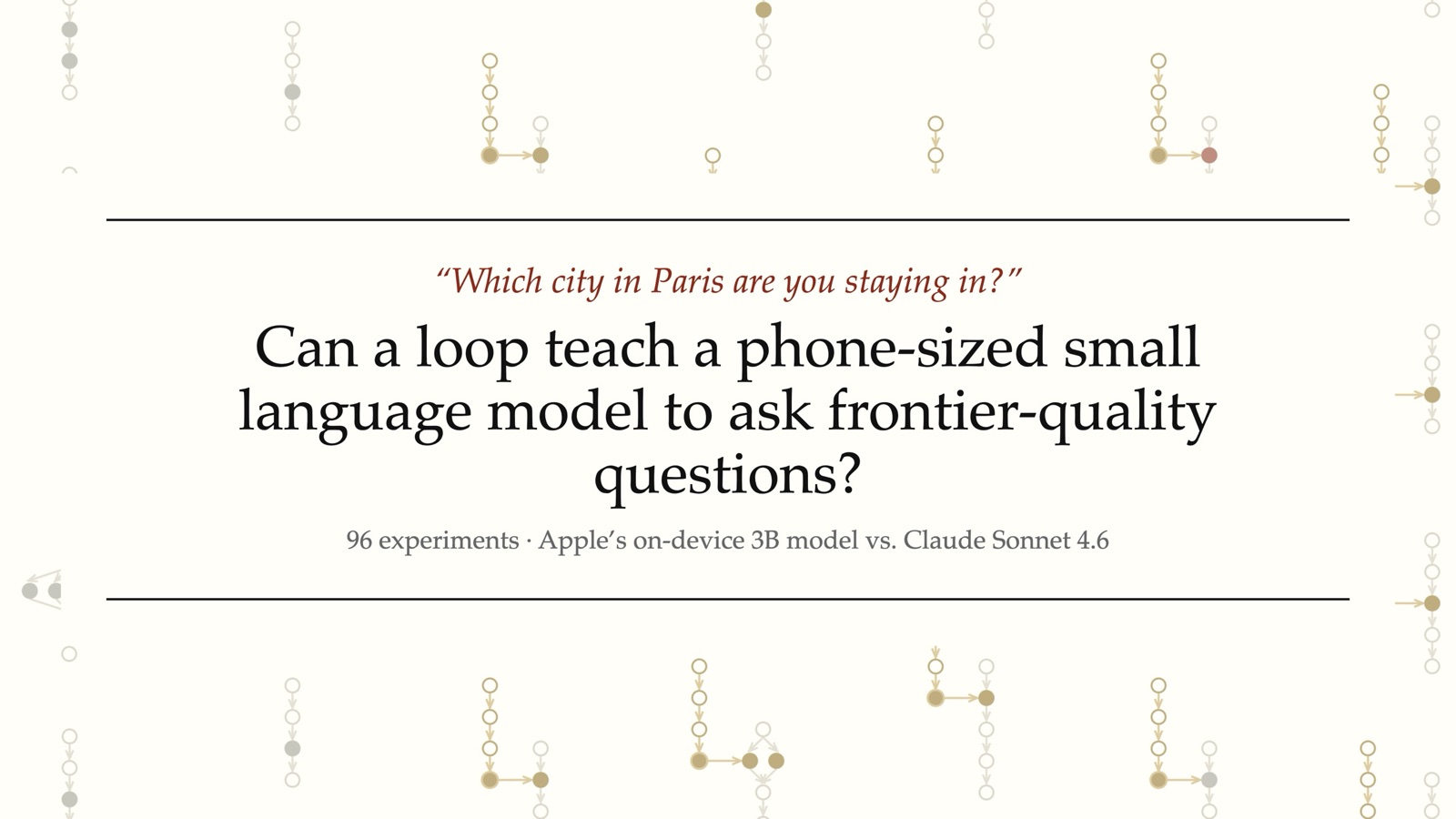
Autonomous Research with AI: "Which city in Paris are you staying in?" — can a loop teach a phone-sized small language model to ask frontier-quality questions?

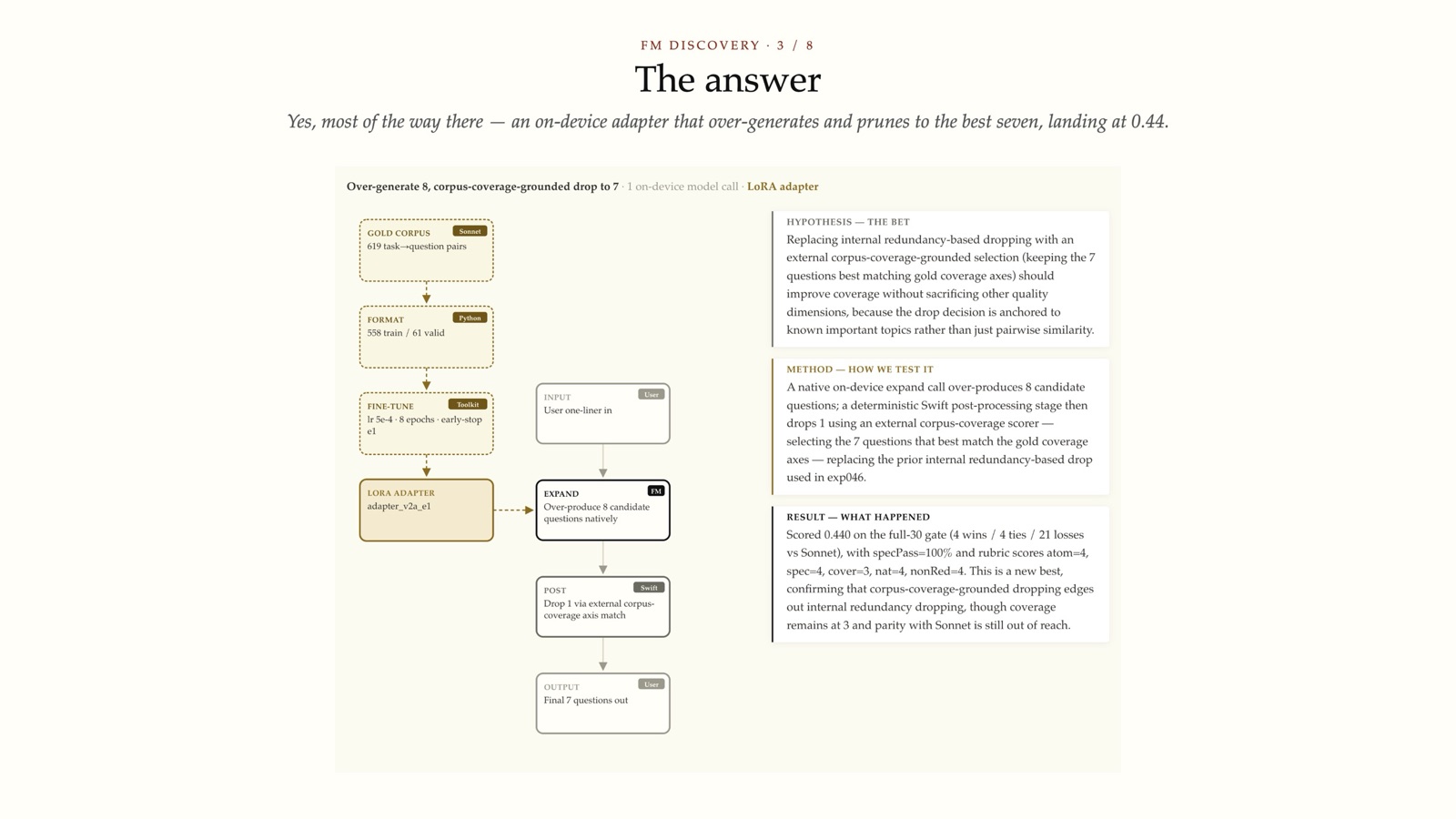
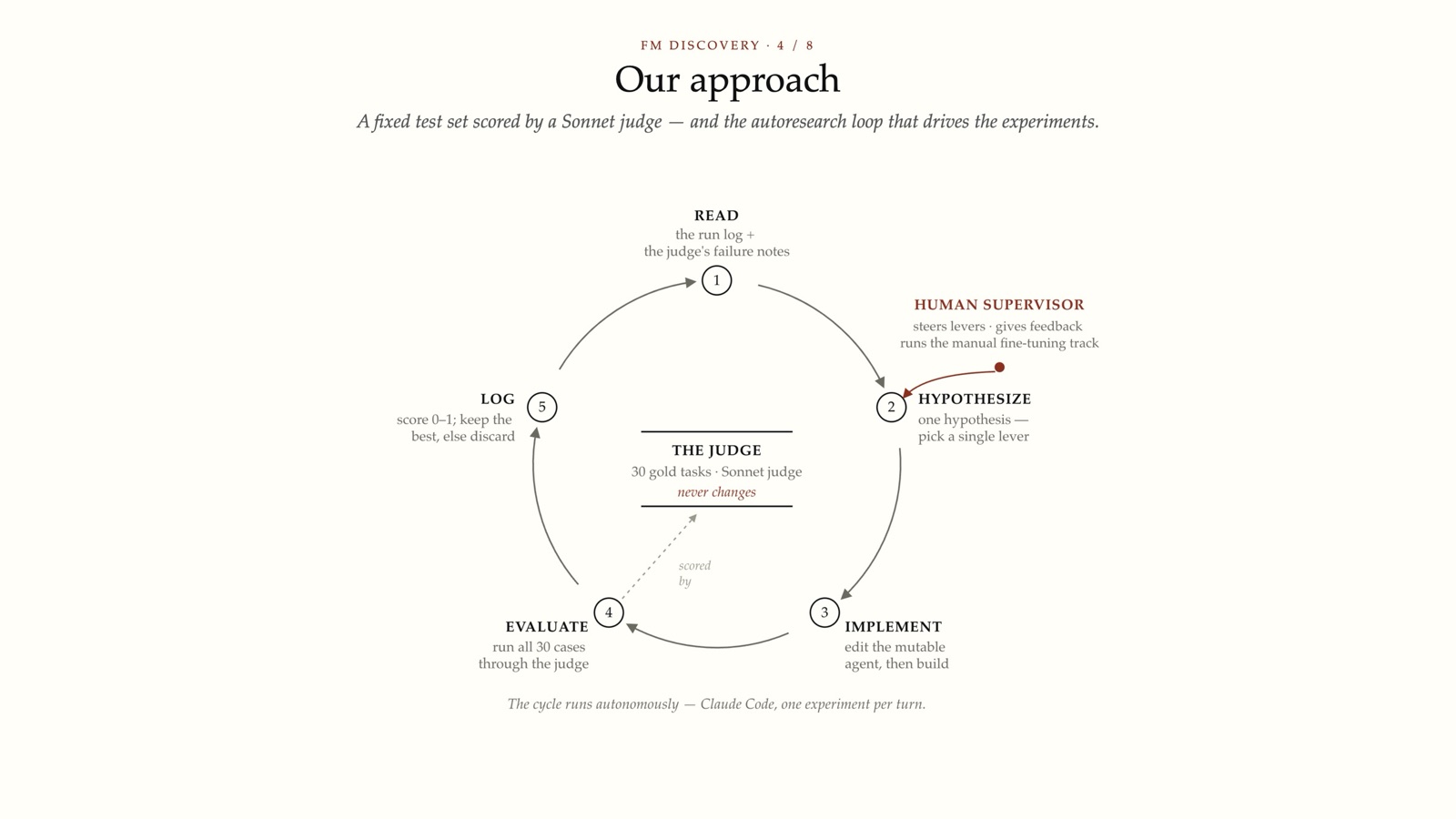
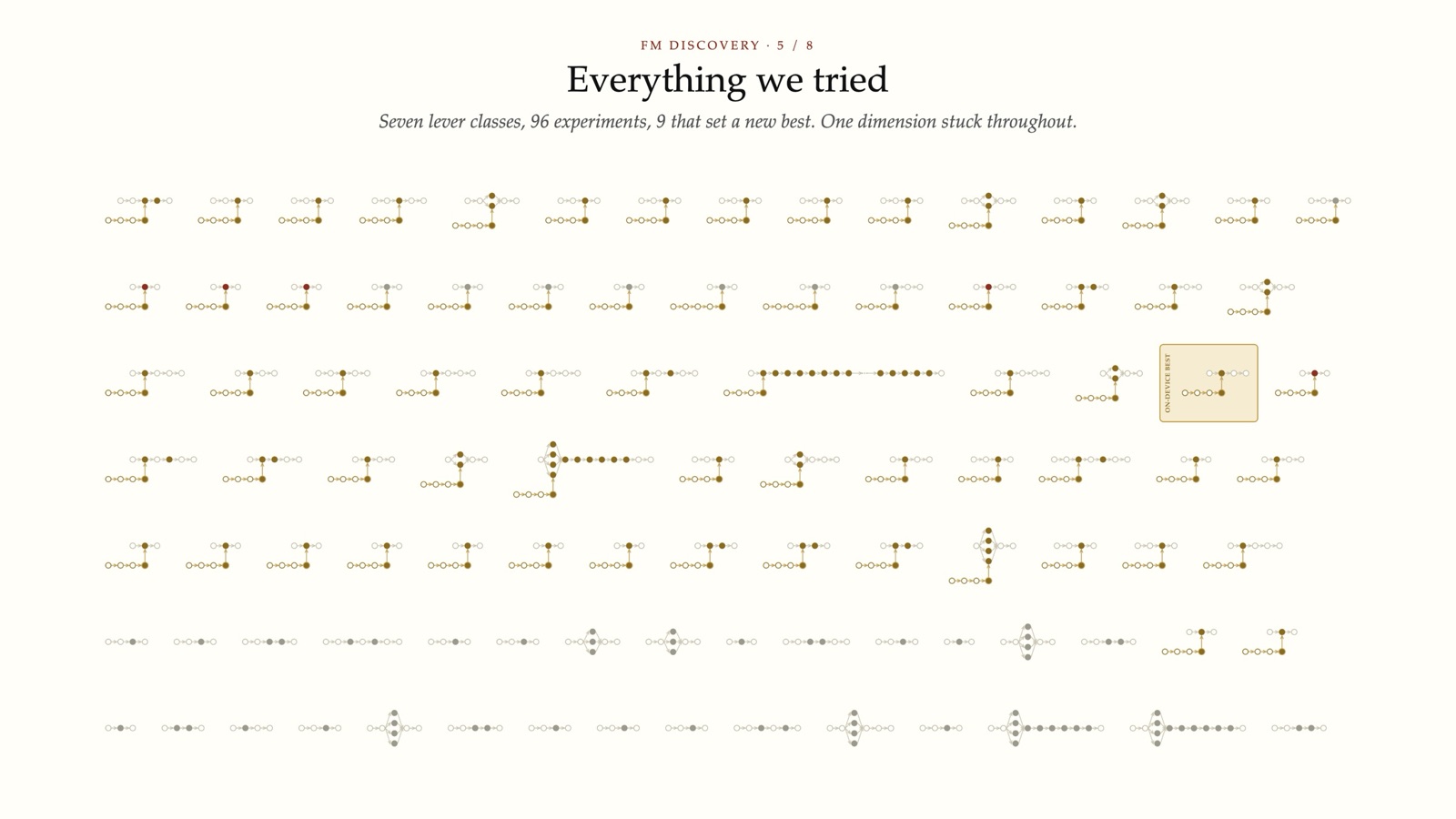
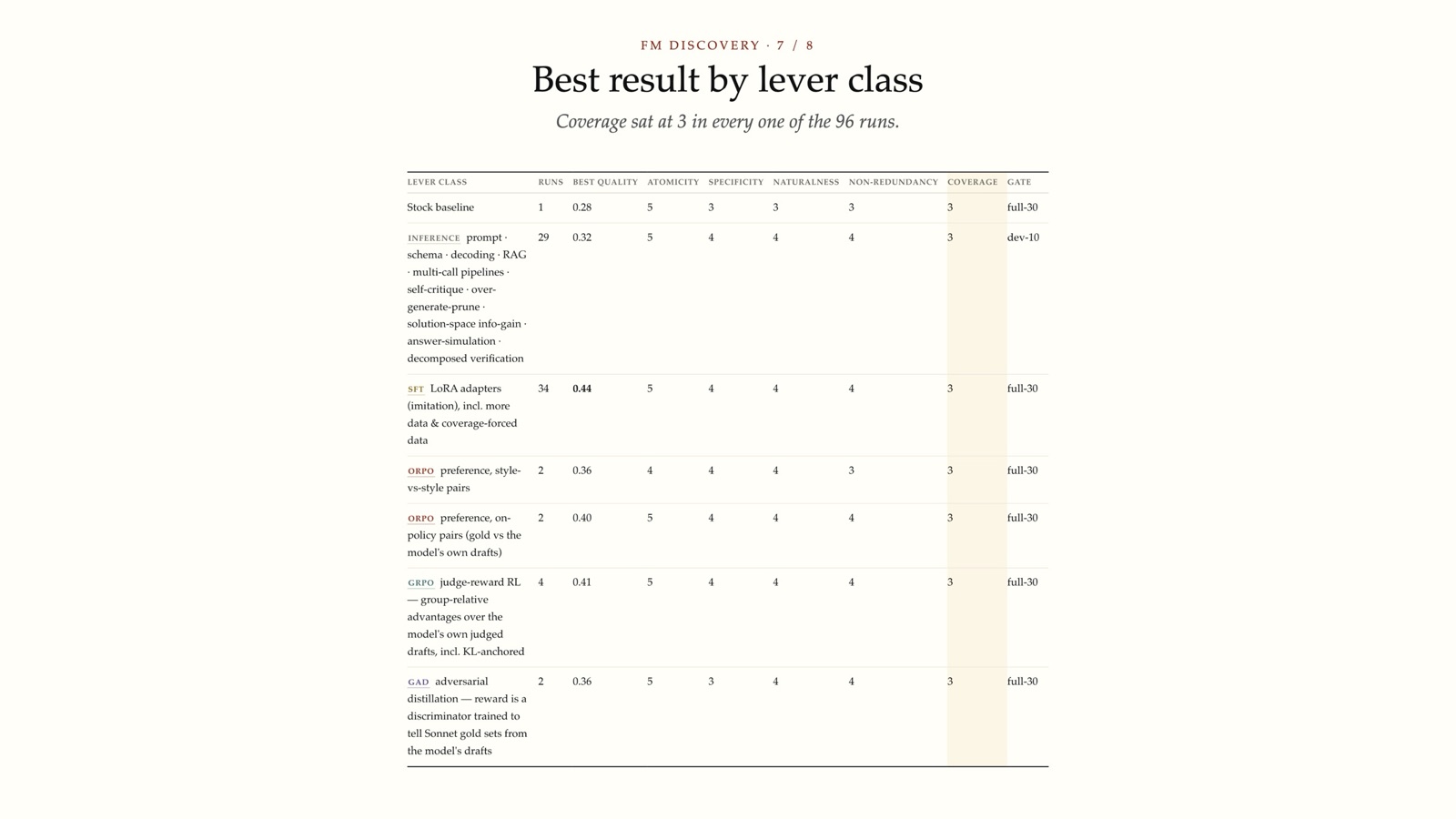
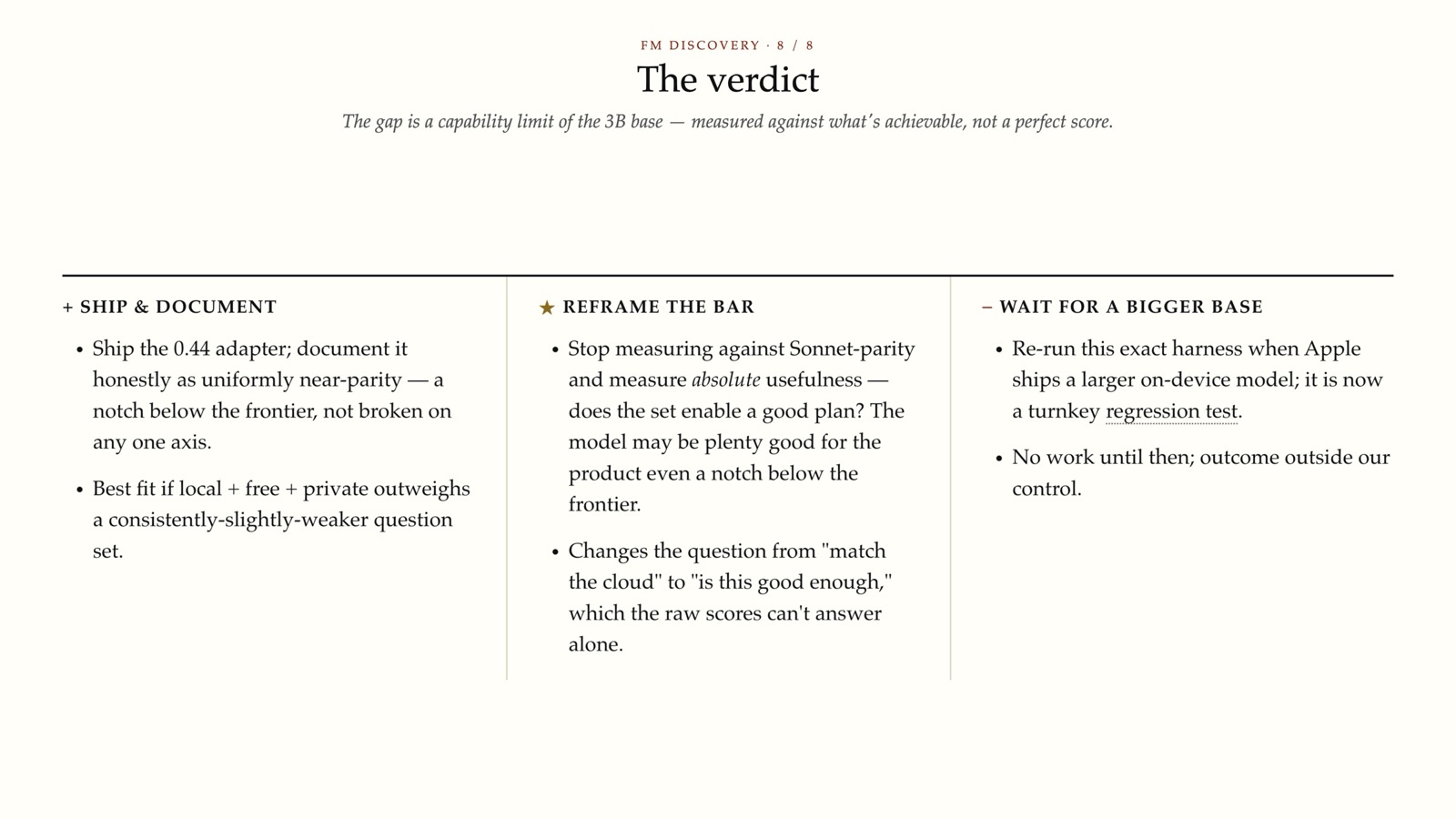
An AI agent running an autoresearch loop — 96 experiments across every lever we could find: prompting, retrieval, decoding, pipeline, fine-tuning, preference-learning, reinforcement-learning, adversarial-distillation — found a technique that brings Apple’s native 2025 3B Foundation Model within about one rubric point of a frontier cloud model (Claude Sonnet 4.6) on every quality dimension.

The research in ten slides
Autonomous Research with AI: “Which city in Paris are you staying in?” — can a loop teach a phone-sized small language model to ask frontier-quality questions?
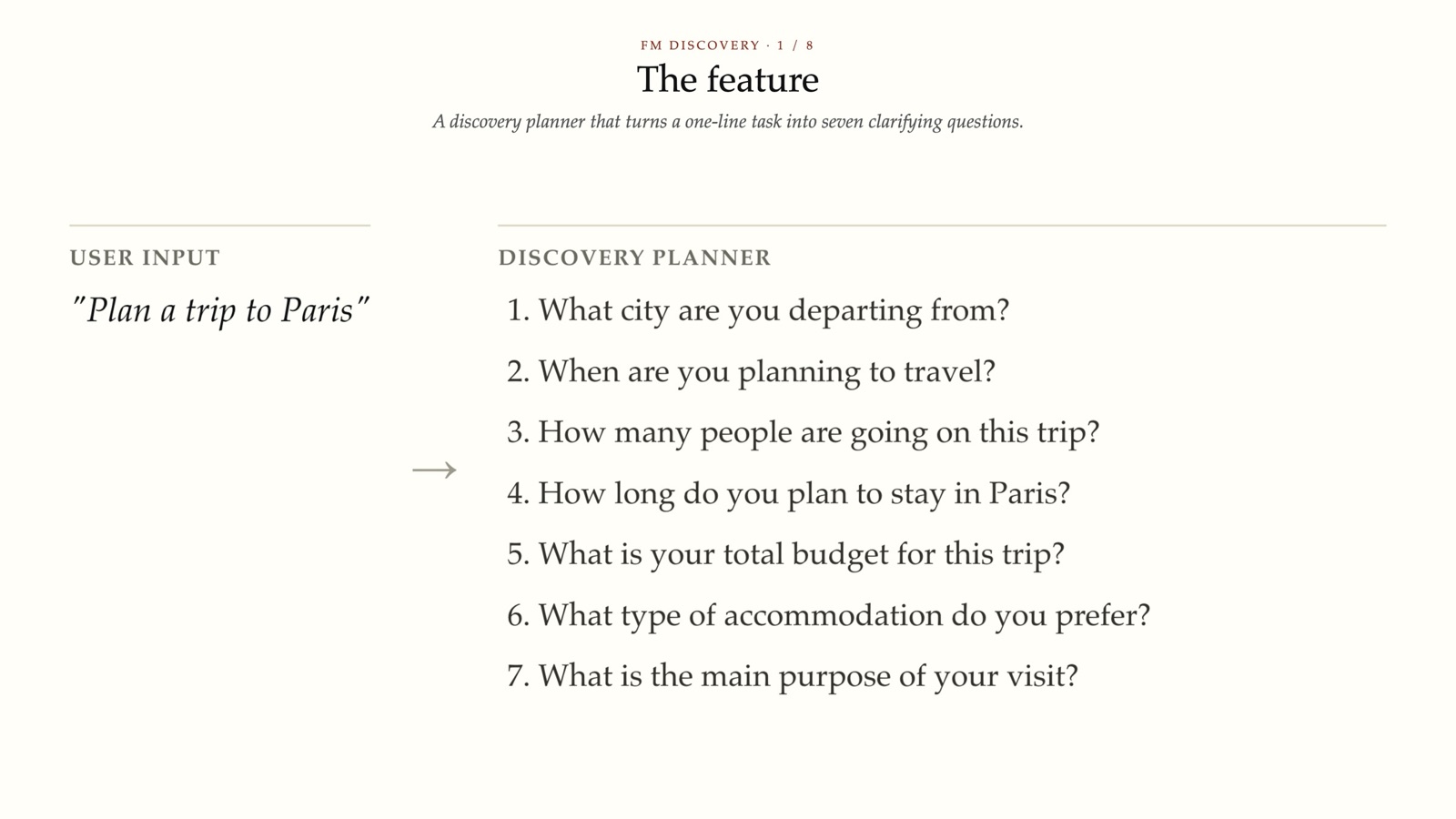
The feature

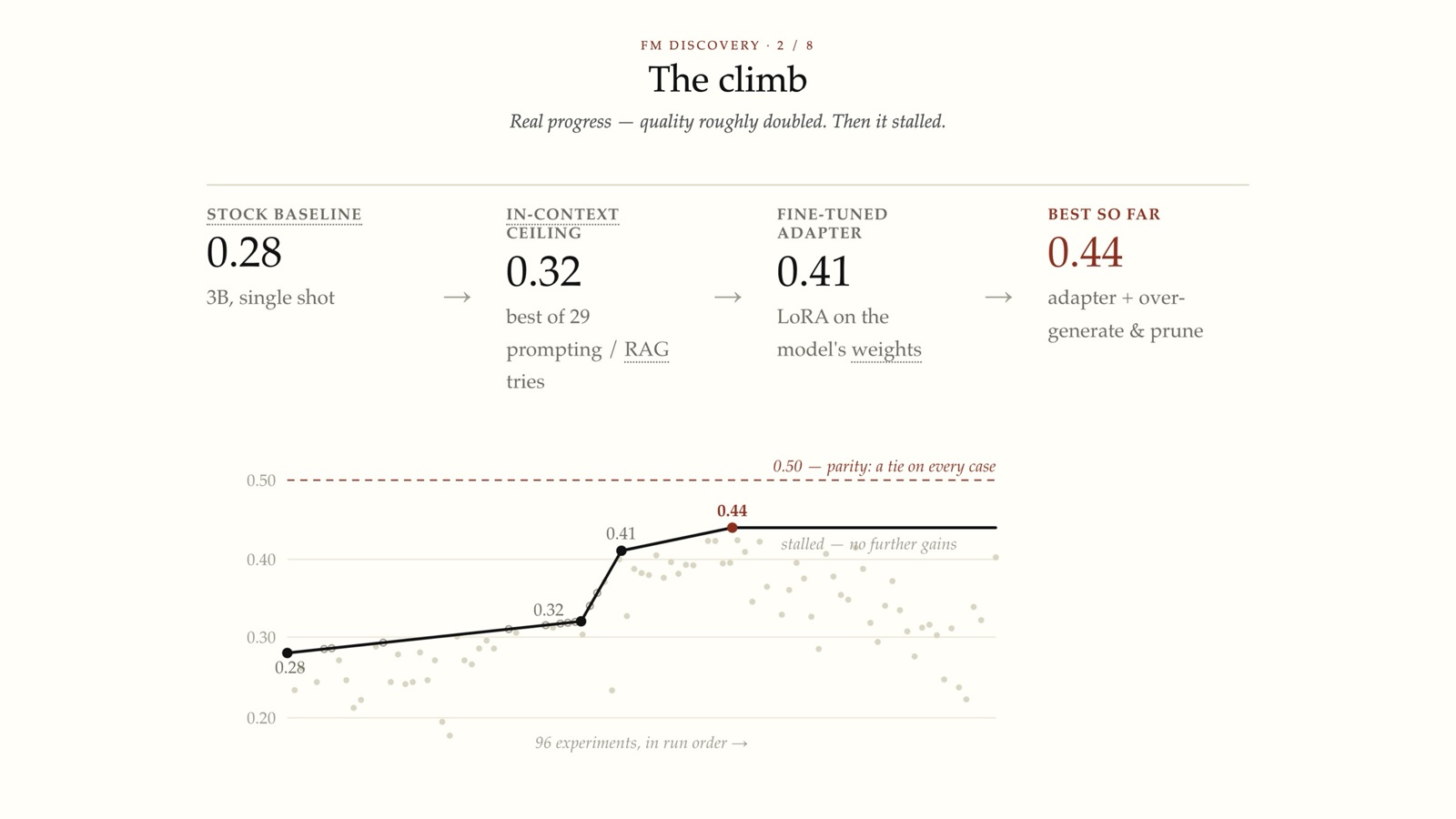
The climb

The answer

Our approach

Everything we tried

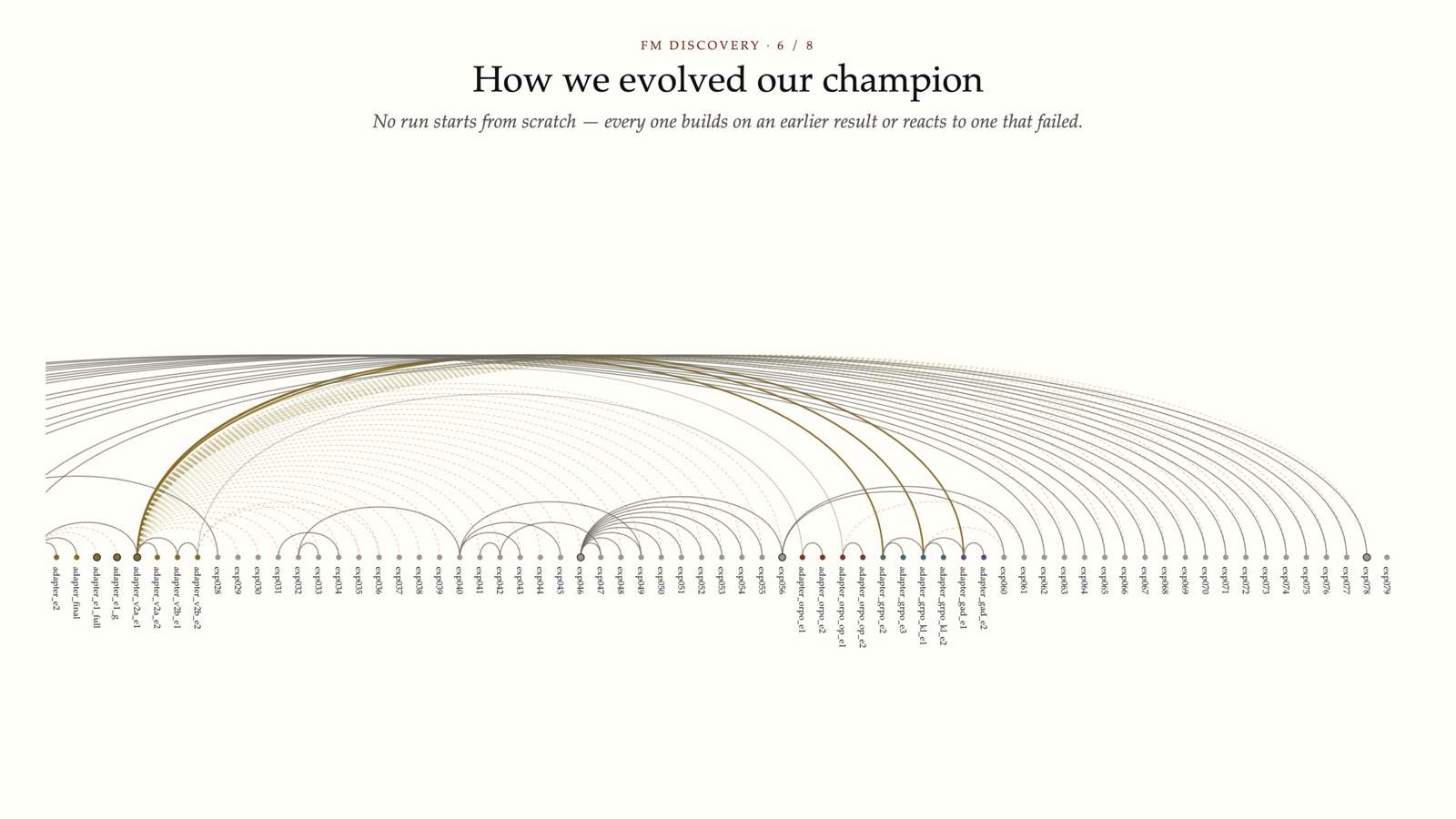
How we evolved our champion

Best result by lever class

The verdict

The whole research, open

Open →